Review by Frank Plowright
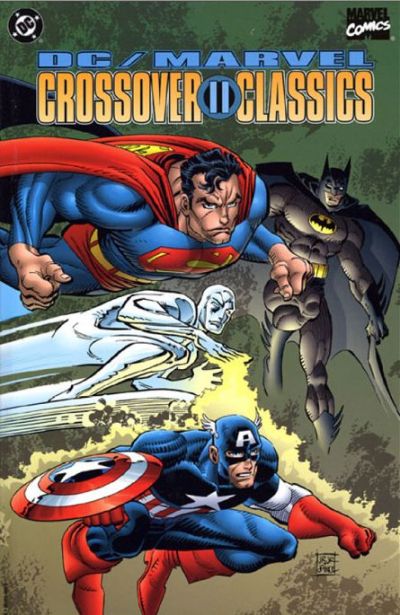
The title credits for this second volume switch to DC/Marvel with the Punisher strangely absent from a cover when he features in two of the four stories reprinted, both times teaming with Batman.
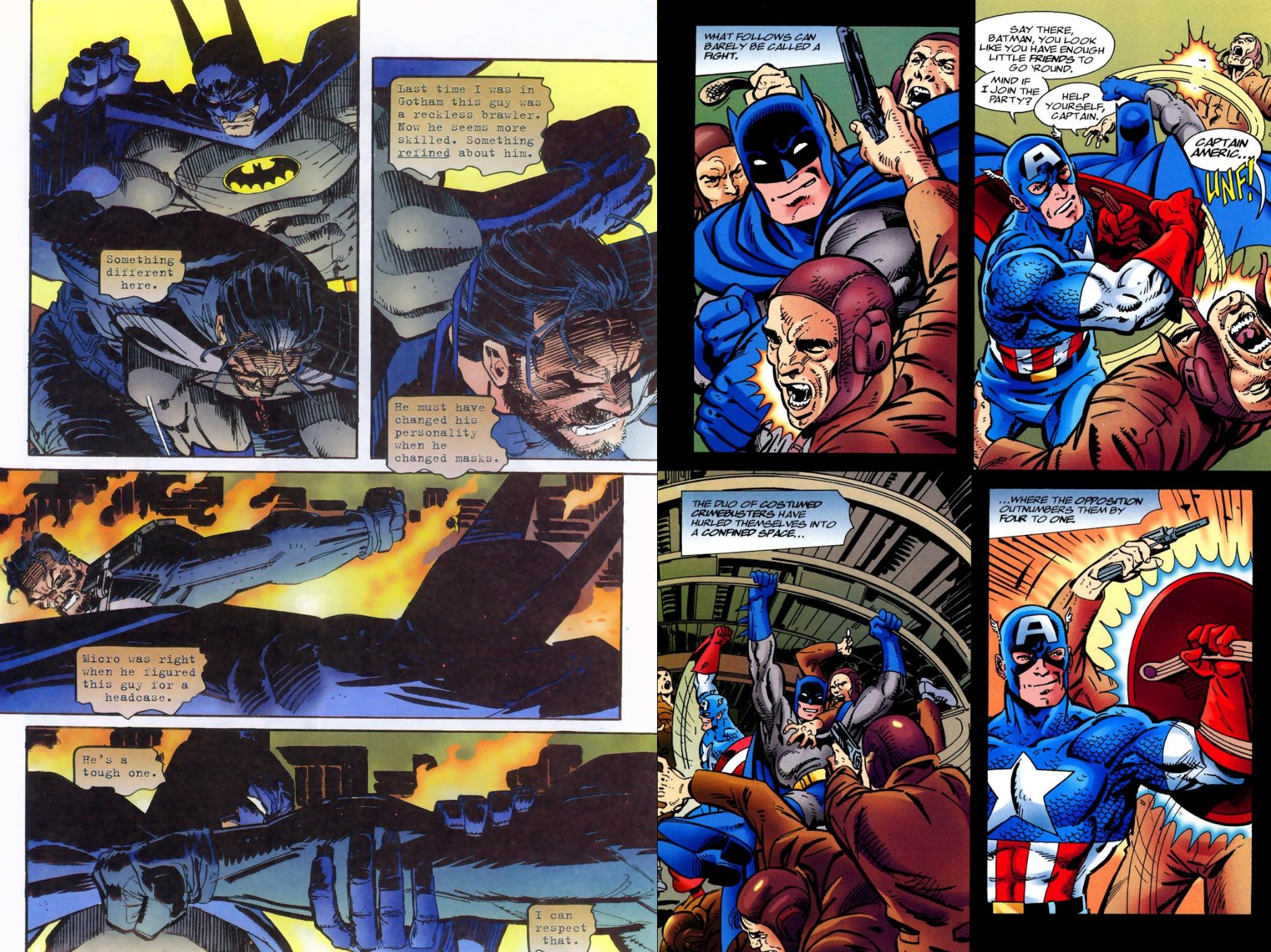
The first pairing is from Batman’s Knightfall period, so the person in an armoured bat-costume is the mentally tortured Jean-Paul Valley, given to excess, so more in tune with the Punisher’s default setting. His enemy Jigsaw is in Gotham, allied with a generic gangster, which is a disappointing choice on Denny O’Neil’s part, as is an unlikely plot to disable Gotham’s reservoir and hold the city to ransom. Barry Kitson’s art tells an ordinary story efficiently, but anonymously, at his best with scenes of Gotham. The Joker turns up for a couple of pages toward the end, leading into the sequel.
That’s written by Chuck Dixon, who in the 1980s was more attuned to crowd-pleasing versions of the characters and far more convincing with the narrative captions of their thoughts. Dixon also has the benefit of the real article when it comes to Batman, and of John Romita Jr. as a more dynamic artist. It’s a considerable improvement, using a sub-plot of Micro and Robin’s hacking skills and includes some moments of dry humour as the two main characters circle each other while both on a mission.
It’s not really possible to discuss George Pérez and Ron Lim’s Superman and Silver Surfer teaming without dropping into spoiler territory. Each of the title characters is going about their business when they’re suddenly transported elsewhere. Superman finds himself on Krypton, and face to face with the Super Skrull, while the Silver Surfer recognises himself on Earth, but not the location. The truth of that is clever. However, the second half is more about the characters responsible for the mess. That’s Mr. Mxyzptlk and the Impossbile Man, not so much villains as children with immense power, and enables some really weird and very brief DC/Marvel crossovers. It’s fun and would be greater fun for the use of a more imaginative artist than Ron Lim.
John Byrne writes and draws Batman meeting Captain America, and he does possess imagination, enough to conceive the good starting point of their team-up occurring in 1945. It instantly removes the tone of the grim 1990s Batman, replacing it with a wise-cracking Robin and a Joker who’s a prankster not a murderous clown. Byrne makes the statement of Batman smiling, as if he’s actually enjoying himself. Captain America, meanwhile, is associating with DC characters of the period like Sgt Rock, and facing off against a War Wheel brilliantly redesigned by Byrne at an immense scale. Bucky connects with Robin, Steve Rogers has to investigate Bruce Wayne, and there’s a pleasingly obvious World War II villain. It’s intended to channel the energy of 1940s comics with the greater sophistication of the 1990s, the villains are well used and courtesy of Roger Stern’s suggestion there’s a nice epilogue.
Two unqualified successes and a decent plot accompanied by less than desirable art are enough to make this better than average all these years later, so ranking as highly as the first Crossover Classics, although if you prefer everything is included in the DC versus Marvel Omnibus. Half a dozen more team-ups follow in Volume 3.