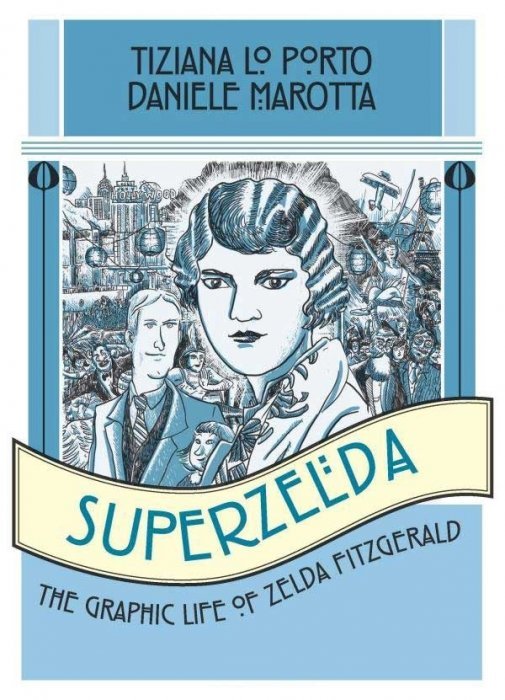
Review by Ian Keogh
Zelda Fitzgerald was one half of a celebrity power couple as synonymous as any with the pre-depression era 1920s, Smart, beautiful, vivacious and precocious, she dazzled her birth town of Mongomery as she grew up in a family tolerant of her independence, and progressed to charm the USA as novelist Scott Fitzgerald’s wife. Hers, though, was ultimately a life of unhappiness blighted by mental illness, not even covering half the century whose start she was born on.
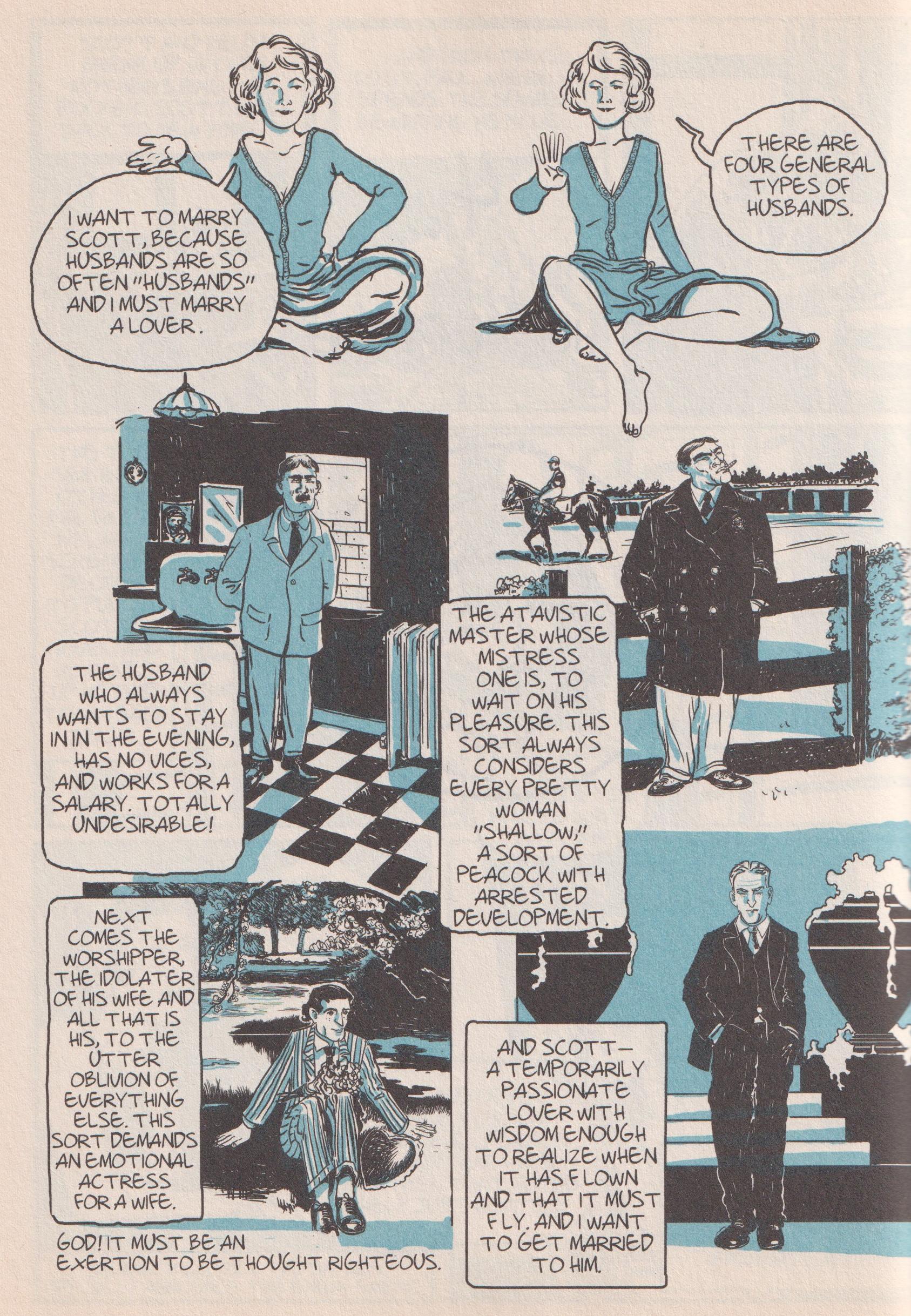
Although this seems a slim paperback, Superzelda’s production is deceptive. Opting for cheap and cheerful rather than premium presentation, 170 pages on pulp paper enable Tiziana Lo Porto to supply a full telling of triumph and tragedy, quoting biographies, articles, letters and the works of Scott Fitzgerald in building a comprehensive picture. Zelda drew a fair amount of dry or witty comment from her socialite contemporaries, and these are also included. The portrait presented is of a smart woman lacking inhibitions and determined to enjoy life to the full, but also profligate, petulant, selfish and entitled, perhaps only really committed to the expression of dance. Lo Porto’s tone is non-judgemetal throughout. However, there are places where events are presented without the desirable comment or explanation, such as a suicide attempt in 1925. Was it due to a love affair, depression or something else entirely?
Daniele Marotta’s art also deceives. He makes no great attempt to supply likenesses of Scott and Zelda, instead drawing consistent cartoon stand-ins, but everything he pictures has a loose elegance. In black, white and pale blue there’s a convincing period presence, and a lot of effort is taken with locations and transport.
Despite the included testaments of several people as to Scott and Zelda’s mutual love and strong marriage, included incidents such as four day rows, each being jealous of the other and each having a neediness suggests otherwise. The 1920s were her golden years, but even toward the end of them life was beginning to tarnish. Lo Porto presents a woman ill at ease with herself, increasingly suffering from mental illness and with morbid fears.
From 1932 Zelda’s spells in clinics and hospitals become longer and longer. As presented, some treatment for her conditions seems questionable and certainly unsympathetic, but psychiatric assessment was then still in its infancy. Not that Scott is any more understanding, and as their lives disintegrate Lo Porto engenders a great deal of sympathy for their forever absent daughter.
Whatever else they may have been, Scott and Zelda were interesting, and despite Zelda taking the title, Superzelda is as much about him, a husband who obsessed about his wife to such a degree the primary women in the four novels published during his lifetime were all versions of her. However, Superzelda’s great failing is being unable to bring out why Zelda should be remembered as an individual beyond being a star that shone bright and dropped into tragedy. She wasn’t considered an accomplished novelist, painter or dancer and that’s where her energies were targeted.
Don’t be deterred by the cheap looking format. Despite never quite getting to why Zelda’s memory persists, this is a well researched biography, and surely an inducement for those who’ve never done so to read Scott Fitzgerald’s novels.