Review by Frank Plowright
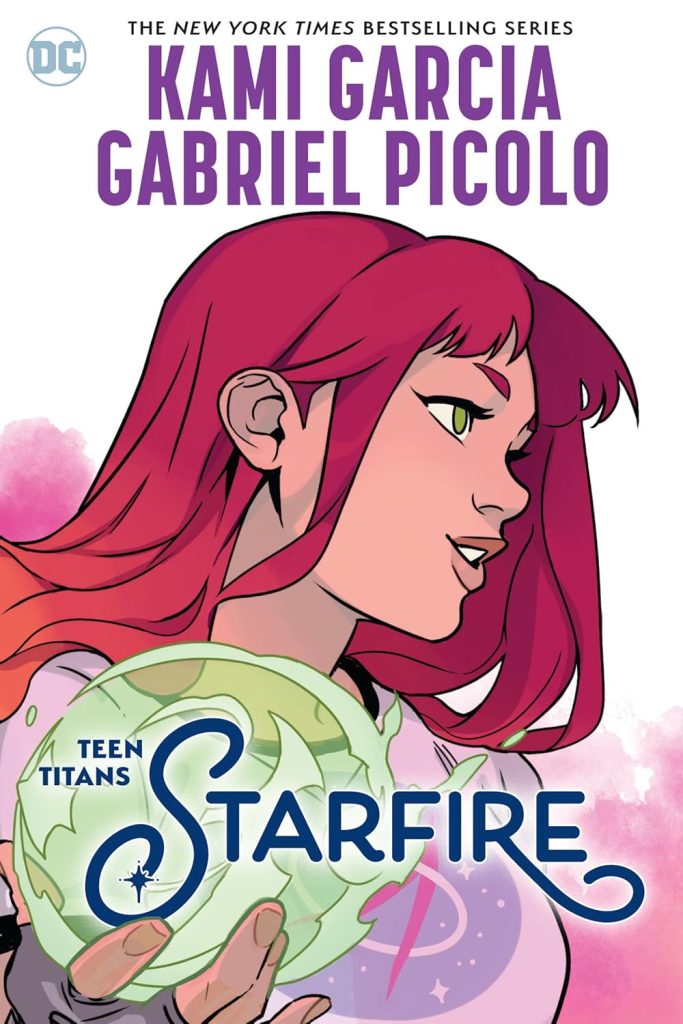
Having already produced graphic novels about Beast Boy and Raven, then united them, it’s now apparent that Kami Garcia’s ambition extends far further. Teen Titans has always been part of the titles on Garcia’s young adult graphic novels, and with what happens in Starfire it’s clear we’re not far away from the entire line-up uniting.
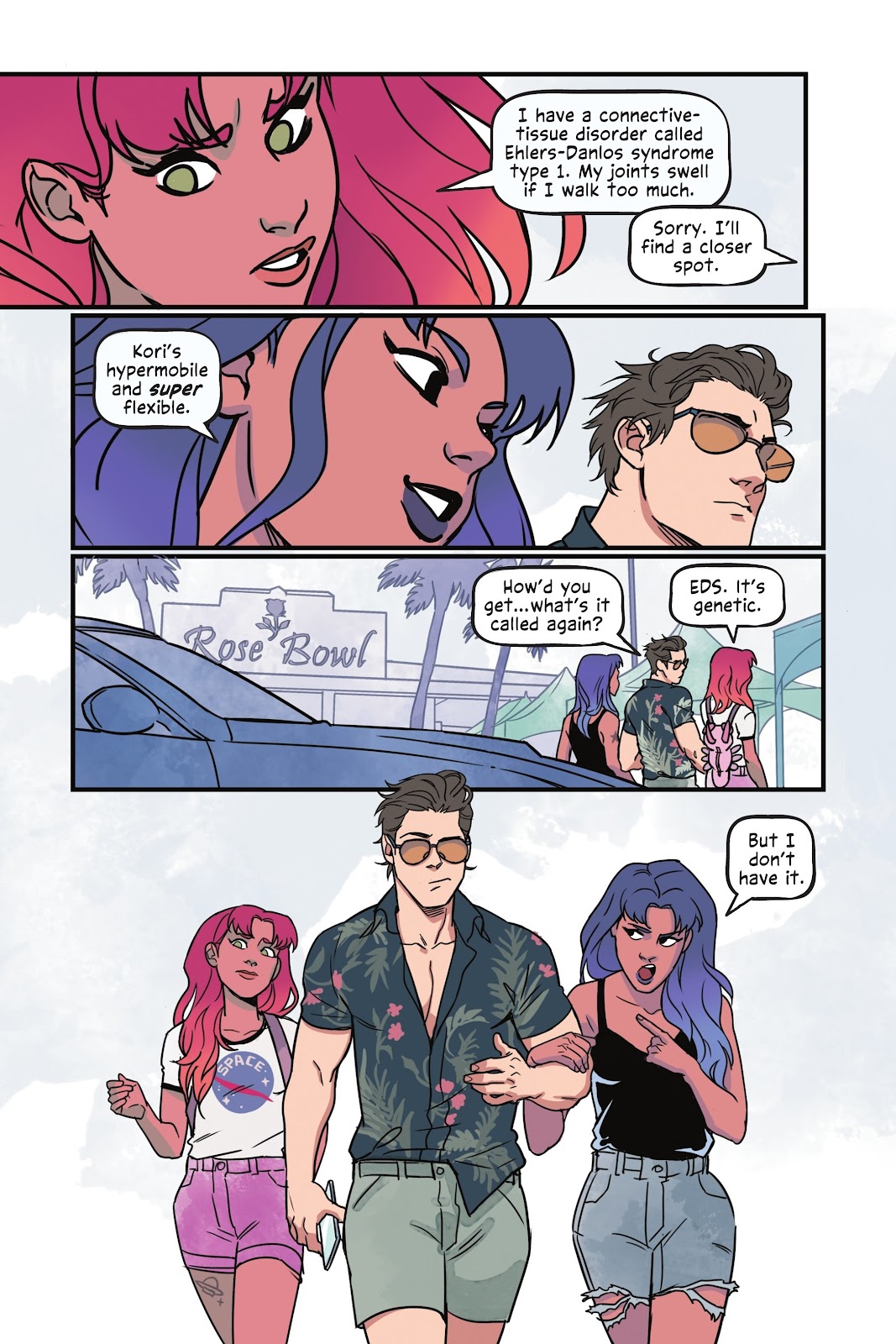
This incarnation of Starfire isn’t an alien princess, but eighteen year old Californian Kori Anders with an older sister Kira and younger brother, and she’s afflicted with EDS, a condition that makes her joints swell if she walks too much. It’s a condition others either don’t understand too well, or don’t want to understand, but Kira’s boyfriend persuades his pharmaceutical company-owning father to run a clinical trial.
White Starfire can be enjoyed on its own, it does tie-in to Garcia’s previous Teen Titans books, at first largely via the presence of Slade Wilson, and readers who’ve not seen him before will quickly pick up on his bad intentions. Just about the stage readers will begin to suspect there’s someone else who doesn’t have the best interest of the Anders sisters at heart, Garcia reveals that’s the case.
It would seem Gabriel Picolo is incapable of drawing an unattractive person, and while that’s long been a feature of superhero comics, it slightly diminishes Kori’s uncertainties and comparisons with her popular older sister. Teen Titans who’ve not been introduced in previous books now make their appearance, and Picolo comes up with an appealing simplified design for Cyborg, or Vic Stone as he is here.
Although she likes Kira, Kori also feels she lives in the shadow of her popularity, tolerated for who her sister is, not for herself, and Garcia brings out the conflicting feelings well. That also applies to Starfire’s gradual and puzzling discovery of superhuman abilities, and how they’re a concern instead of something to be celebrated. It feeds into the naturalistic way Garcia tells Starfire’s story, prioritising human reaction over superhero action. That action is a matter for concern, not celebration. It takes a while for their introduction, but the cast introduced in Garcia’s earlier books also turn up looking for Kory.
Everything comes together very smoothly with reader concerns neatly activated by a character unable to see the truth and so endangering everyone else. The natural progression makes for an enjoyable experience, but for the first time in this series there’s not a definitive ending, but a cliffhanger, which is resolved next time in Teen Titans Forever.