Review by Frank Plowright
Rather than having her characters stuck in a neverland where time stands still, Sophie Escabasse is progressing time further forward with each new Witches of Brooklyn graphic novel. It was still school time in What the Hex?! but a third outing for newly discovered witch Effie sees her having to leave her relatively recently acquired Brooklyn comfort zone for the American tradition of the rural summer camp. Depending on a child’s personality this is either a glorious adventure in the wild making new friends, or horrific weeks of endurance. Effie’s reluctant, but up to a point drops into the first category.
As Effie and her guardians are all witches, Camp Raccoon offers challenges over and above the usual romps in the woods and playing in the lake, although the thought of swimming is intimidating enough for Effie. The camp’s speciality is discovering the individual talents of young witches, particularly whether or not they’ve got green fingers, witches code for their being able to bond with plants.
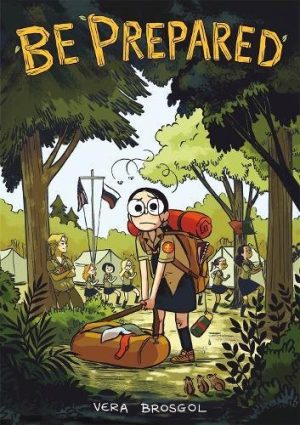
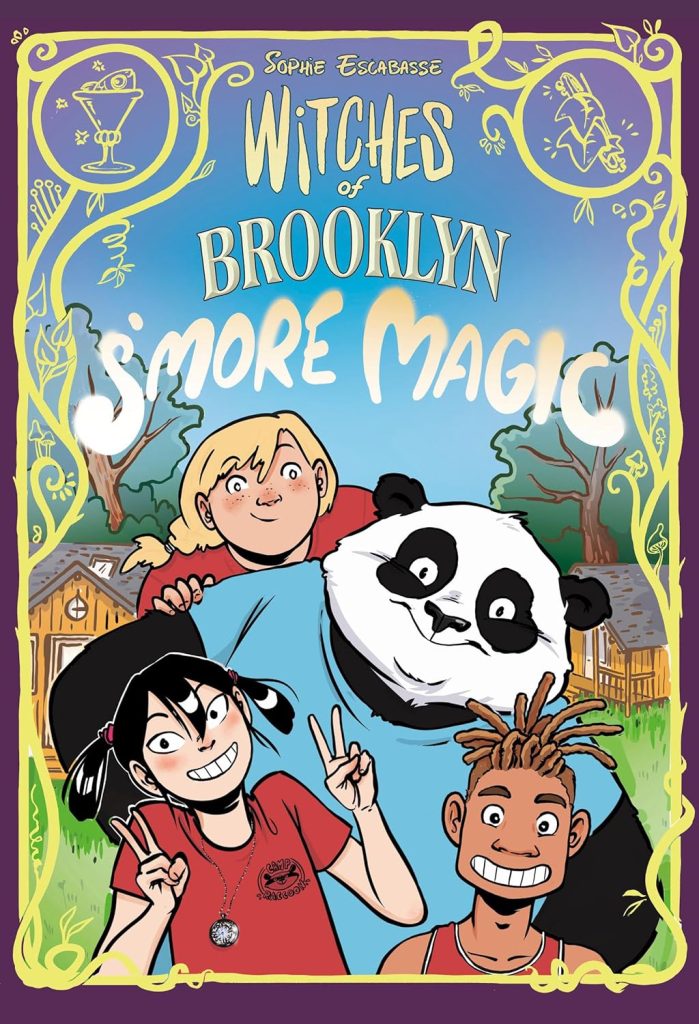
There is no shortage of graphic novels aimed at youngsters providing the full summer camp experience (see recommendations), which makes the areas where S’More Magic falls down more obvious in comparison. Sophie Escabasse introduces stock characters. There’s the instant friend, the instant enemy, the sympathetic camp counsellor and the wise camp official. To be fair, there’s a limited selection of archetypes available under the circumstances, but with the exception of Fiona, who has a more original personality and approach, people are one-dimensional. There is an attempt to vary the stock cast with the panda seen on the cover, but Henry’s background is just too whimsical and really comes to nothing. It’s as if Escabasse just fancied drawing a panda for most of the story.
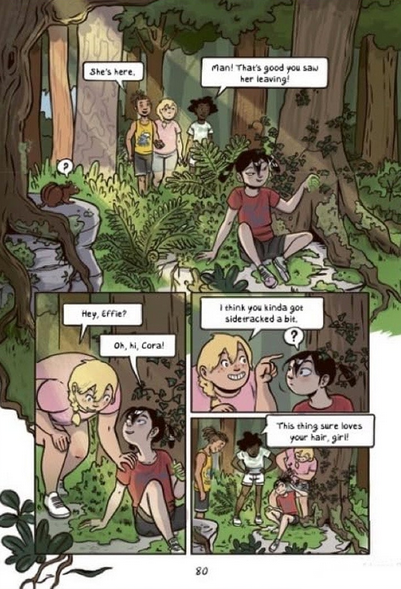
It’s the drawing, though, that’s the heart of S’More Magic. Escabasse makes the summer camp a place young readers will want to visit, with lush scenery and decorative motifs. This isn’t a series where everyone has the same body shape, and the characters and their moods resonate while Escabasse ensures the panels are filled with people when that’s necessary.
As before, when a plot eventually develops it’s a good one, offering danger and requiring an ingenious solution.
Throughout Witches of Brooklyn there’s the feeling of Escabasse having ideas worth developing, but letting the charm of the art excuse taking too long to bring them into focus. Perhaps that’ll be rectified with Spell of a Time.