Review by Frank Plowright
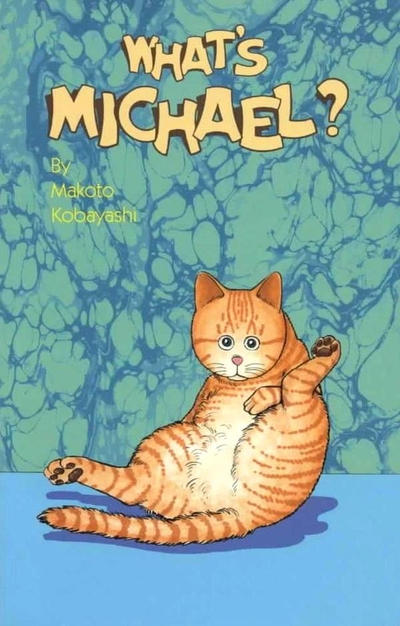
No-one ever went broke by overestimating the desire of cat lovers for anything to do with their favourite creature, and Makoto Kobayashi’s five and six page episodes are aimed squarely at that audience. Kobayashi’s elegantly drawn shorts start realistically enough with the ginger cat Michael stalking a mouse, but what’s to come is definitively established by having him dance on two legs before the end.
Over thirteen varied stories Kobayashi plays out the fantasies we have about cats when attributing personalities to them, yet breaks the spell by having them revert to standard behaviour at a moment’s notice. This is exemplified in the second strip, on the surface a tense sequence in which Michael is interrogated by the police over sardine theft. Kobayashi delivers his version of police interview room tension, then suddenly snaps it to have all three cats go chasing after a fly.
A question that arises is whether we’re seeing the single Michael in the company of various owners throughout the collection, or multiple multiversal Michaels with a selection of owners. Without explanation that will continue to be the case throughout the series, so best not to trouble yourself as the variety of owners and their personalities offer a variety of premises. Likewise, don’t look for logic overall, just go with the flow. Some strips are flights of fantasy while others are grounded in reality, like the Yakuza gangster whose deep personal secret is that he’s a cat lover. It’s almost a breach of the unspoken code of feared gangsters accompanied by fearsome dogs.
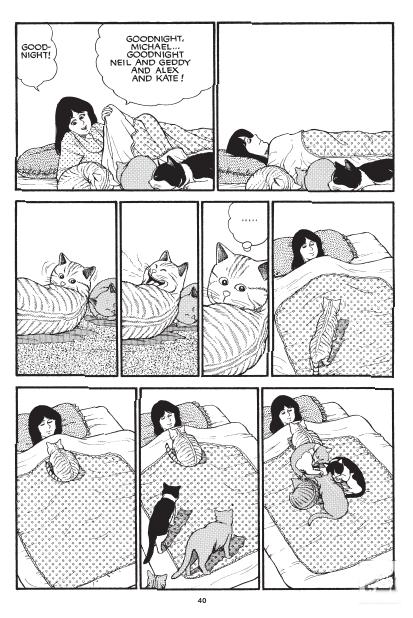
Occasionally Kobayashi will drop almost all flights of fancy and just have cats behaving as cats do, such as a pair of strips titled ‘The Cat Cries at Midnight’. There Michael and his pals prevent a woman from going to sleep as they seek the most comfortable spot for themselves.
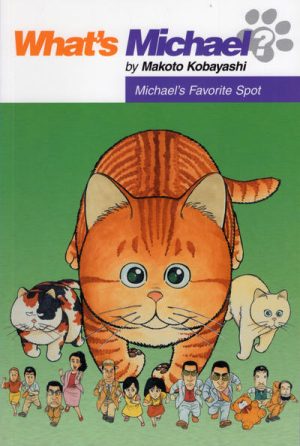
If you’re a serious cat lover you might want to entirely skip the first six small paperbacks from the 1990s and head straight for 2019’s first What’s Michael Fatcat Collection. Be warned, though, as it clocks in at over 500 pages you might overdose on sentimentality, and Mark Cox’s design for these slimmer collections is very attractive. Another thirteen stories are compiled in Living Together, although the strips have no continuity other than the introduction of recurring people, so can be enjoyed in any order.