Review by Frank Plowright
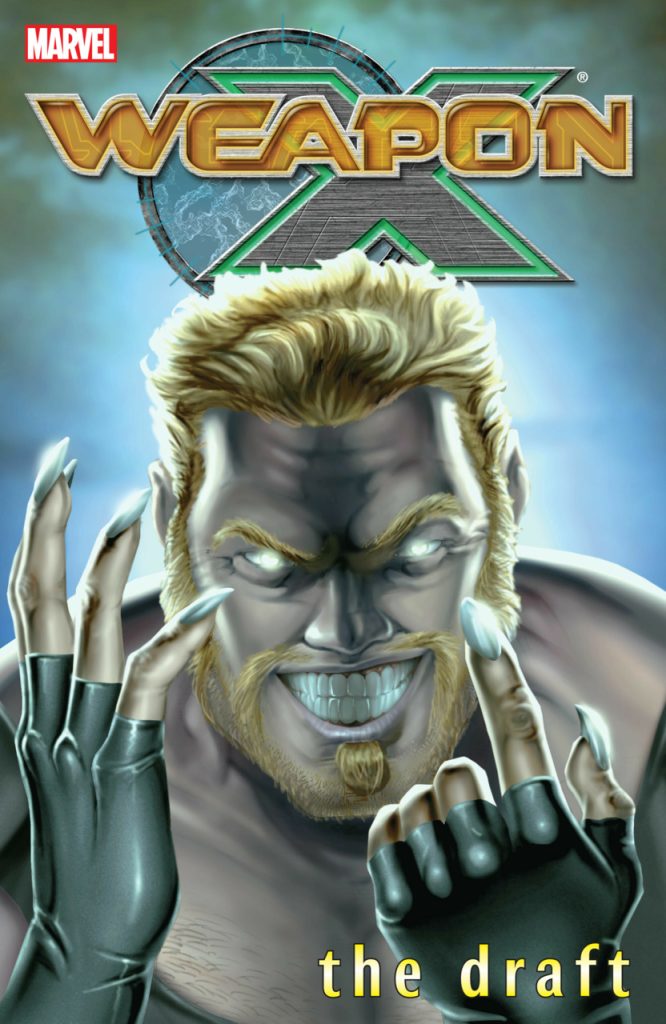
The Draft develops into a page-turning, if occasionally greatly disturbing experience, and starts well enough with a dark dream sequence about Wolverine, but then…
Memo to Frank Tieri: don’t have the narrative captions ridicule a bunch of villains dressed as symbols of the Zodiac, yet then have the most ridiculous mutant ever created as part of the Weapon X team. Welcome back Marrow, the woman who pulls bones from her own body to use as weapons. If only someone had invented knives, or spears or guns she wouldn’t have to endure the immense pain it causes.
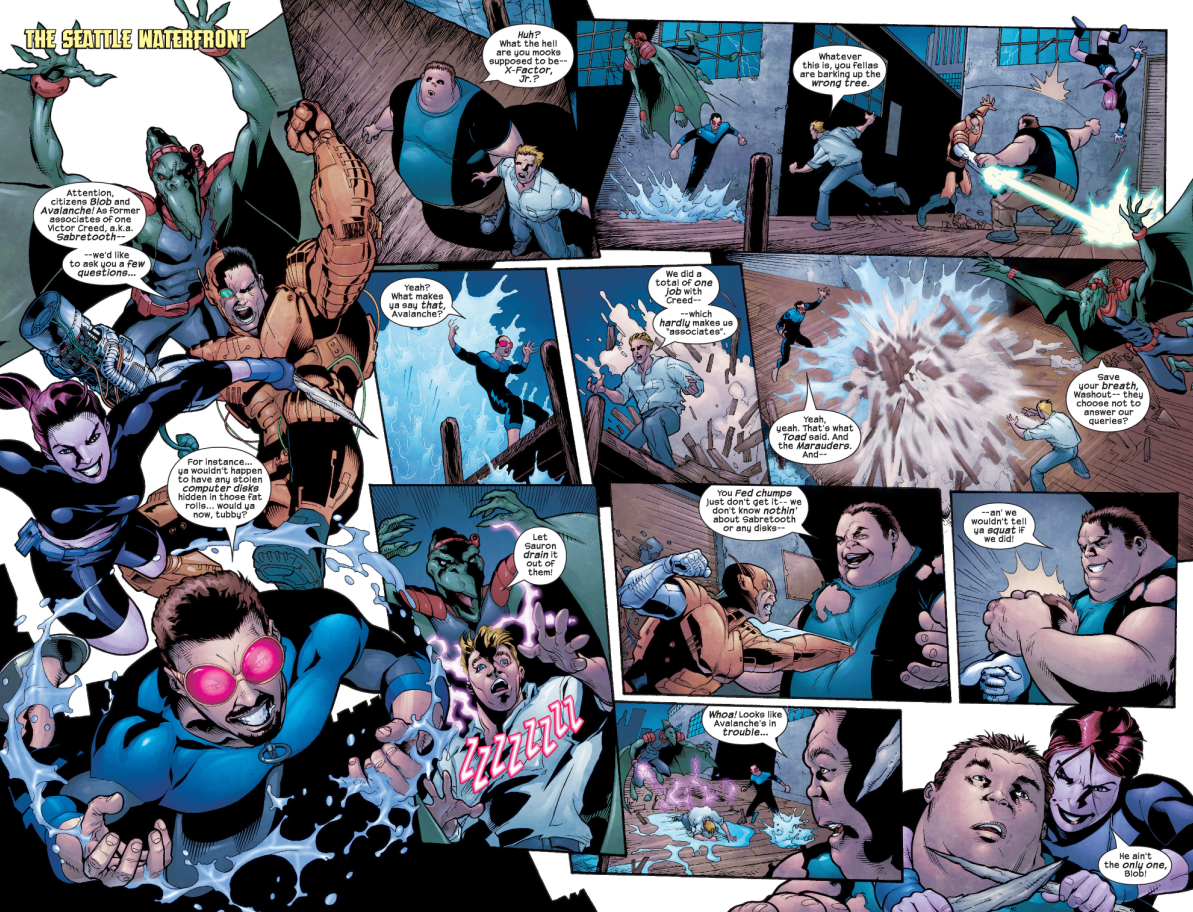
Marrow is accompanied by some other known mutant faces not greatly in use elsewhere as the series began in 2002, including Aurora, Mesmero and Sauron. Everyone involved is introduced via five stories by an assortment of creators, pairing them and showing their recruitment to Weapon X. It’s a pity Ethan Van Sciver’s eye-catching design for Wild Child doesn’t transition into the main events, and Pablo Raimondi’s art on the Kane chapter also impresses, but not all art is up to that standard. Brandon Badeaux on Marrow’s solo features bodies twisted into very strange shapes, and manages to turn Christina Z’s well-intentioned story about manipulation into sordid sensationalism. The best overall is Tieri and Kilian Plunkett introducing Agent Zero.
Tieri is playing on reader knowledge of the Weapon X name being associated with unconscionable and covert practices, not least the torture and transformation of Wolverine, and after the unfortunate start the story begins to gel. Tieri explains why people who’ve previously worked with superheroes are now allied with the worst of their kind, and places them in situations where their powers make a difference. It’s not absolutely necessary to know Tieri was working towards this in Wolverine: The Return of Weapon X, but that material provides greater context.
The plot is that Sabretooth has absconded with information about likely targets, and seems to be murdering those targets before they can be recruited. He’s undeniably the worst among a bunch of unsavoury characters, but Tieri’s intention isn’t that we like them. He’s introduced a moral ambivalence because in most superhero graphic novels you’re supposed to root for the home team, but there are very few characters here to sympathise with.
Georges Jeanty draws the longer story efficiently, so there’s no confusion about what’s happening, but it lacks the dynamism some situations call for. There are also odd anomalies. Why draw the father of a young child in the 21st century with a pipe gripped between their teeth?
That features in a good final chapter where continuing plots come to fruition. Instead of taking the straightforward approach, Tieri has the story told from the viewpoint of a young abducted child, although one with an advanced vocabulary. The source makes events all the more depressing, but it’s by some distance the best on offer here, an absolute shocker.
Tieri and Jeanty continue with The Underground, or the entire series, most of which has never been reprinted in paperback, is available in Omnibus format as Weapon X: The Return, along with the earlier Wolverine material.