Review by Frank Plowright
Ed Brubaker’s comic writing fame is going to rest with his excellent crime stories, and even the superhero work for which he’s most acclaimed works along similar principles. Much of his Captain America run would be a viable action thriller were the superhero aspects removed. It’s a surprise then, to recall Brubaker writing the X-Men, and more so that he began with a space opera serialised over almost a year.
As Rise and Fall of the Shi’ar Empire opens the focus is on Professor X. He’s alienated from most of the regular X-Men and has lost his telepathic abilities, yet is now able to walk. Preying on his mind is that Vulcan has been freed, left to unleash his vast abilities and malign mind on the wider galaxy after having only just been repelled from Earth. The Professor gathers a small team of X-Men and sets into space.
Darwin, Havok. Marvel Girl, Nightcrawler, Polaris and Warpath don’t rank among the major X-Men, and are well chosen for what follows, each of them ensured a moment in the spotlight showing why they’re suitable for the mission. Unfortunately what follows wallows in events gone by. Lengthy explanations of past plots and the politics of the Shi’ar throne are integral, as is explaining Vulcan’s tortured history. As an abstract threat to be dealt with he’s extremely effective, but as an actual presence thrust under the spotlight every three chapters he’s tiresome, although his motivations are at least credible.
Clayton Henry draws the Vulcan solo chapters, and not as interestingly as Billy Tan illustrates the remainder. Tan’s from the school of grimacing heroes, and will happily noodle away on any technology, intact or destroyed, but he’s there for the big moments, and his X-Men have presence even when standing around discussing matters.
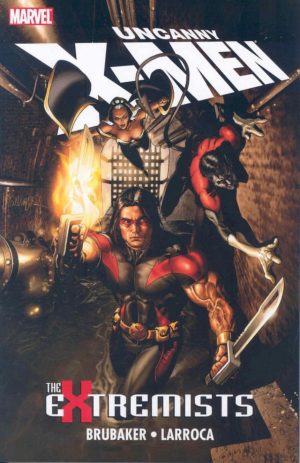
The feeling is of Rise and Fall of the Shi’ar Empire being the result of Brubaker’s research on being handed the X-Men assignment, not a story he desperately wanted to tell, and the departure from his strengths makes for something that’s adequate rather than thrilling. It’s very much about the journey, which occupies two-thirds of the book, and by the time the X-Men arrive in Shi’ar space there’s been a revolution. The best aspect is the finale, featuring genuine surprises in not tying up everything neatly with a return to the status quo. That does partially happen with Professor X, while an epic requiring a sacrificial death is predictable, although surely reversed sometime later. However, the X-Men are split, some returning to Earth for The Extremists and some taking on a mission in space, and the Shi’ar Empire has certainly changed.
Readers well versed in the Shi’ar continuity and not requiring all the explanations may delight in the involvement of the Starjammers and Imperial Guard, but this isn’t the X-Men graphic novel to pick up cold.