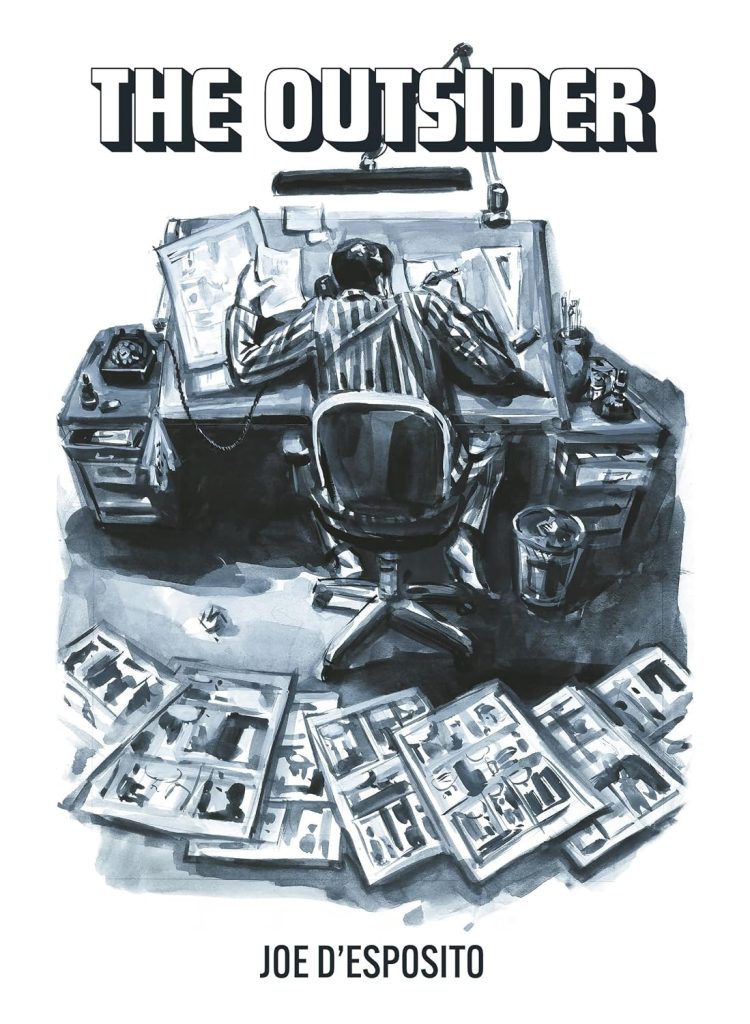
Review by Frank Plowright
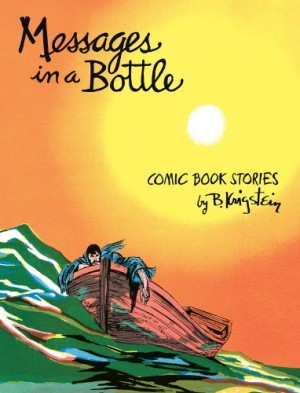
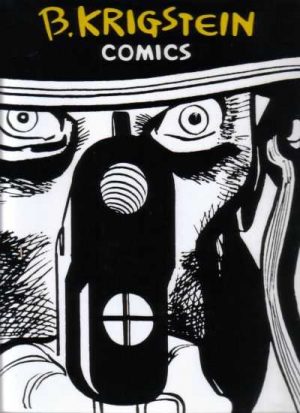
Bernard Krigstein is one of the most admired artists ever to work in comics, and as more people come across the refined innovations of his 1950s art his reputation continues to grow. Is it time then for a biography in the form whose practitioners he felt lacked the ambition to achieve its potential?
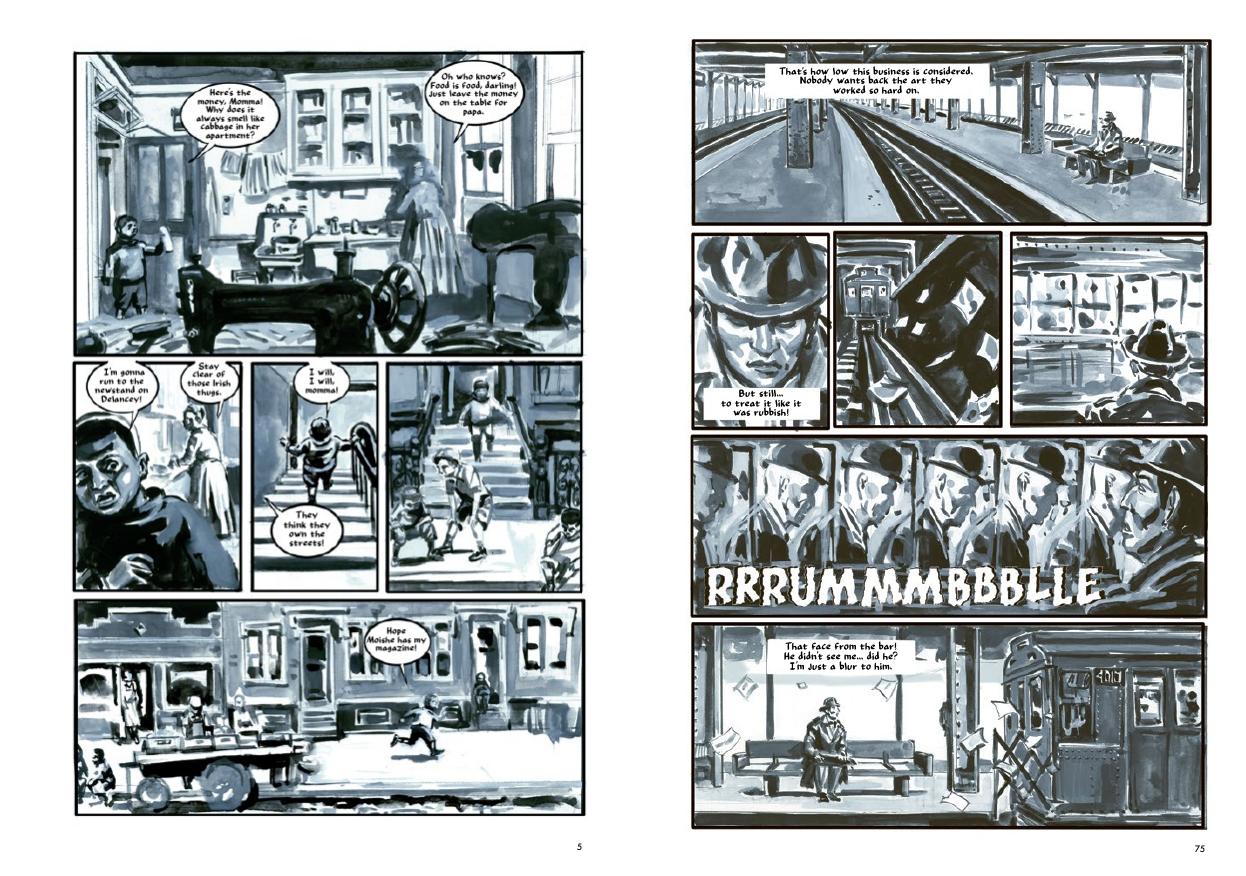
Joe D’Esposito’s choice is to risk telling his story almost entirely via dialogue rather than using it occasionally and relying on narration. Putting words into the mouths of real people is a dubious proposition, giving them a tone of voice they perhaps didn’t have, and risking unintentionally trivialising them. While the focus is Krigstein himself, there are diversions such as a scene detailing Natalie Krigstein’s post-natal depression, also told entirely in dialogue, and the personal nature prompts unease. D’Esposito’s on safer ground with Krigstein’s opinions on art and comics, where he can quote directly from interviews.
Research is diligent, to the point of including Natalie’s comic writing career, but there’s seemingly a shortage of documented childhood recollections for an opening sequence. We therefore have a dramatisation of what’s presumably a memory quoted somewhere about Krigstein not liking the smell of cooking cabbage in a neighbour’s apartment. The result mythologises the mundane. Thankfully, there’s greater substance to the remainder of The Outsider, with D’Esposito handling the sickness of Krigstein’s infant son and the parental worries with dignity and respect. He details Krigstein’s struggles with the mediocrity of the comic scripts he works on, so it’s surprising how he was nevertheless dedicated to fighting the corner of his colleagues by attempting to unionise his career. Some time is spent detailing this, with a dramatisation of a public argument with Bob Kane, not a man known for his principles, standing out.
An immediate obstacle for any graphic novel biography of a comic artist is of the artist drawing it inviting comparisons with their subject. In D’Esposito’s case it’s accentuated by his clever echoing of scenes from comics Krigstein drew. He’s not the artist Krigstein is, but few are, and after some shakiness during the opening scenes D’Esposito settles into a workable greytoned period approximation that’s detailed and transmits emotion well.
D’Esposito doesn’t supply references, so it’s uncertain if a confrontation with serial plagiarising Pop Artist Roy Lichtenstein actually occurred, or whether it’s a dramatic airing of Krigstein’s feelings. Disappointingly, a subsequent career in fine art and teaching is subsumed into what’s presumably a transcript of a 1976 comic convention appearance.
It leaves The Outsider as anecdotally entertaining in places, and conveying feeling on some matters, but not giving a more complete picture of a complicated and driven artist isn’t being true to the man he was. The suspicion is that Krigstein himself would have no time for a biography that concentrates primarily on a comics career he rarely wanted to talk about.