Review by Frank Plowright
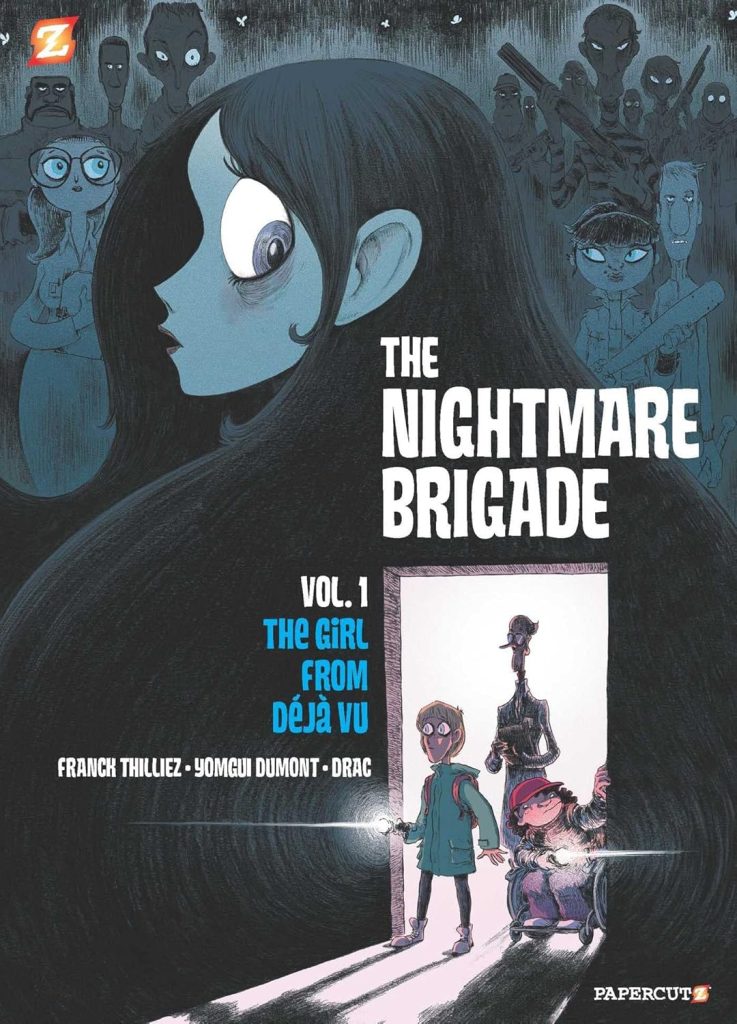
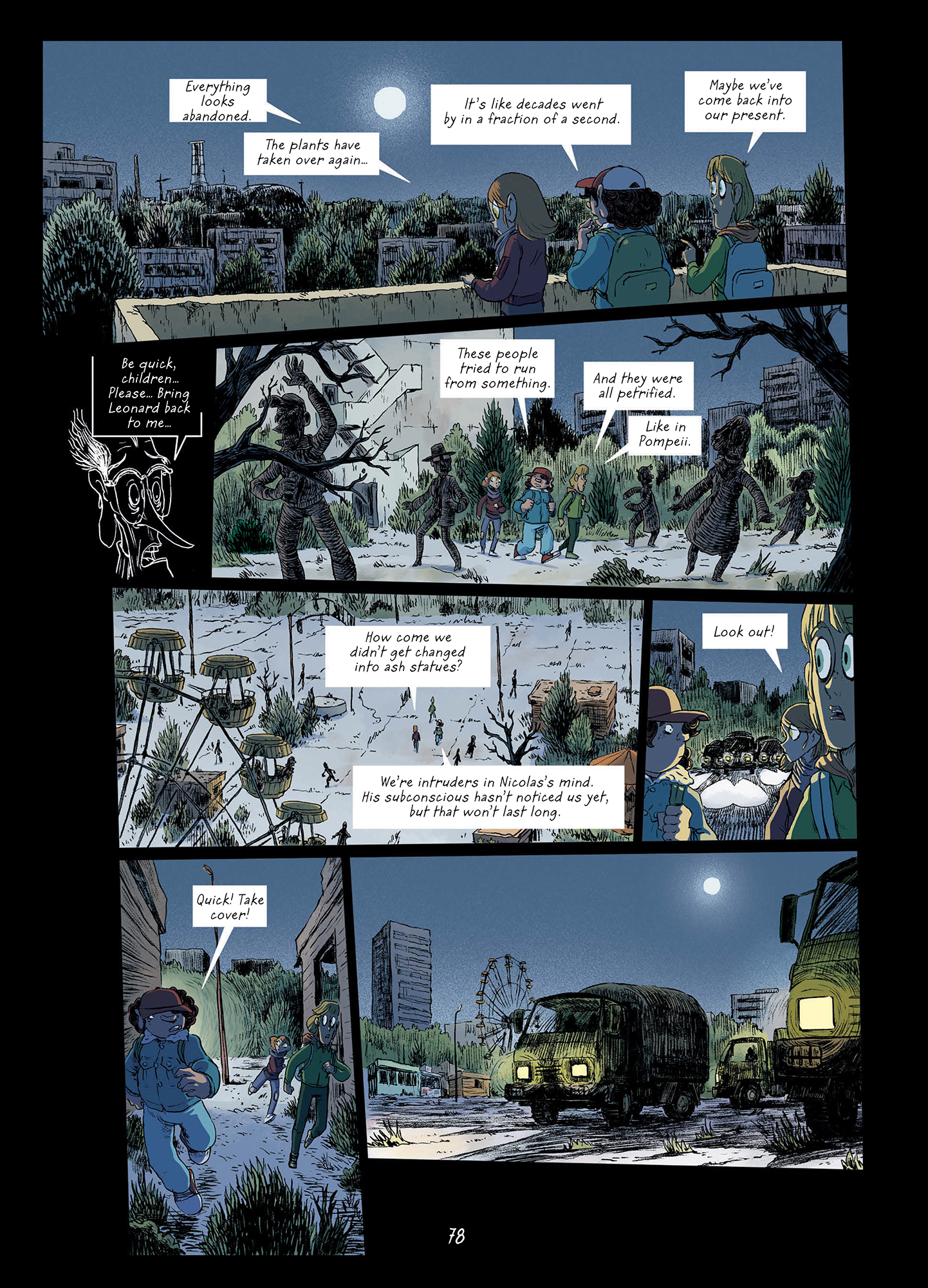
Esteban was found in the woods without any memory, but aged eleven. He’s since lived with Tristan and his father at an institute dedicated to helping people overcome their nightmares. On the face of it this seems a noble occupation, but the way Yomgui Dumont draws the clinic has sinister overtones. It looks like an early 20th century sanatorium, with plenty of tubes and pipes accompanying the modern day computer equipment, while Professor Angus hardly transmits as a comforting figure.
The technology is to enable children to enter the world of dreams, best left to them rather than adults for reasons explained, and for Tristan a benefit is being able to leave his wheelchair and walk again. While there’s danger in the first visit to a nightmare, Franck Thilliex uses it more to explain the possibilities and explore the world of Sarah’s nightmares, while Tristan looks for meaning in seemingly random events. Thilliex also underlines that on no account can the dreamer wake up while Esteban and Tristan are part of the dream, otherwise they could be trapped. If you suspect that explanation heralds later danger, you’d be right.
Dumont’s cartooning is individual and detailed, but deliberately edging toward distortion and ugliness. Eyes are either massive or almost non-existent, and people can have a feral look about them, but the style has an internal consistency and suits a world that changes from reality to something similar, yet unreal. Using white outlines on black as a means of communication into dreams from the real world is a nice touch, and when a creepier form of danger is required, Dumont really delivers.
The Girl From Déjà Vu combines what was issued as two separate graphic novels in Europe, but the English versions are published at just larger than pocketbook size. The ending to the first sets up the second in which Esteban and Tristan attempt to rescue someone trapped in a dream. Events move fast, with Sarah added to the team in callously casual circumstances and very different dangers in a different location occupy the second story.
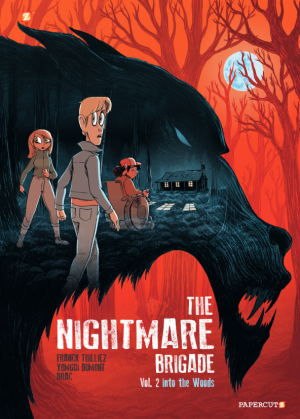
As has already been proved in comics, exploring the world of dreams is creatively lucrative, and The Nightmare Brigade supplies a creative twist on the idea for young adults. Thilliex maximises the drama both in and out of dreams, and Dumont draws a suitably forbidding world, yet set at a level for young adult consumption. Very satisfying. Next is Into the Woods.