Review by Karl Verhoven
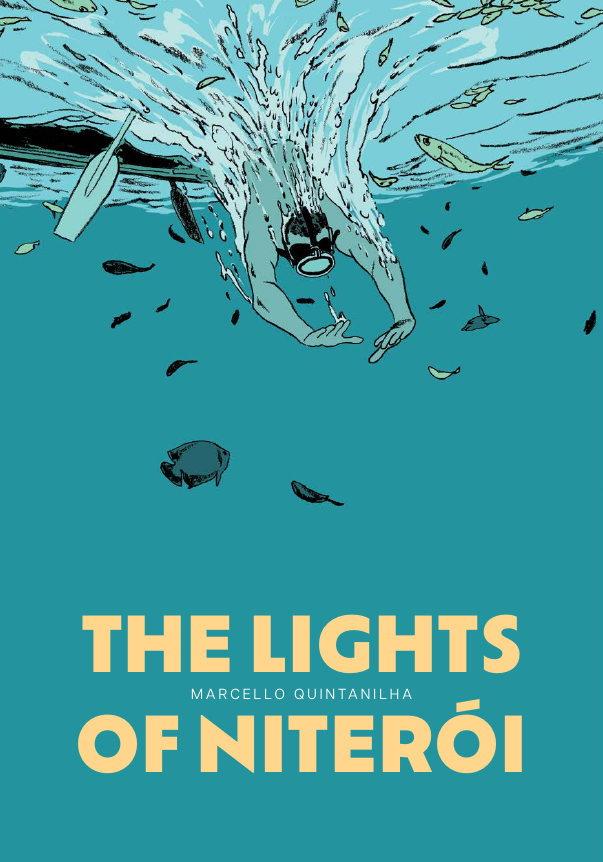
What we all really want from a graphic novel is originality, something we haven’t seen before, and Marcello Quintanilha certainly supplies that with The Lights of Niterói. It’s set in the 1950s, and the opening sequence is two men on a beach noticing an explosion across the bay, surmising that someone is catching fish with dynamite. They’re determined to arrive in time to scoop up plenty of the spare fish. Hélcio is a football player just starring with a professional club and his mate Noel is hunchbacked, and cruelly referred to as Turtle. We see them negotiating to hire a boat, their antics on the way to the dead fish and watch them take the catch on board. It’s leisurely, atmospheric and their bantering conversation comprehensively sketches who two people are.
Hélcio gradually evolves into the featured character, Quintanilha extrapolating what life is like for a football player in the 1950s at various levels of the game. Hélcio is immensely talented, yet prefers scoring goals to remaining in the team position he’s allocated, and doesn’t understand why he’s lectured for playing out of position when he scores more often than not. This is contrasted with the tranquillity he feels when putting on a scuba mask and exploring the clear waters. “It wasn’t like he was entering the water”, explains a never revealed narrator, “but like he was exiting the world”.
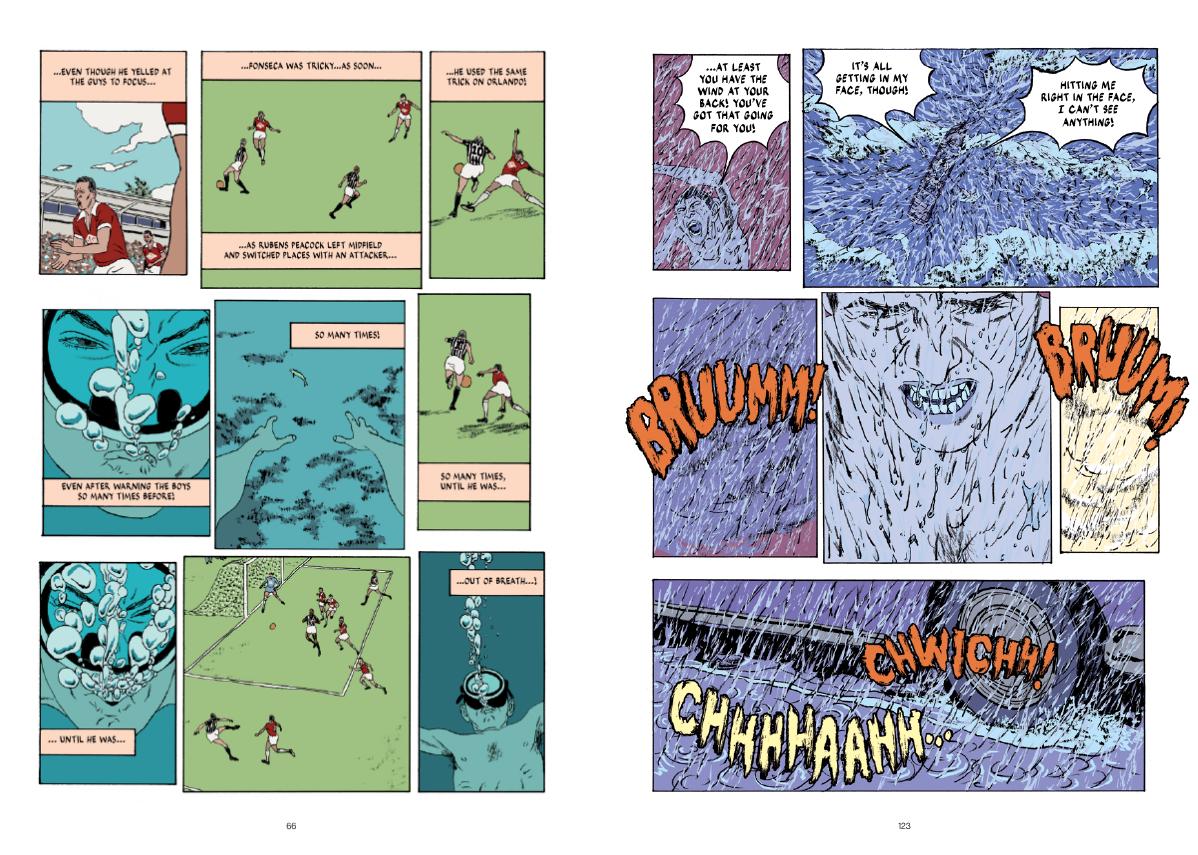
Quintanilha’s art is astounding, yet deceptive. The drawing looks simple, but the composition is masterful. Every single panel is meaningful whether a facial expression, a football match or a pause to appreciate the scenery. He can switch styles where appropriate, and makes excellent use of sound effect lettering for atmosphere. Genetics has dealt Noel a harsh hand, but there’s no ridicule here from Quintanilha, who draws him realistically and writes him as dignified, although insulted by others on a scale from Hélcio’s teasing a mate to vicious invective.
The start is slow, but always engaging, and from there Quintanilha picks up the pace to chronicle an astounding day. The back cover blurb reveals The Lights of Niterói is based on real events involving the author’s father, whose life story unwinds in desperate circumstances. The use of contrast is on several occasions beautifully judged, as is an occasion of angry words ill-spoken set against the tempestuous weather.
The breadth of the line separating fact from fiction is never revealed, so it may be a composite, but what are we to think of protagonist who so casually devastates a friend already living with constant discomfort and ridicule? Separation, though, is eventually the theme as Quintanilha runs a convincing football match commentary alongside Noel’s activities in a nuanced piece of storytelling. Hélcio’s hailed as a hero for scoring, but his mind isn’t entirely on the game, a guilty conscience prevalent as it’s shown how much the victory means to the local community.
The Lights of Niterói is a masterful extrapolation of friendship and a melancholy portent of the future as we realise the friendship will never survive Hélcio’s career trajectory. It prompts a range of conflicting feelings and will take English language readers somewhere they’ve never been.