Review by Frank Plowright
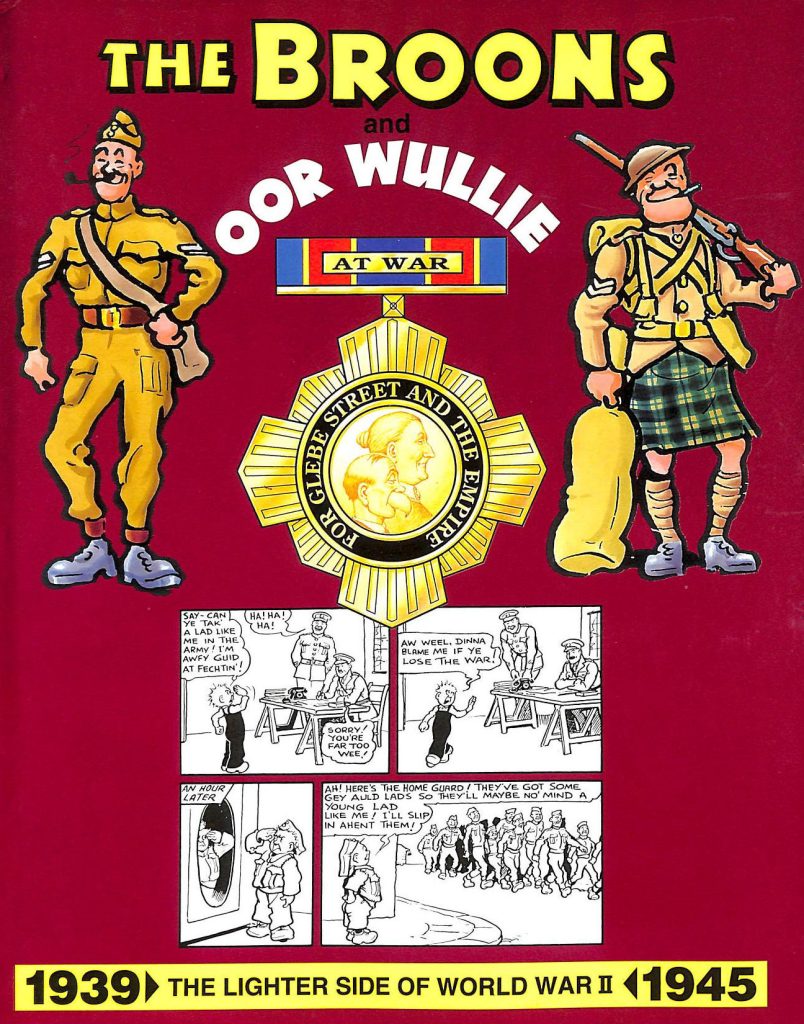
Most hardcover collections of Dudley D. Watkins’ work on the two Sunday Post newspaper strips span a decade, but the shorter six years of World War II provide an equally compelling selection.
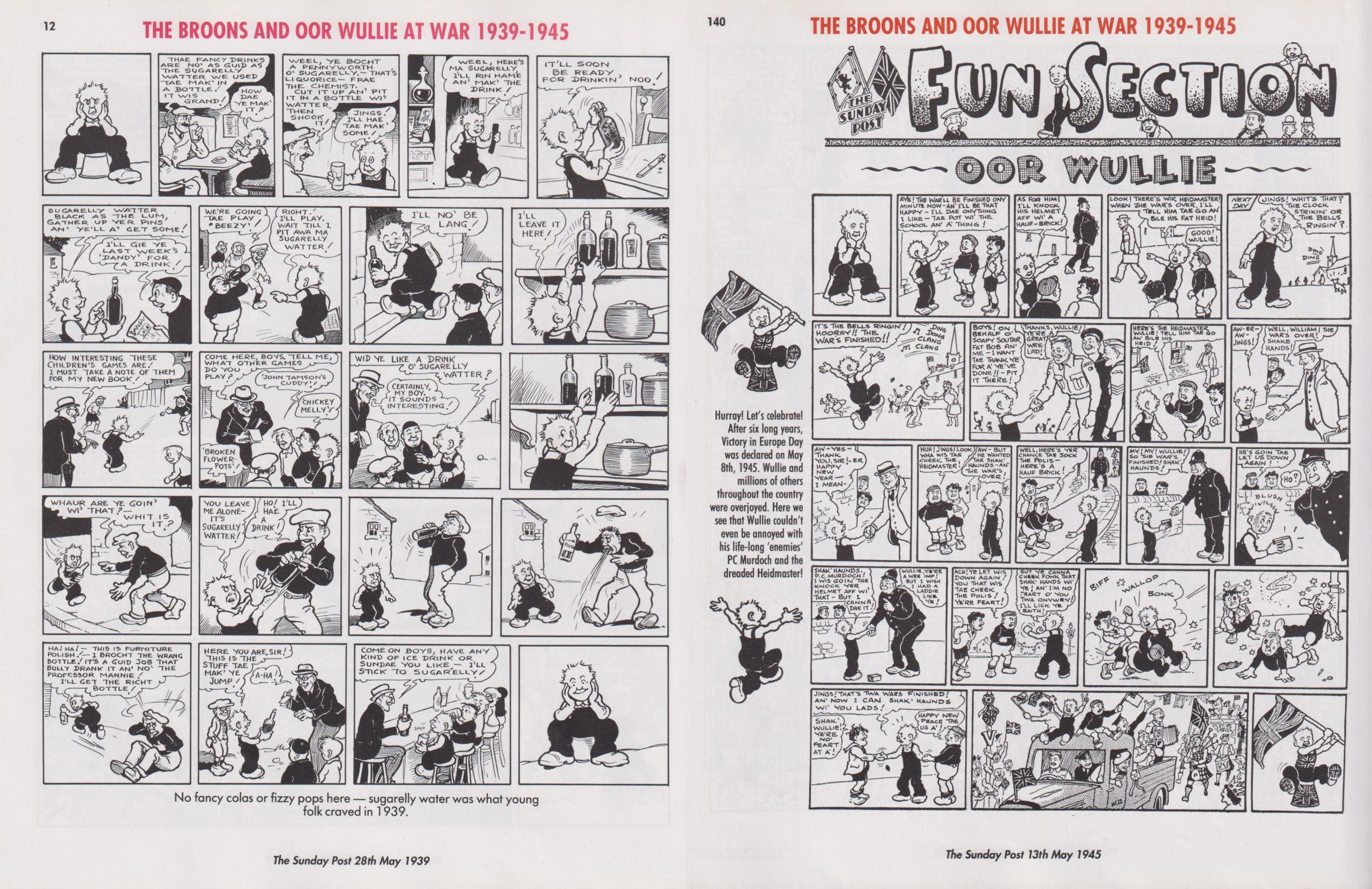
The earliest strip here was originally printed on April 30th 1939, so technically before World War II, and just over three years since the strip’s début. Wullie is a stumpy young lad, yet look at a page from the end of the book and just how far Watkins has developed his style is astonishing. Not only is Wullie slimmer and slightly taller, but the panels are less cramped because people are now always seen from distance. Watkins is probably also using different tools as the lines may be slightly thicker, but there’s a greater refinement. A footnote to an early 1943 strip points out the change, but it’s been gradual and started long before.
With the art being so polished in any form there’s a tendency to under-rate the dexterity of the scripts, in this era definitely attributable to R.M. Low. Wartime deprivations and routines provide a new theme for the gentle domestic comedies, although play a far greater role in the lives of the Broons, marking the distinction of their strips being intended to amuse adult readers while Wullie’s antics were aimed at their children. While Low makes an initial attempt to reflect wartime circumstances, for the most part his plots for Wullie around village and countryside could have been recycled twenty or even forty years later. By contrast the Broons endure blackouts, food shortages, and practising for air raids all before March 1940, while Hen and Joe join the army.
Also notable is how in the early days the language was strictly regional. Even modern day Scottish readers are going to have difficulty with terms such as “potted hough”, around which R. M. Low builds the entire first Broons strip. To save you looking it up, it’s small chunks of meat in a meat-derived jelly. The strips were only circulated within a certain radius of Dundee, and were astutely tailored to that audience, who’d see phrases they used echoed back at them. As seen on the sample pages, at this stage words were phonetically spelled out in Scots dialect. As the strips flow so naturally it’s only when pausing to consider that Low’s facility for authentic local conversation becomes apparent.
It’s felt some of the historical references are now too obscure, and so in addition to the year by year text pages a few strips feature additional explanations, but definitely not enough. It’s unlikely anyone under the age of fifty will understand a Wullie strip about the V sign. Spot the rare strip where Wullie’s not sitting on his bucket at the end, and how many plugs there are for DC Thomson comics The Beano and The Dandy.
Like all the other collections reprinting strips by Low and Watkins, there are many delightfully inventive strips that transcend their date. Also like all other collections reprinting work by Low and Watkins, there’s no credit for Low and the only mention of Watkins is three lines on the dust jacket. It’s poor compensation for someone those lines refer to as “a genius in the field of cartoon art”.