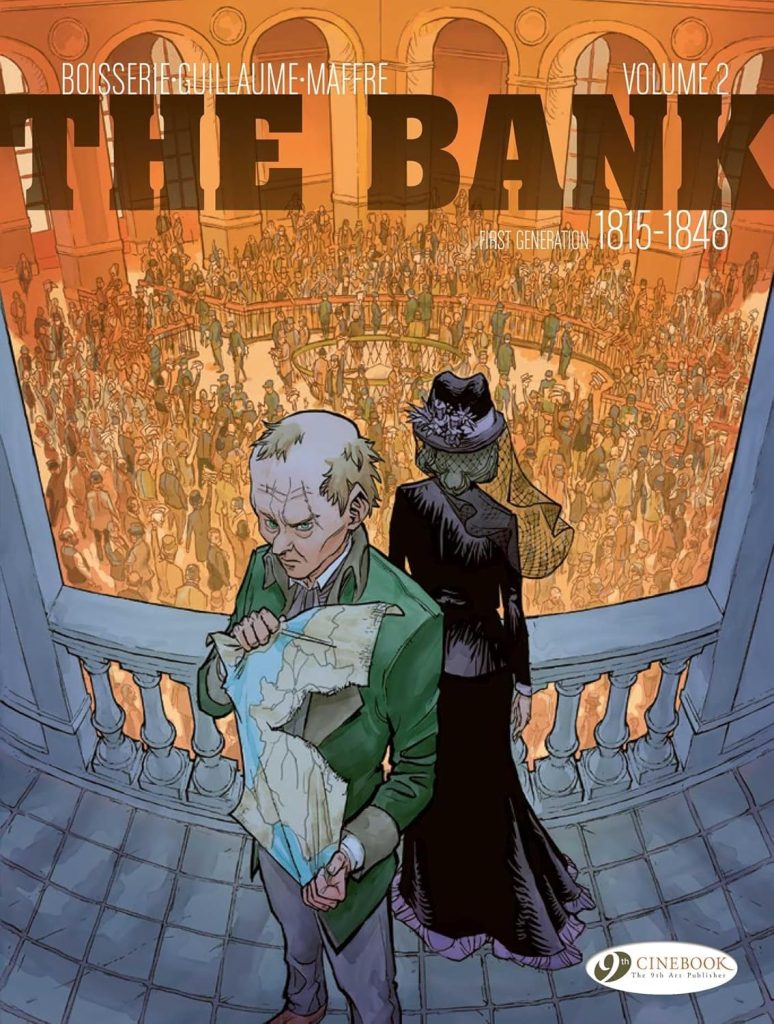
Review by Ian Keogh
The Bank is a generational saga concerning the fictional de Saint Hubert family, first seen in London at the close of the Napoleonic Wars as refugees stripped of their estate and lands by the revolution. In The Waterloo Insider Charlotte and Christian are teenagers, and although she begins as a figure of sympathy due to her circumstances, by the end we see Charlotte conclude it’s a kill or be killed world. When plans concocted with her brother go wrong, she’s unconcerned about leaving him to be hanged for their crimes while she escapes back to France.
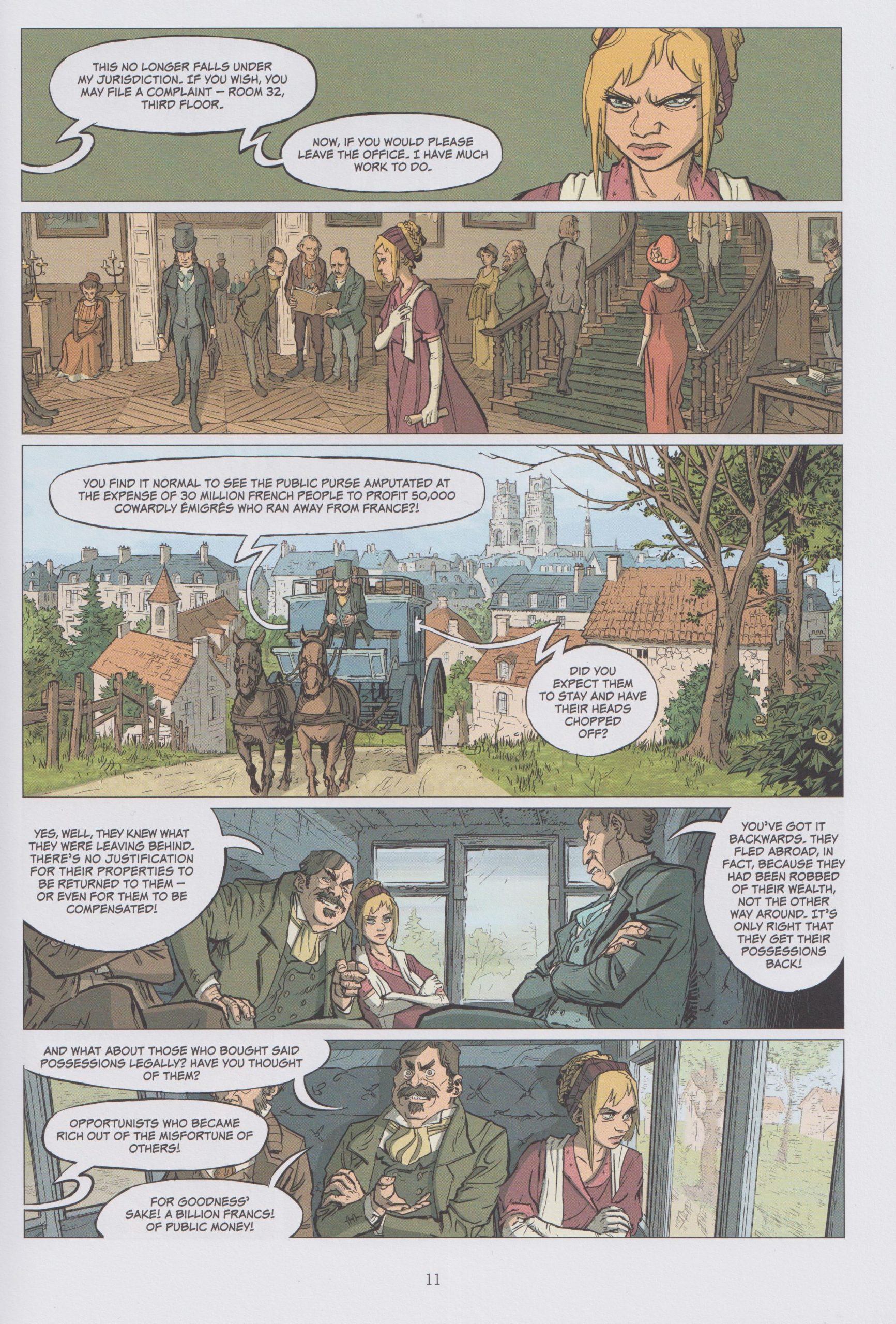
Pierre Boisserie and Philippe Guillaume weave their story around historical facts, so the possibility of Charlotte pulling herself from a life of prostitution a second time is due to the restored monarchy wanting to make restitution to nobility whose lands were confiscated during the Napoleonic era. We’ve already seen her as an astute judge of circumstance, and she works her way into a situation where she’s able to exploit that financially. However, she returned to France pregnant and as the story jumps forward a few years there’s no indication as to what happened to the child, and when leaving she believed a potential problem had been solved, but instead she’s cultivated a lifelong enemy.
Such large themes are the bread and butter of the mid-19th century popular novel, and they’re credibly exploited here as the writers move toward another jump forward for The Baron’s Accounts.
Julien Maffre continues to use cartoon expressions on faces, sometimes exaggerating them beyond the need to make the point, but this is otherwise art showing considerable effort. Maffre defines places and situations appropriately, be they distressed and shabby or opulent and grand, while period clothing is well researched. In a story where shocks fuel the plot it’s essential to have grounding, and Maffre supplies just that very attractively.
Much has changed for a now middle-aged Charlotte by the story’s end, and it’s been another page-turning journey.