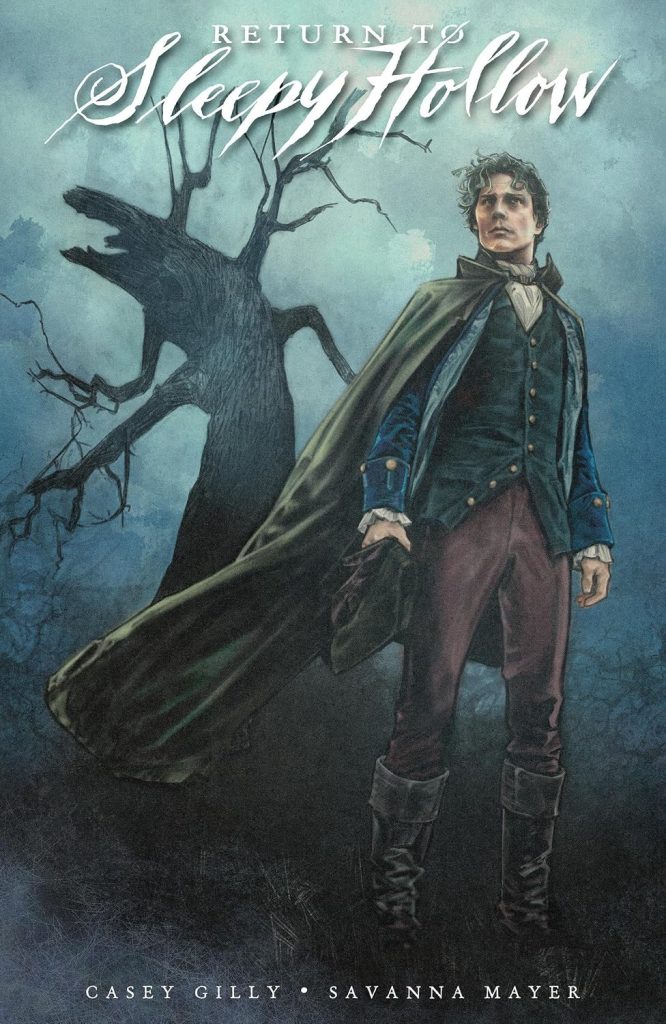
Review by Ian Keogh
Washington Irving’s The Legend of Sleepy Hollow is a spooky treat that’s continued to thrill new readers for two centuries, yet the most famous adaptation is Tim Burton’s film, which recast Ichabod Crane as an investigative police officer who ends a supernatural threat.
Casey Gilly and Savanna Mayer pick up in 1814, fifteen years later. Crane has become a well-travelled debunker of paranormal activity, accompanied by a now grown Masbath, but circumventing the end of the film, Gilly has Katerina van Tassel return to Sleepy Hollow to take over the family funeral business. The events of the film and subsequent moments of importance are summarised in the opening chapter, while Gilly builds the community of Sleepy Hollow. Katerina’s daughter Lottie is now in her early teens, plagued by nightmares of the supernatural and occasionally possessed, such as when she forges a letter asking for Ichabod’s help.
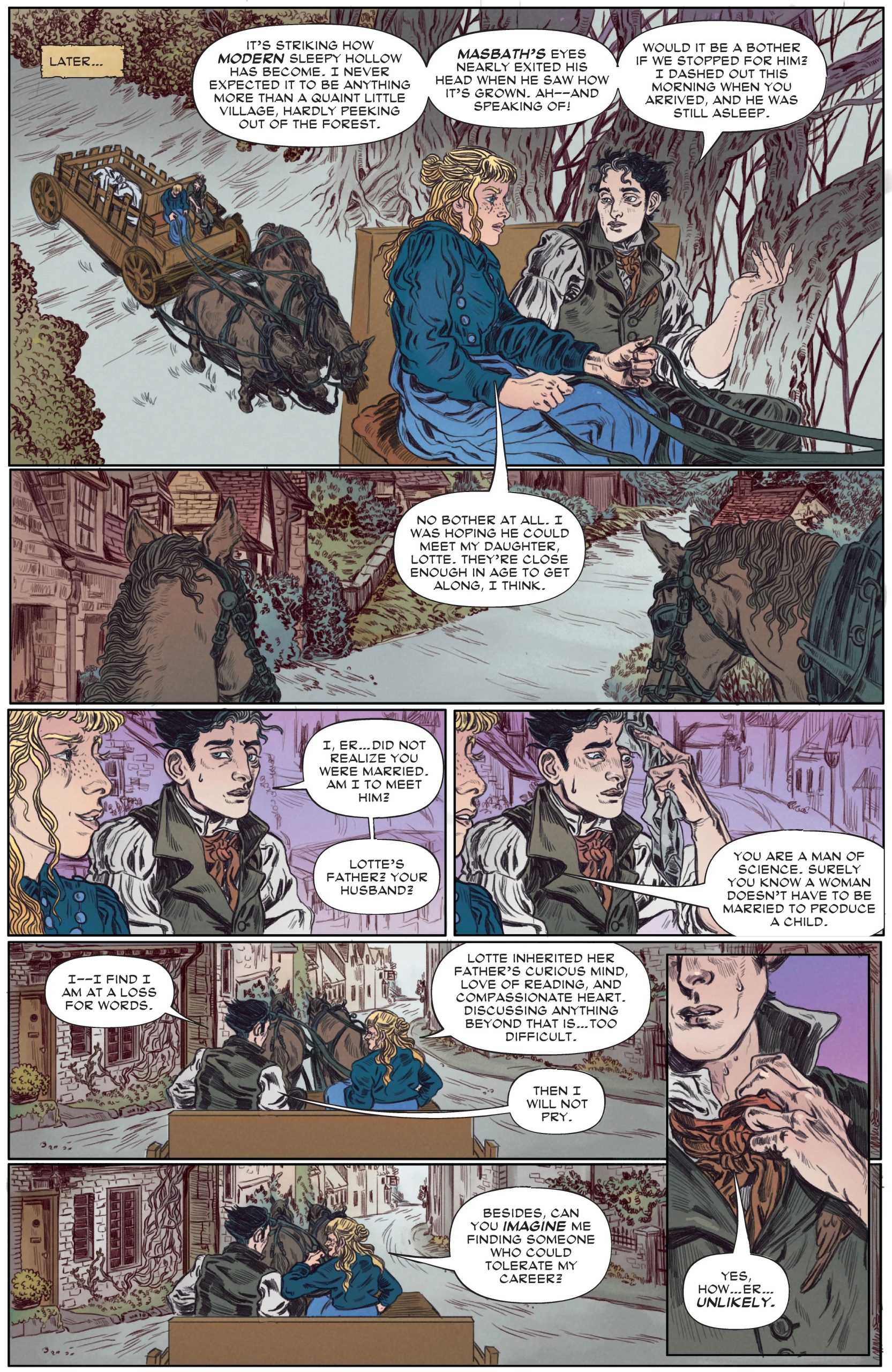
A period atmosphere is cultivated well, with Gilly applying the moral strictures of the era. Katerina is frowned upon both for her trade and having a daughter without being married, although for an investigator Ichabod is a little slow on the uptake concerning the parentage. In the 19th century there’s both greater religious observance and greater belief in the supernatural, although it’s the latter that predominates here.
Mayer’s art is rich in researched period detail, but there’s an almost modern look to the people. A style that’s decorative until the horrors manifest is heavy on detail, with fabrics rumpled and features expressive. The detail applied to the supernatural events provides a grim contrast.
Part procedural mystery, part romance and all horror, Return to Sleepy Hollow supplies thrills and chills in revealing the truth about Sleepy Hollow.


