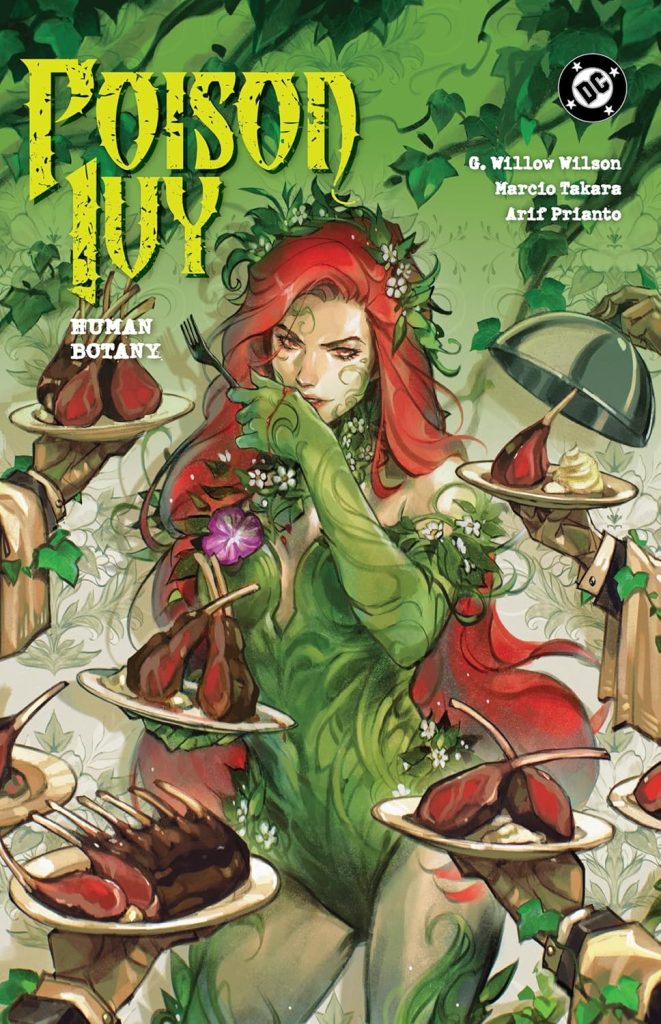
Review by Frank Plowright
Human Botany opens with Poison Ivy’s 25th issue, the celebration meaning assorted short stories by creators other than the primary team of G. Willow Wilson and Marcio Takara, and largely spotlighting the supporting cast. The art is good throughout, but in service of material not approaching Wilson’s work. The one exception is Dan Watters looking at misguided Agent Robson’s perverse ideas about love powerfully illustrated by DaNi, and leading into what will come.
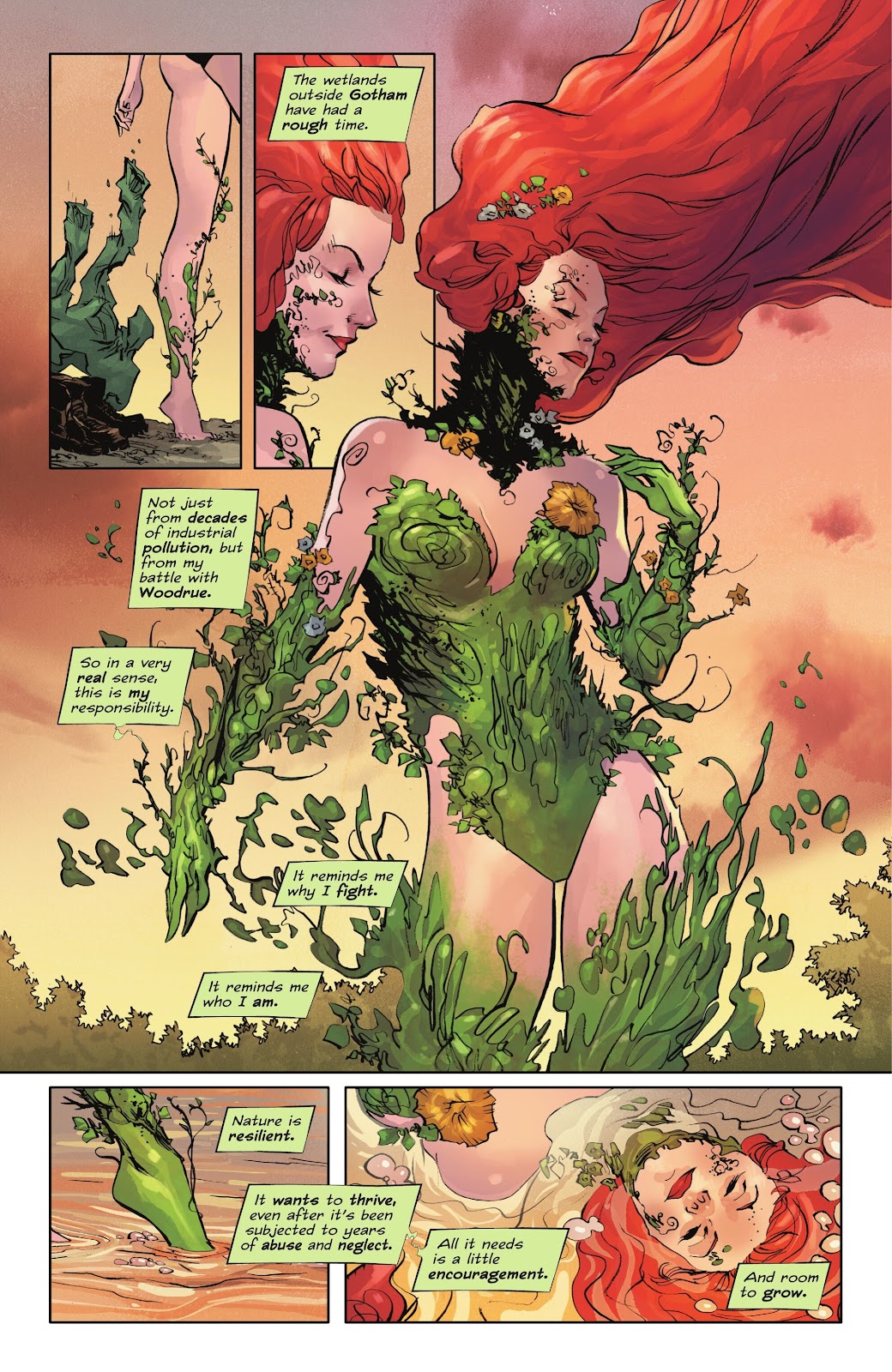
With that done Ivy has the time to explore an unoccupied town that’s suddenly appeared in the wetlands outside Gotham, while the extreme activities of the Order of the Green Knight are dragging the eco-acitvism movement into the dirt.
Origin of Species was a slight dip down the scale from the quality level set by Wilson and Takara, but what was revealed there has relevance to Human Botany, which restores the joy and delight. Wilson’s plot is clever for taking something with possible global ramifications and having the centre being a ghost town in a swamp. Ivy is placed in a metaphorical box, but escape from it leads to Wilson broadening her world and that of the supporting cast while also broadening her capabilities and possibilities. It’s a substantial shift, but achieved with little disruption and maximum logic, and in case we’ve forgotten, Wilson provides a recap of Ivy’s existing talents in the final chapter.
Wilson’s record with characterisation is exemplary overall, except not always as strong when it comes to the personal relationships, and there’s another potential mis-step here as supporting character Janet rather suddenly finds herself attracted to Killer Croc. While the possibility of danger certainly heightens emotions, this still comes from left field as a little too unlikely.
Takara’s art has impressed throughout the series, and continues to do as he develops, now paring the panels down to necessities, yet with an eye-catching delicacy. Those panels would look great in black and white, but Arif Prianto’s colours transform them into a different kind of beauty, vibrant and compelling.
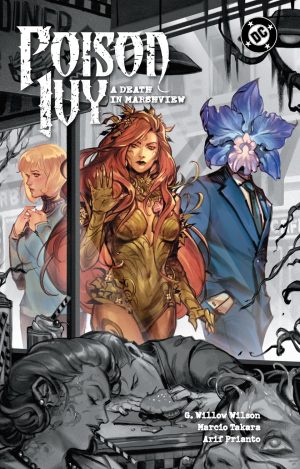
As engaging as it is, Human Botany is merely a prelude, certainly answering the questions to mysteries introduced at the start, but in an enlightening way setting up problems to be explored during A Death in Marshview.