Review by Frank Plowright
With so many young adult graphic novels contemplating the problems teenagers face, it’s surprising that there’s not yet been one about acne, that scourge of puberty. Well, now there is, at least initially.
Rex is twelve, short for his age, and on the day he’s due to start seventh grade he awakens with a volcano right in the middle of his forehead. The next day it has companions. It’s not as if Rex hangs out with the popular crowd anyway, and an early example of continuing embarrassments is the kid with crutches being picked ahead of him for a basketball game.
It’s deep into the book before there’s confirmation, but it would seem no coincidence that both author and lead character are named Rex, and Pizza Face is set in the 1980s. Although beginning with the idea of zits, Rex Ogle takes the story more in the direction of general bullying, although in moments rather than relentlessly. The fictional Rex is picked on for his height and other matters, although his holding grudges without explaining them and not thinking before he opens his mouth does him no favours.
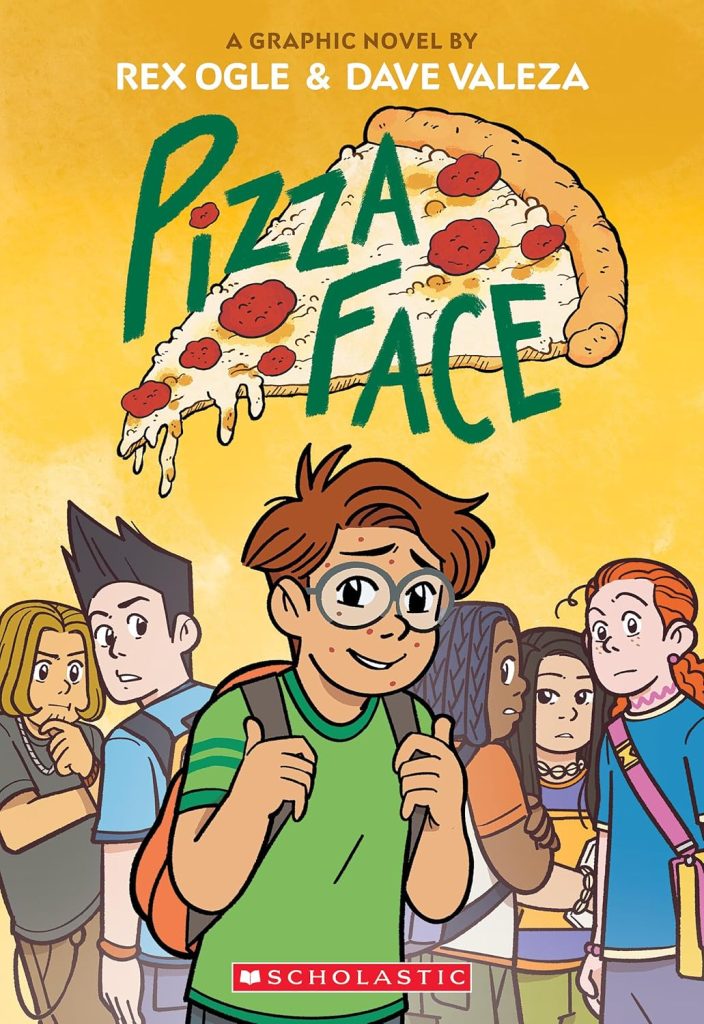
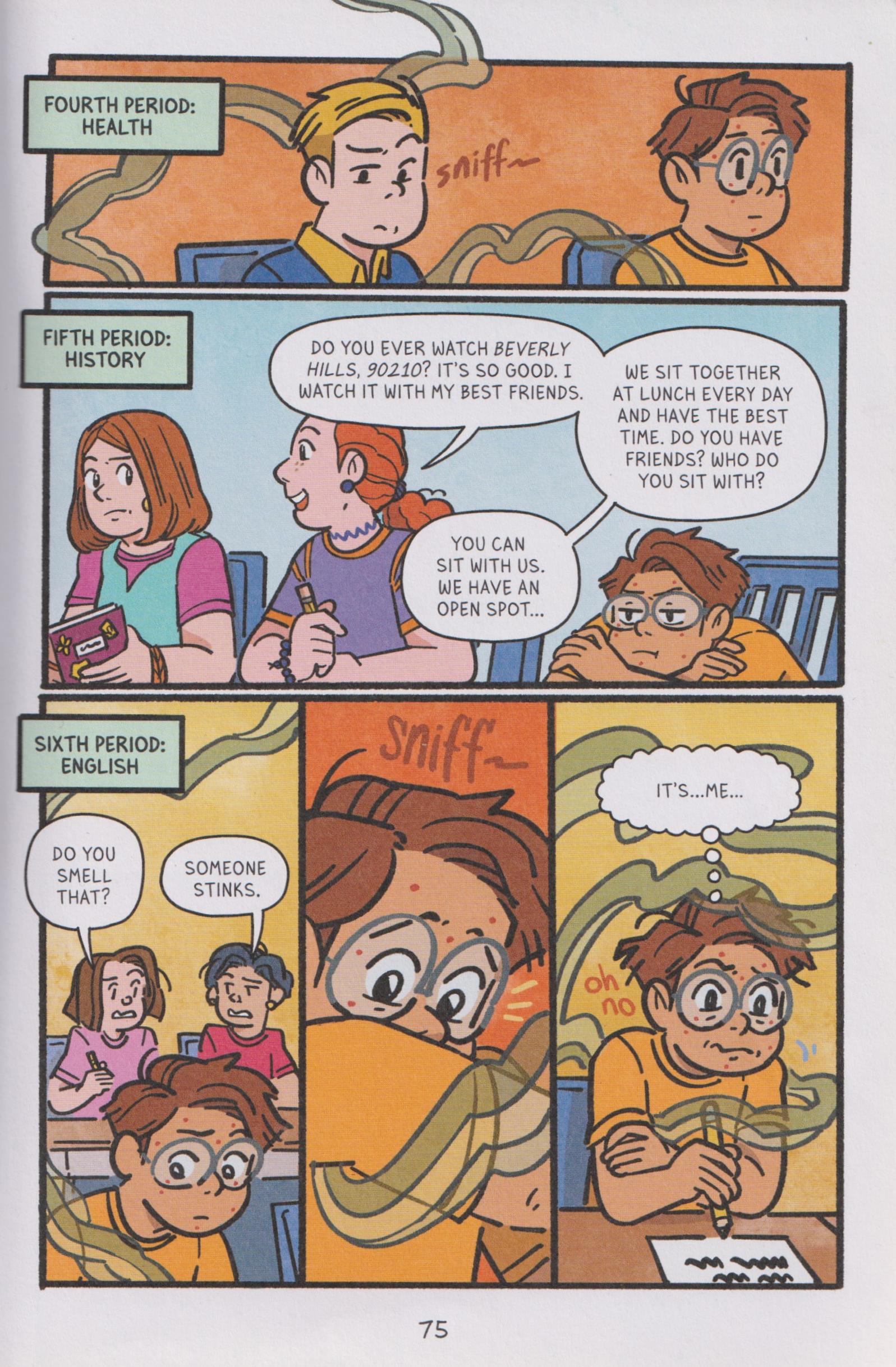
His misadventures are very neatly illustrated by Dave Valeza, who brings character to a cast easily identified, yet look closely and its established with an admirable simplicity. His method of indicating facial spots is via little red dots, a seen on the cover, and they’re not just seen on Rex.
For all that and the title, acne only supplies brief moments, and Pizza Face is more concerned with youngsters finding their comfort zone in school as puberty kicks in. That’s a slight disappointment, as what’s suggested as having an original theme treads the same path as many other young adult graphic novels (see recommendations). Ogle feeds in other aspects of puberty such as voice changes and needing to wash more often, and if the Rex in the story is his younger self, he’s unsparing with the viewpoint. Even allowing for Rex finding his way in uncertain circumstances, he’s very much the author of his own misfortunes much of the time, but one mitigating factor reinforced is his family not having the money to indulge him. This is so common, and dealt with in other graphic novels, but Ogle delves a little deeper than parents just pointing out there’s no money. His mother is somewhat contradictory, which is a nice realistic touch.
Also good is the problems of other kids getting an airing. Rex is picked on for being small, but his opposite is only a little older, yet tall and bulky, and so stands out for that reason and it’s shown why others behave the way they do. Rex’s problems accumulate, but Ogle avoids the suggestion of easy answers solving everything, except for one case where he does receive help. Rex eventually developing a sense of awareness beyond himself is nicely handled, and the message to take away at the end is not too worry so much about what other people think of you. True friends aren’t going to care about a few spots and associated problems.
Charm and understanding are the watchwords here, and looking back to a pre-cellphone world is also welcome, although that might not be a selling point for the target audience. Rex turned out okay and became a writer, and that’s a good example for smarter kids.