Review by Frank Plowright
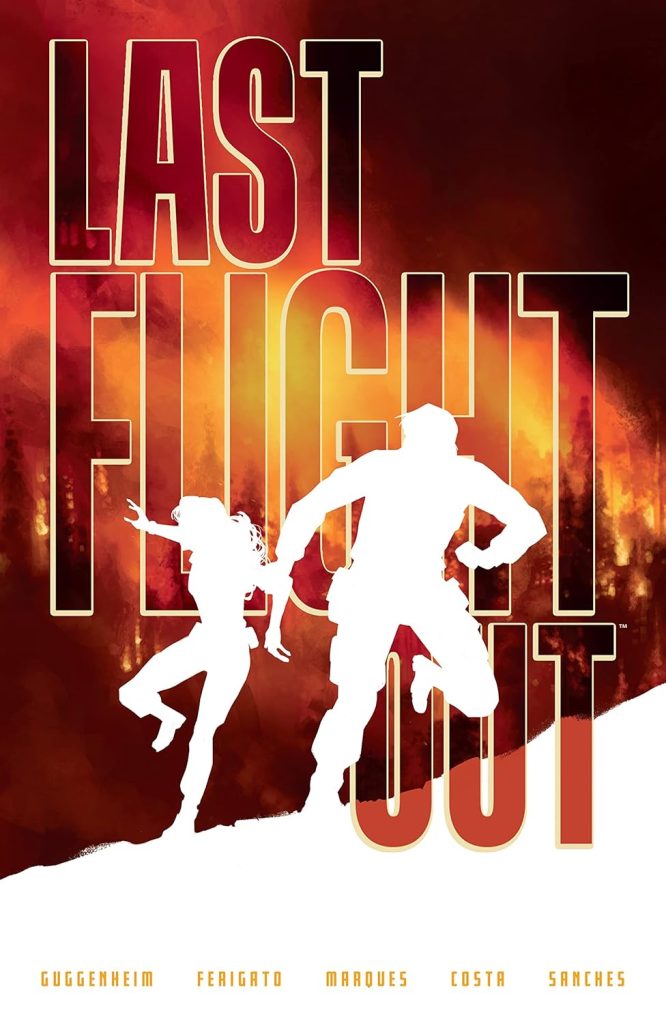
Last Flight Out picks up in 2031 by showing Dr Ben Caewood prioritising his work over being present when his daughter is born. He seems equally preoccupied when his wife dies and Sara survives a car crash. That doesn’t seem to have been lesson enough about what matters, though, and there’s little interaction with his daughter going forward. It’s a clever piece of writing from Marc Guggenheim, as after ten pages every reader will have made up their mind about Caewood. Only then is it revealed what Caewood’s been working on. It adds to the desperation of what develops.
Unpleasant though it may seem, Caewood’s single-minded dedication has a purpose when the planet is going to hell in a handbasket. After years of neglect and a continuing poor relationship as Sara became an adult, Caewood now wants contact, and he’s influential enough to be allocated a squad of military specialists able to navigate a dangerous world in which he has no place.
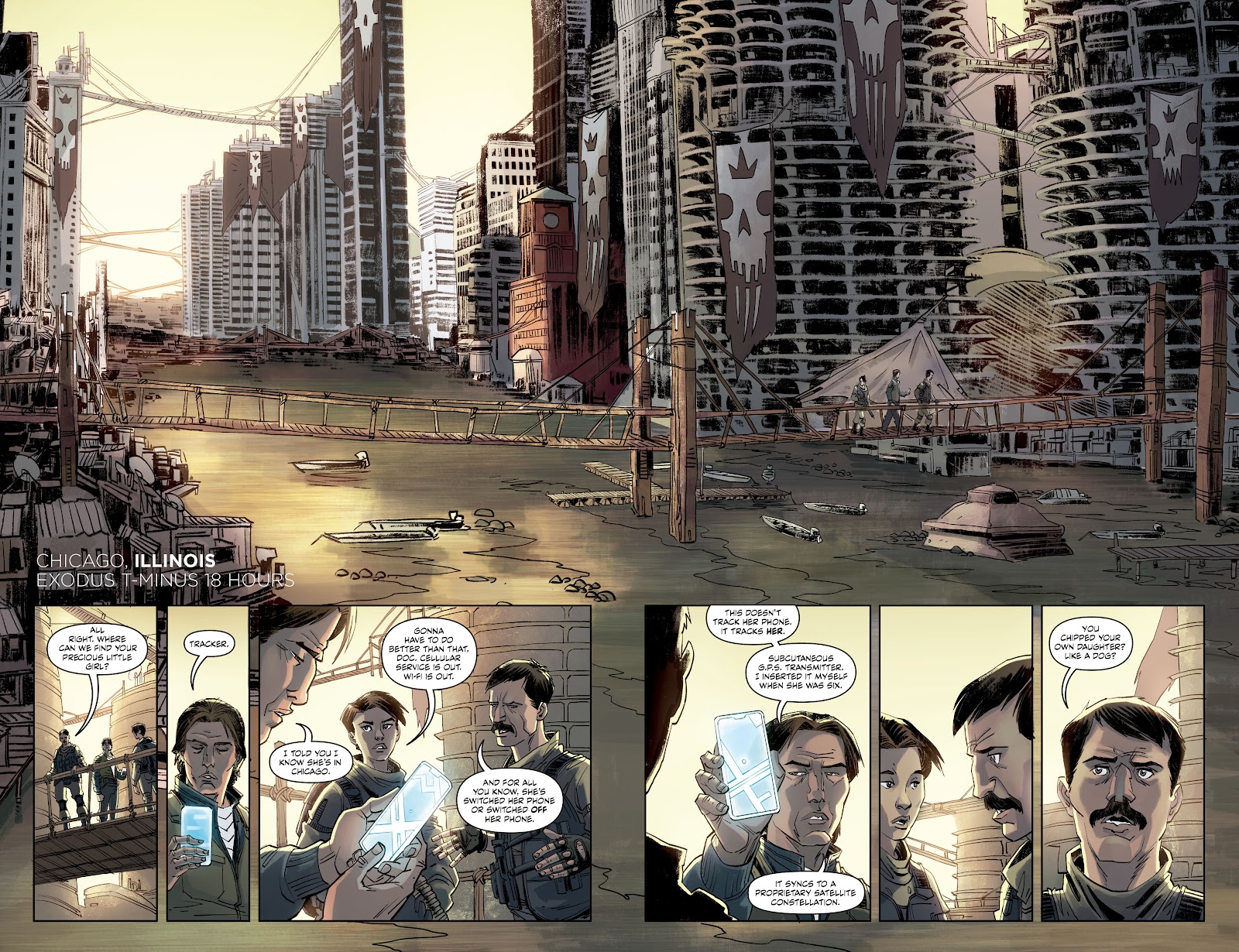
Guggenheim’s career began in comics, but he’s better known as a TV writer, and Last Flight Out hits all the right spots as an action thriller with an understandable human predicament at its core. Artist Eduardo Ferigato handles both aspects extremely well, never slacking in showing the detail of a dangerous planet, yet also more than capable when it comes to the extreme feelings. There are elements of John Romita Jr. about the faces, but the remainder is drawn in a compact action style.
As Caewood’s mission continues in the present, there are plenty of flashbacks to the past along with text pages filling in the situation and the major cast members. Guggenheim infuses these with the dramatic strength applied over the opening sequence, and in the present day keeps throwing in viable complications when readers know the clock is ticking, although he adroitly muddies the waters regarding that.
Eventually there’s more than a touch of Die Hard, and the suspicion is what with Guggenheim being a screenwriter that Last Flight Out is either a script he couldn’t bring to film or the graphic novel is a step along the process of doing so. Whether either is the case or this was always intended for comics, it perfectly suits the form. An epilogue page is strange and unnecessary, but disagreements and tension are maintained until the end with no way of knowing how things will play out. Very much recommended.