Review by Ian Keogh
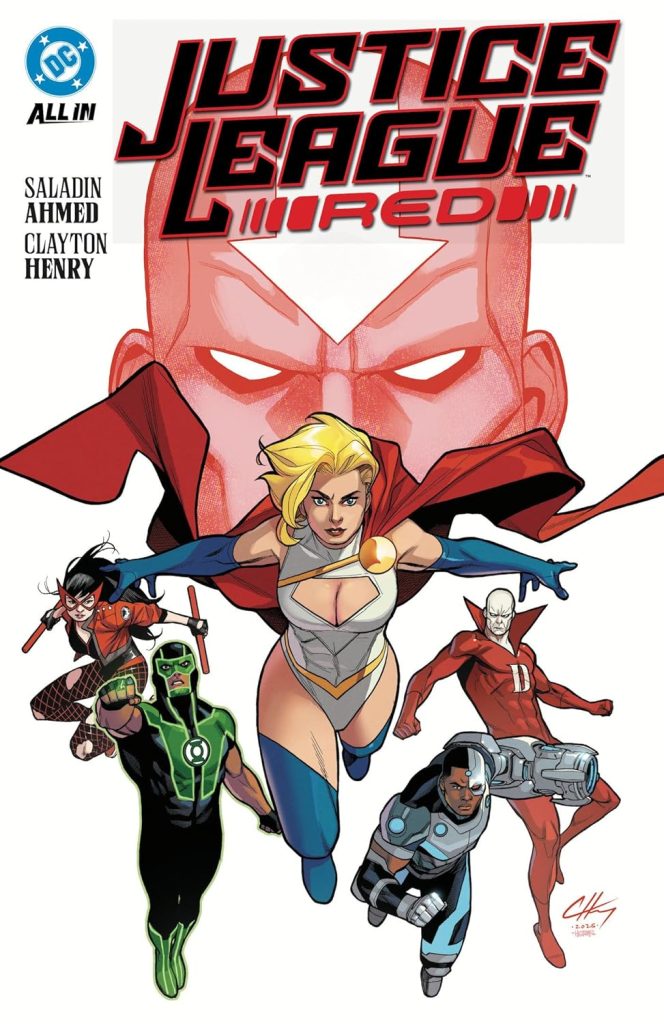
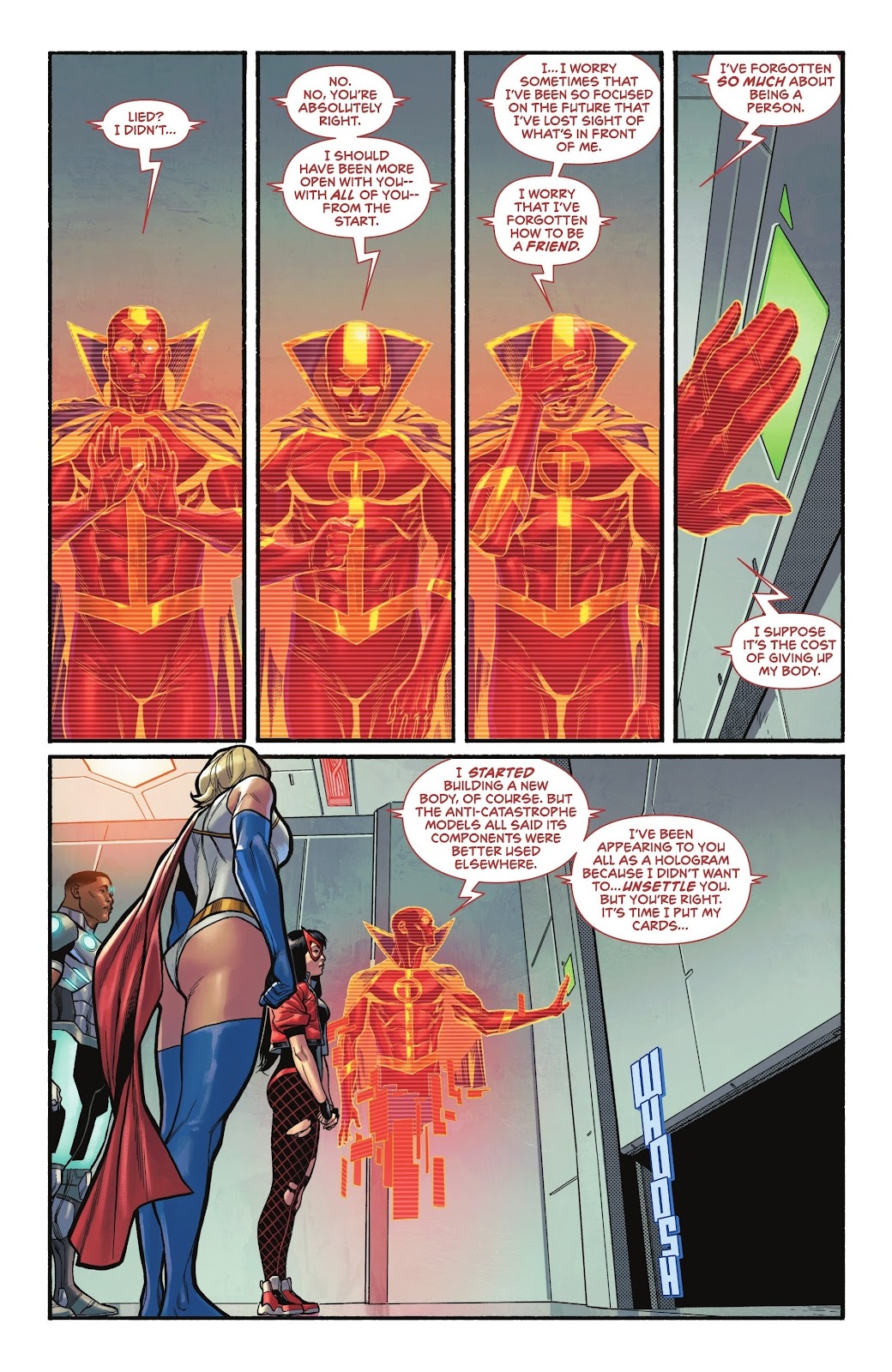
Shortly after the Justice League regroup, artificial intelligence Red Tornado begins extrapolating the future. In every scenario the recent reformation of the Justice League begins a series of events leading to disaster, and according to his configurations informing them about this only makes matters worse. What’s needed is a covert team available to make small adjustments at various critical junctures, and they’re seen on the cover.
The justification seems slim and extremely convenient as a means of creating a new team, but Saladin Ahmed incorporates that into the plot from the start, with the heroes rapidly developing suspicions about Red Tornado’s motivations. Ahmed covers some obvious questions readers will ask, but ignores others, too often dropping back to the default of mistrust and manipulation.
Good superhero art from Clayton Henry during the creatively constructed action scenes postpones the questions for a while, and Henry gives the cast suitably heroic poses when they’re discussing how things don’t add up.
The stench of metaphorical rotten fish rapidly becomes overwhelming, but Ahmed’s plot needs that as the Justice League Red members are forced toward a decision about whose truth carries the greater weight. In times of media manipulation, fake news promoted as truth, and the truth dismissed as fake, Justice League Red is very contemporary. However, it depends on the cast of experienced heroes being all too easily deceived, which is unconvincing. So is Deadman throughout. He even explains how no-one can see or hear him while talking to someone who can.
Black Adam is used well, and Red Canary’s coming of age also resonates, but too little else succeeds. Given manipulation is such a theme, Ahmed might have set everything right in the final chapter, but he doesn’t, instead opting for the often seen scenario of a villain causing the team to doubt themselves for several pages of padding. Too many lingering questions aren’t addressed, and ultimately this is a fudged redemption arc.