Review by Frank Plowright
The House of M world was a divergent reality where for once mutants weren’t persecuted, but instead considered royalty. Other collections deliver the main story, while this is a bulky mopping up exercise, gathering stories exploring that world with no great impact on its continuity.
Three extended stories feature the dimension-hopping Exiles, the students otherwise featured in New X-Men: Academy-X, and the strangeness of ‘Mutopia X’, while Carol Danvers, then Ms. Marvel, stars in a shorter tale.
Delving most effectively into the tensions that still exist between mutants and humanity, in ‘Mutopia’ David Hine has humans as the minority resistance group fighting against the mutant elite. Their prominent target is Danny Kaufmann, known to most as a respected businessmen, but to the police as corrupt without ever being caught being so, while the central character is ordinary police detective Ismael Ortega. He has personal problems, and Hine ensures they become worse amid a consistently insightful and humane look into how society has changed, although with occasional sadistic interludes when Kaufmann features. Minimal use of Bishop provides the only recognised superhero. Lan Medina draws two contrasting worlds expansively, bringing a very mixed cast to life, and coincidentally designing one of them as looking very similar to Beak who we’ll meet later. It’s not immediately clear that the fifth chapter occurs when everything has returned to normal, but it makes for an excellent ending.
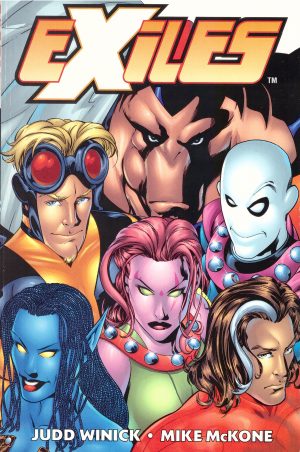
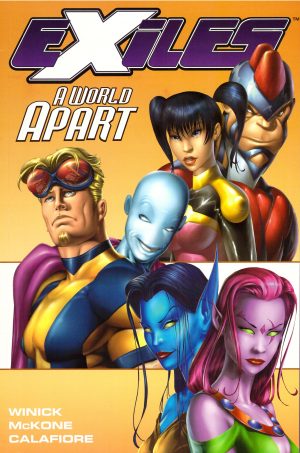
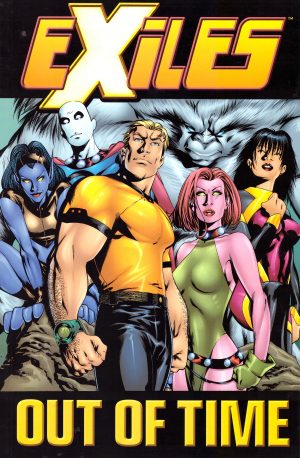
Beak is central to the dimension-hopping Exiles, exploring alternate universes with different versions of familiar characters. Tony Bedard has them returning to Earth during House of M and realising something’s really wrong. It’s made worse by the presence of Proteus, who possesses people. Everything is well drawn by Paul Pelletier, but too much is standard superhero angst, although leading to a crowd-pleasing ending for those following Exiles. It’s better experienced in full context via Exiles: The Ultimate Collection Book 4.
The New Mutants and Hellions teams also face human terrorist organisations, but the divisions between them are accelerated by the teen heroes now working for different organisations. Co-writers Nunzio DeFilippis and Christina Weir feed in other young mutants not used in the regular series, in what’s a lesson in not always believing everything you’re told. It’s well drawn by Aaron Lopresti, but possibly not greatly appealling to those wanting superhero action as it follows the style of the core series in prioritising teen drama.
Brian Reed and Roberto De La Torre’s Ms. Marvel story definitively occurs after the restoration of the ‘real’ world, but has Carol Danvers flashing back to that world where she was Captain Marvel, so a pointer into her future. It explores the idea of her being the world’s greatest superhero, but an ending of her realising she’s not been fulfilling her potential is contrived.
Only Bedard and Pelletier deliver a straightforward superhero story, which would be the expectation of a House of M tie-in, while all dance around the edges of the main continuity. ‘Mutopia X’ is the highlight, but readers engaged with the main House of M events may find this slim pickings.