Review by Win Wiacek
Created by veteran cartoonist Carl Anderson as a silent, pantomimic gag-panel first seen in March 1932, Henry was one of the most venerated and long-lived of US newspaper comics strips. The feature was developed for The Saturday Evening Post before being picked up by legendary strip advocate and proponent William Randolph Hearst. He brought it and the then-69-year-old Anderson to his King Features Syndicate in 1934 after which the first comic strip appeared with a full colour Sunday half-page following in March 1935.
Being a man of advanced years, Anderson employed Don Trachte to assist with the Sundays whilst John J. Liney performed the same role for the Monday to Saturday black and white iteration. Liney still found time to write and draw a comic book iteration of the mute and merry masterpiece from 1946 to 1961.
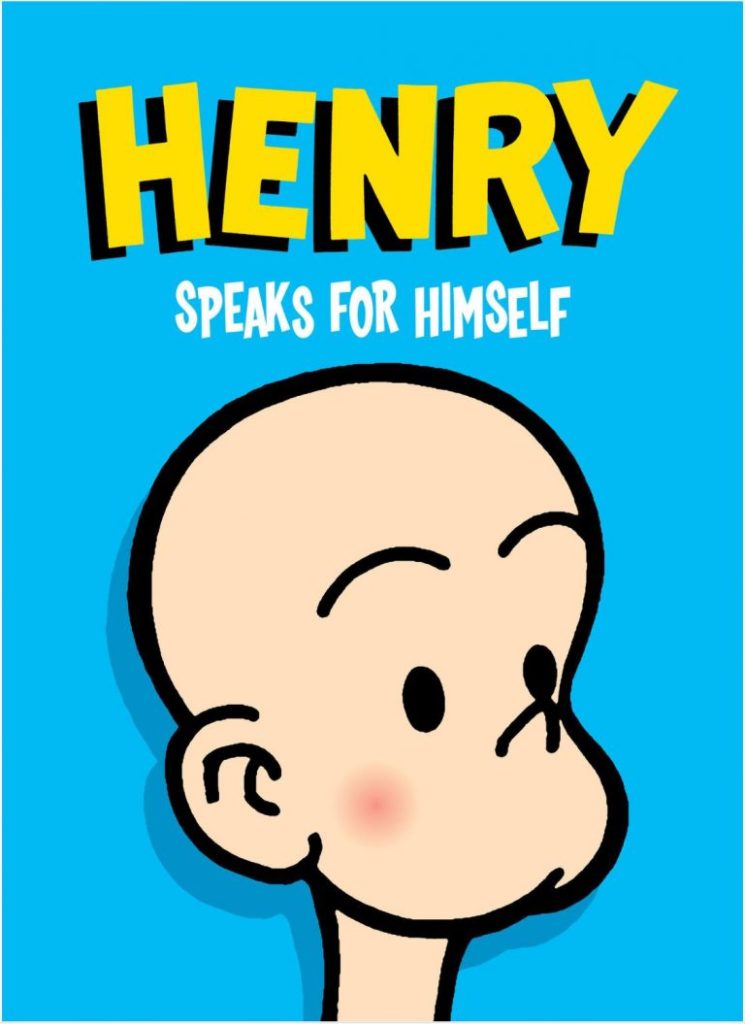
The newspaper strip had always been a timeless, nostalgia-fuelled, happily humour-heavy panoply of gags and slapstick situations, wherein the quite frankly weird-looking little bald kid romped and pranked in complete silence, with superb cartooning delivering all the communication nuance its vast international audience needed.
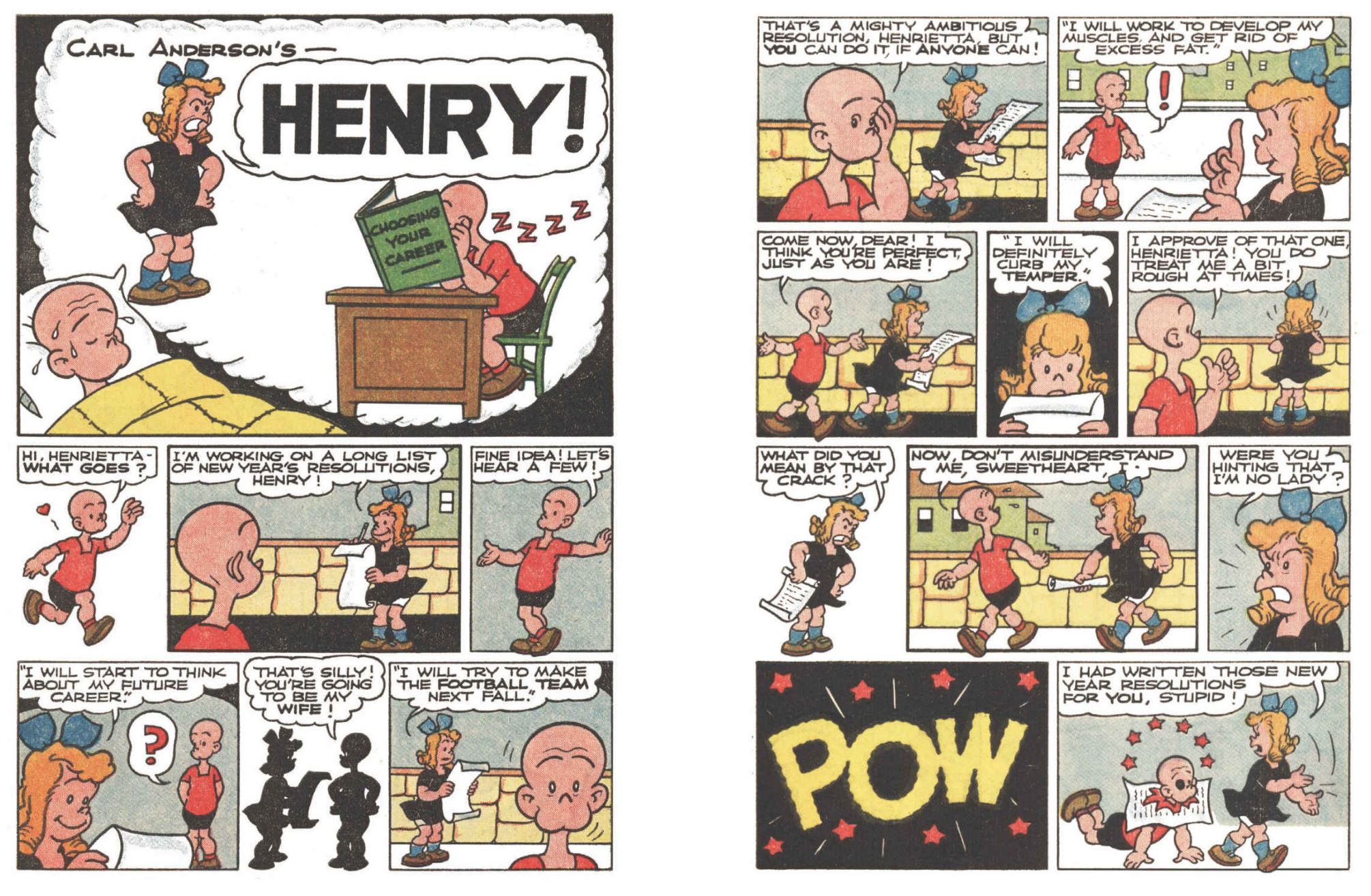
Now though, with children seen as sole consumers, the powers-that-be felt that little lad should be able to speak and make himself understood. Liney easily rose to the challenge and produced a sublime run of jolly, wild, weird if not often utterly surreal, endlessly inventive adventures – many of which approached stream-of-consciousness progressions that perfectly captured the ephemeral nature of kids’ concentration. He also introduced a captivating supporting cast to augment the boy, and his appealingly unattractive, forthright and two-fisted inamorata Henrietta.
This splendid collection gathers some of the very best longer tales from the comics in the resplendent flat primary colours so evocative of simpler days, beginning after a heartfelt reminiscence in the foreword by Kim Deitch.
The vivid viewing portion of this collection is liberally augmented with stunning cover reproductions, all impressively embracing to the quiet lad’s silent comedy roots, a brace of which precede a beautiful double-page spread detailing the vast and varied cast Liney added to the mix.
Spanning 1949 to 1957, the first two offerings show Henry keeping his non-existent mouth shut and exploring the medium of first person narrative, inner monologues and thought-balloons, all whilst getting into mischief seeking odd jobs to do. That results in meeting good-natured, cool but increasingly put-upon Officer Yako. That bald boy doesn’t actually utter a sound until 1950.
As Liney became more confident he began widening his palette. ‘Rhyme Without Reason’ reveals the entire cast afflicted with doggerel, meter, couplets and all forms poetic, with Liney even drawing himself into the madcap procession of japes and jests, whilst ‘A Slice of Ham’ cleverly riffs on Henry’s ambitions to impress Henrietta by becoming an actor. This yarn offers a wealth of Liney caricatures featuring screen immortals such as Chaplin, Gable, Sinatra and more, whilst introducing a potential rival contender for Henry’s affections in cousin Gilda.
There’s a peek into the future and a trip to the past, Henry becoming a cab driver, attending a fancy dress party and this completely charming compilation closes by reprising that Stone Age sojourn.
Henry Speaks for Himself is fun, a frolicsome and fabulously captivating all-ages cartooning to enthral anyone with kids or who has the soul of one.