Review by Frank Plowright
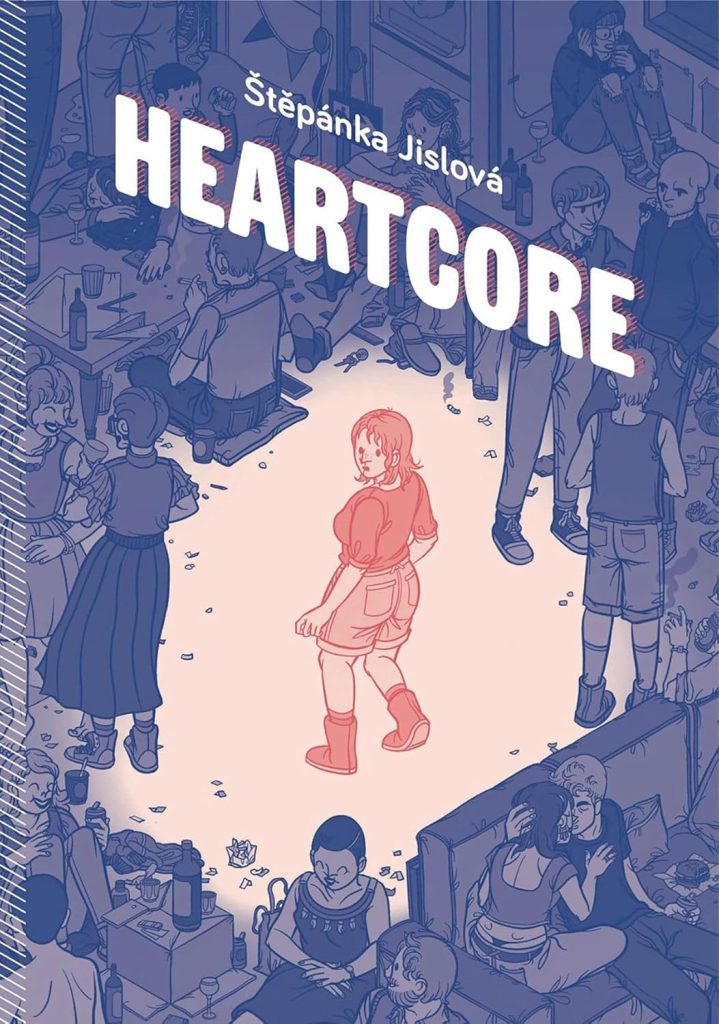
Štěpánka Jislová’s love life has been a largely disappointing experience. Possibly in common with many women, she’s found reality falls so short of romantic idealism, and has spent a lot of time thinking about why that is. Heartcore is the result.
It’s a wide-ranging exploration of love and attraction, with Jislová considering how much can be generalised and how much is personal to her. She’s confident with her own identity, attracted to men despite her competitive nature generating resentment at being allocated to girls’ teams when younger, and recognises patterns to her relationships. Having a boyfriend meant she was desirable, so that was an ideal state, yet actual relationships suffocated her, leading for a while to the unattainable being a perfect solution.
That’s followed by a need for sexual gratification prompting a dive into the choices available through online dating, providing a funny recurring joke of prospective partners learning Jislová draws comics and presuming it’s Superman.
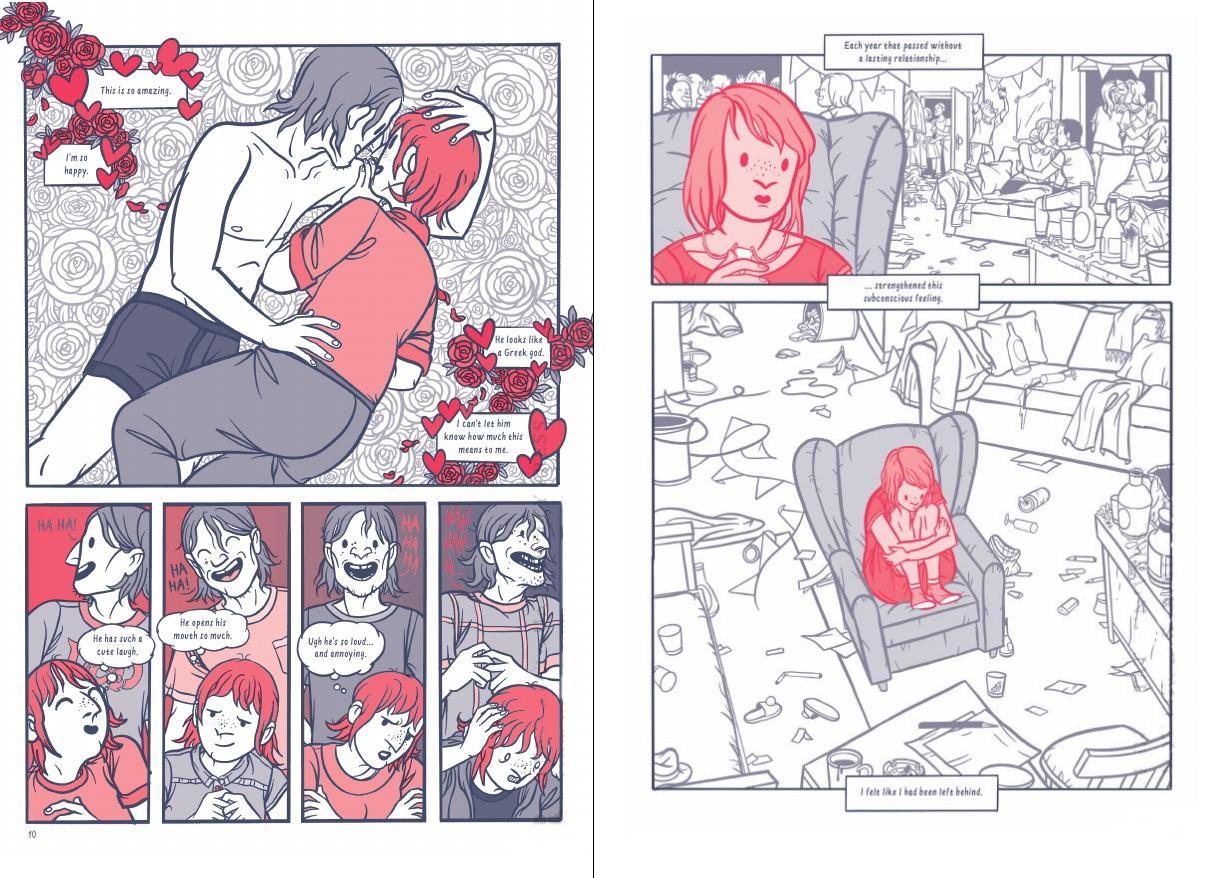
Jislová thinks visually, leading to creative sequences such as the stages of a relationship from infatuation to fulfilment to demise being supplied in four consecutive panels in the sample art. It’s clever and also representative of how quickly she cycles through boyfriends, a pattern that begins when younger, and is then applied to subsequent sexual partners. There’s a clever visual disconnect as partners are generally drawn as perceived after a brief relationship, accompanying the question of why Jislová bothered with them in the first place. Also clever is the way Jislová leads readers from a casual scene into a realisation, which occurs several times.
Heartcore is characterised by a solid self-awareness, Jislová as hard on herself as she is on the men she dates, supplied via succession of illustrations where she’s undignified at best. However, the attractive art goes a long way to disguising a core problem with Heartcore, where the choice is made to be exhaustive rather than representative. Over the first 150 pages it meanders into repetition beyond what’s needed to establish recurring patterns. Scenes featuring feelings and substance already conveyed are presented at equal length when they play out once again.
The beating heart of Heartcore is the relationship with Michael, egotistical and manipulative, whose attraction is only in private, and who steadfastly refuses to acknowledge a relationship that’s lasted for years. As appalling as he is, though, he eventually prompts a healthy realisation as Jislová looks further back into her past attempting to identify the origins of a need for attention. It’s desperately sad and leads to the revelation of a tragic event, and then to a surprising switch of attention.
There’s an interesting ending likely to divide readers who’ve taken every step of the journey, and it underlines how any conclusions drawn have to be individual, not universal. Honest, brave and insightful, Heartcore connects emotionally as intended, has a lot to convey and features impressive art. Working through the repetition provides rewards.