Review by Ian Keogh
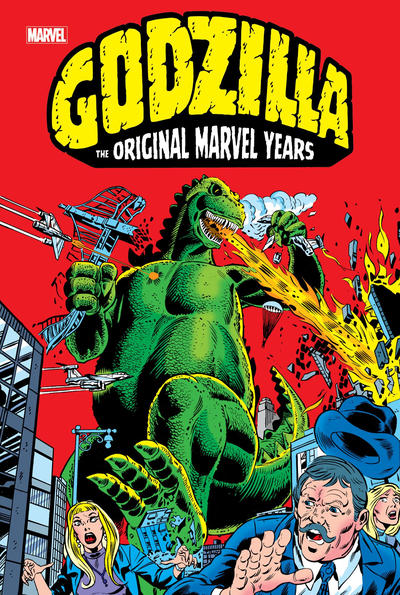
Starting with Conan the Barbarian, Marvel in the 1970s discovered augmenting their superheroes with licenced properties was a route to expanded overall sales. By that time Godzilla had appeared in numerous Japanese comics, but there wasn’t the American awareness of him that exists now, so there was some risk involved in starring a rampaging monster unable to speak in his own monthly comic. In the light of so many very good 21st century Godzilla comics it could equally be said IDW are taking a risk with this Omnibus collection of material now almost fifty years old.
The surprise is some of it still being fun, although largely back-ended. Entirely written by Doug Moench, there are several distinct phases. The opening shot is Godzilla as we know him from cinema, angry, violent, fearsome and unstoppable, but Moench’s initial inspiration is immediately integrating him into the Marvel universe by making him a problem for S.H.I.E.L.D. It provides audience identification, but Moench rapidly lapses into a pattern of laying out plans that then fail and hitting the repeat button.
There’s a half-hearted attempt at involving superheroes via an appearance from the mismatched 1970s Champions (without Ghost Rider), but it’s poor, and the idea is benched for a while. Moench instead has Godzilla battle a succession of other monsters. The best of this sequence is when they’re ditched and Godzilla visits Las Vegas as Winsow Beddit gambles away. It’s pastiche that still works.
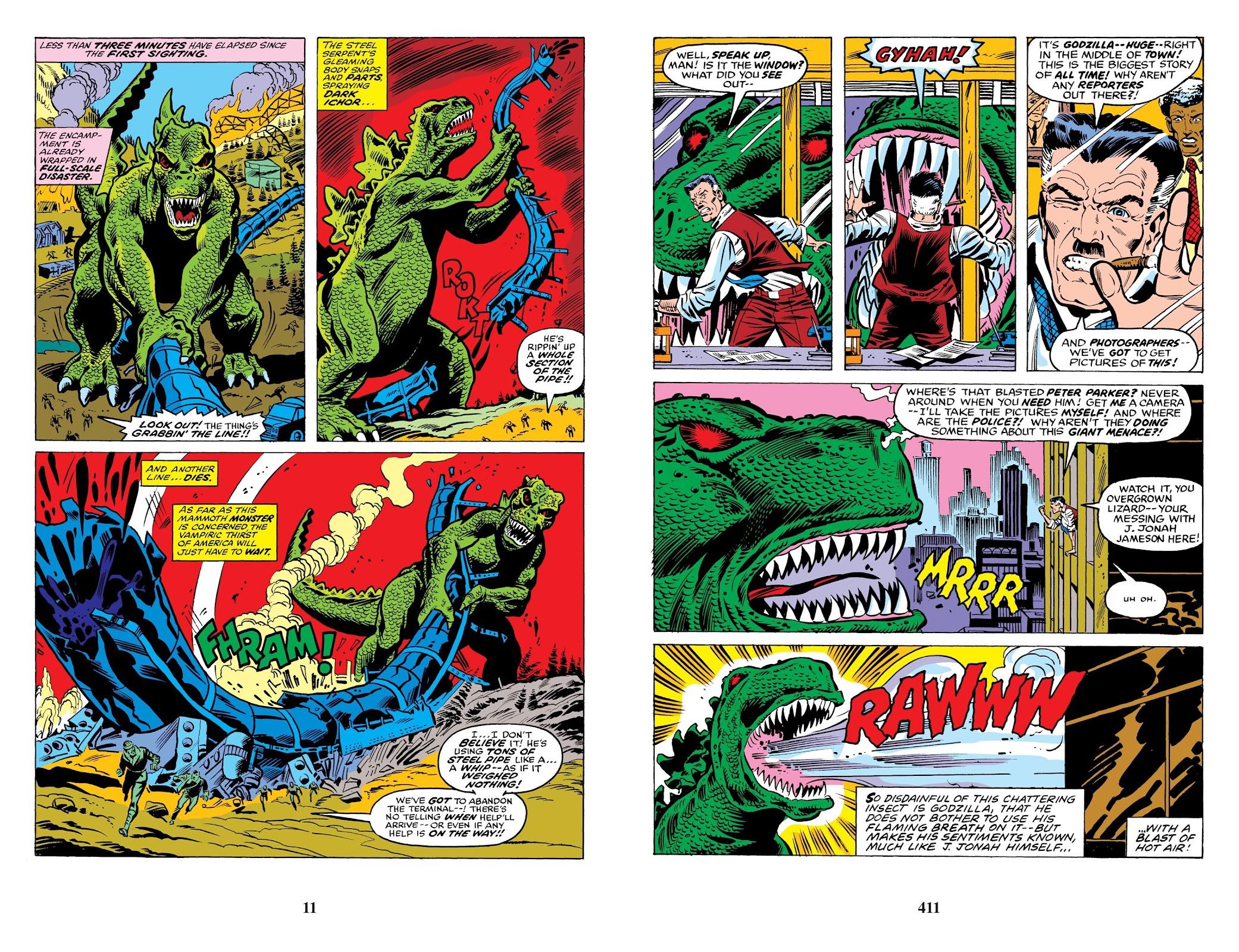
Artist Herb Trimpe divides opinion, and with Godzilla forced into small panels he’s handicapped from the start, but finds ways to give Godzilla space. Remembering these are stories aimed at younger readers, Trimpe does his job delivering a monster to thrill and frighten. He’s very good with a blockier version of futuristic Kirbyesque technology as used by S.H.I.E.L.D., but the appearance of giant battlesuit Red Ronin ought to be the apex of such technological wonder, and here Trimpe disappoints. Tom Sutton, technically a better artist, draws two early chapters, but he can’t adapt to the needs of the strip.
It’s when Moench appears to be running out of ideas and adopting a throw it against the wall to see what sticks attitude that the series takes off, and Karl Kesel’s introduction correctly identifies pitting Godzilla against cowboys as the turning point. It’s very silly in places, but features an effective subplot and by this time Dan Green’s inking is softening Trimpe’s tendency toward stiff figures.
After that comes a continued eight chapters completing the book. Moench decides to embrace the possibilities of the Marvel universe beyond S.H.I.E.L.D., and uses the shrinking gas Hank Pym devised to become Ant-Man. As Kesel’s introduction points out, it reconfigures the entire dynamic. A small, hunted Godzilla is an instant figure of sympathy, and that’s increased when he’s taken to New York and escapes. It seems a ludicrous idea fundamentally wrecking Godzilla’s appeal, yet it works. Chapter by chapter Godzilla grows a little and Moench delivers ridiculous excitement, including Godzilla vs the Fantastic Four in a shark tank. Trimpe can’t maximise the visual thrill of the Avengers and the FF taking on Godzilla for the finale, but Moench scripts a winner.
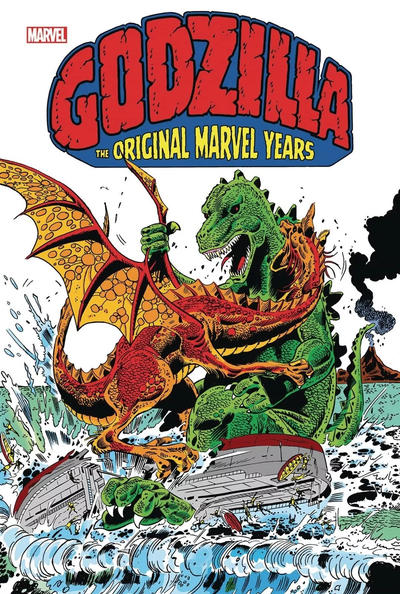
The better later issues don’t compensate for much treading water, and Trimpe’s art isn’t to all tastes, but if you loved this series as a kid there’ll be a joy at reconnecting. The standard cover is most commonly found, but anyone with a fondness for Trimpe’s original series covers has a choice of two alternatives.