
Review by Woodrow Phoenix
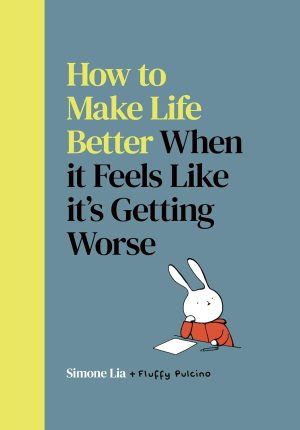
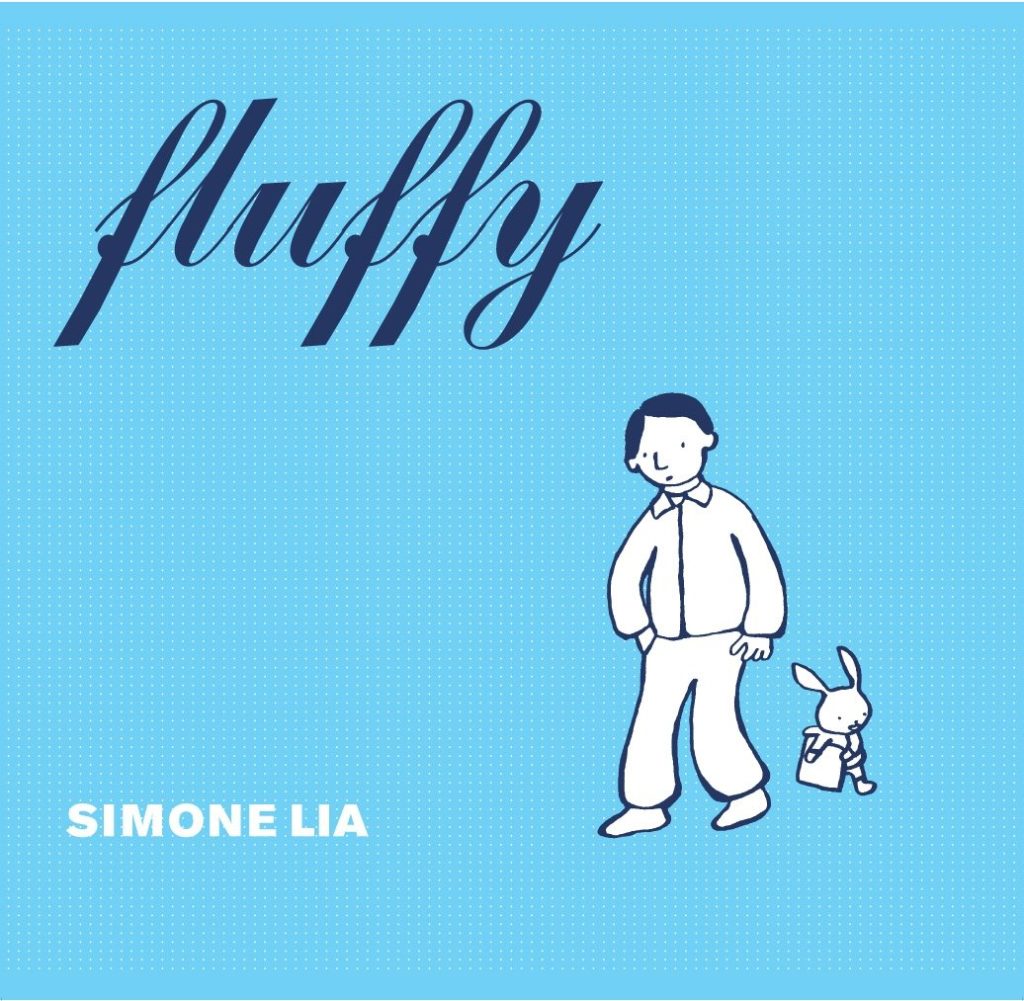
Fluffy is the story of a little white baby bunny who thinks he is human. Fluffy is the responsibility of a young man called Michael Pulcino. We never find out exactly how this situation came about, but Fluffy has been living with Michael for some time and the slightly anxious man takes care of the little boy rabbit, in the manner of a parent or guardian. Of course Michael is not Fluffy’s dad, and he keeps trying to get Fluffy to understand this, but the little rabbit refuses to accept it. “Why do you keep saying that?” Fluffy asks him. “Because it’s true,” Michael tells him. “I’M NOT A BUNNY. YOU’RE A BAD DADDY FOR SAYING THAT” the little rabbit says, ending the difficult conversation by running away.
Simone Lia’s drawings of the man and bunny are reduced, graphic shapes but the backgrounds of the world they inhabit are more naturalistic studies of real locations, grounding the simple figures in a down-to-earth, suburban South London landscape and giving the story a firmly reasonable setting. Apart from the basically strange dynamic of a talking rabbit in a human world everything proceeds in a straightforwardly soap-opera style. We see Michael trying and failing to extricate himself from another equally awkward relationship in his life, with the intense Suzanna Owers, Fluffy’s nursery school teacher who is much keener on Michael then he is on her. To try and give himself some breathing space from all his home issues, Michael takes Fluffy away with him to visit his parents in Sicily. But will a change in location be anything more than a new stage to relive the same problems?
Fluffy is a touching, funny and slightly disturbing exploration of a single parent and child relationship given a sense of the uncanny by the protagonists involved. Additional weirdness is added by two narrators who pop up to fill us in on backstory and provide some commentary on the action. Both are drolly anthropomorphic characters, one being a flake of dandruff and the other a dust particle. They aren’t too impressed with the storytelling, finding the story ‘amateurish’ and the ending ‘unresolved’. Somehow the addition of meta-narrative elements that usually push books into irritating, gimmick territory instead just work to reinforce the humour and humanity of Simone Lia’s characters, perhaps because of her very matter-of-fact presentation using the unique powers of the comics medium to their fullest.
Fluffy is a bit of a tightrope act, with its unconventional premise a way to freshly observe how people relate to each other. The risk pays off brilliantly, and you will find yourself emotionally invested in the outcomes for everyone depicted here.