Review by Frank Plowright
Initially raised by wolves, orphaned boy Luke was given a home in an English settlement eventually raided by Vikings. He fought hard against them, and his losing an eye and being accompanied by wolves led to them calling him Odin, or Hidólfr in Norse. It’s a name that’s become feared among the Vikings as he hunted down Einarr, the leader of the band who raided his village, and toward the end of Farewell, My Odin I they engaged in mortal combat, although without a definitive result. That’s because there was an intervention, Chihiro Yoshioka here revealing it to be an English army keen to recruit Hidólfr, their leader Alan Muir ultimately leaving him no choice.
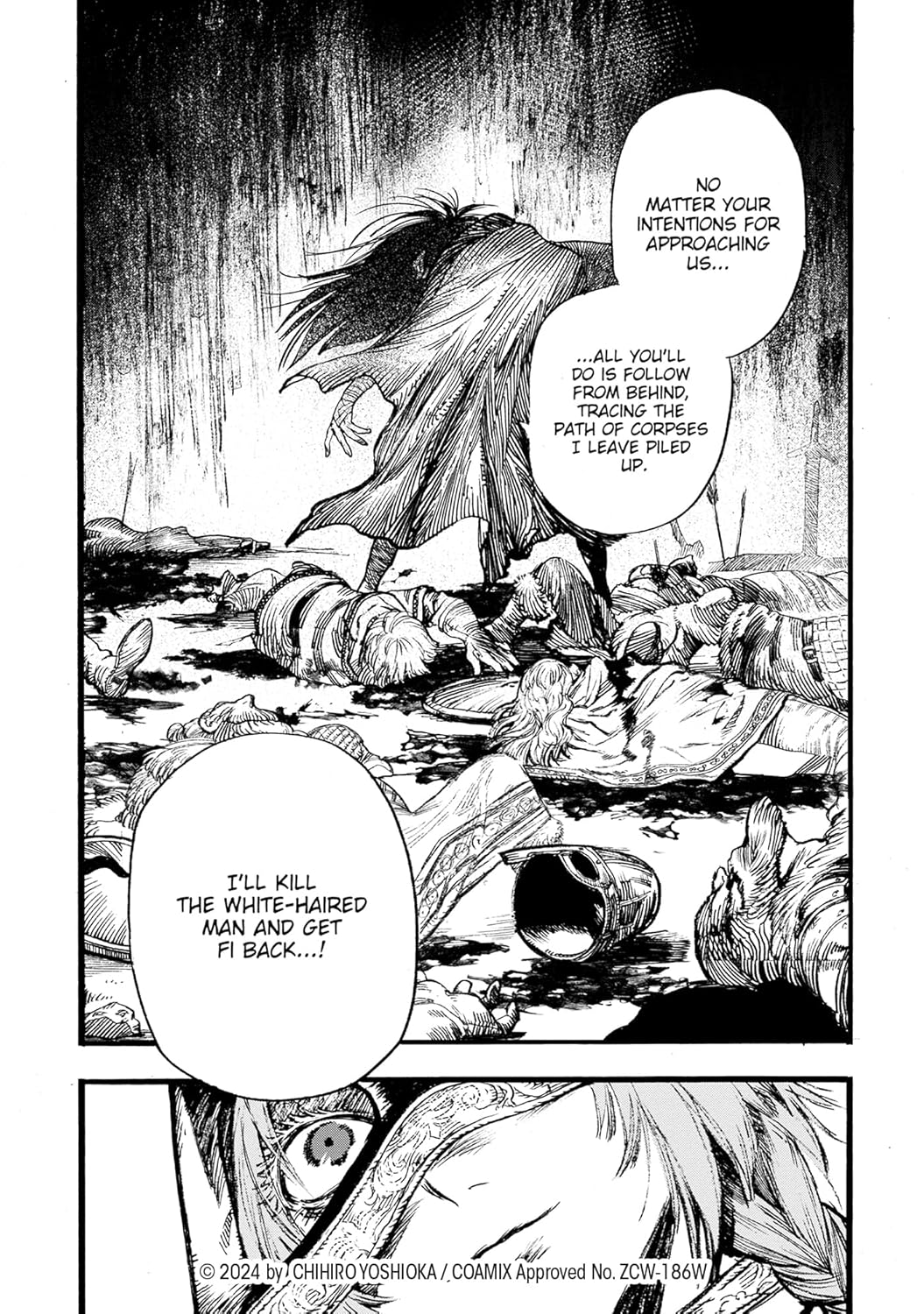
Over the first volume Yoshioka did much to draw similarities between two warriors who’re mortal enemies, and here graphically reinforces that Einarr isn’t his own master. While other sword and sorcery titles convey the downsides of their times with restraint, that’s not Yoshioka’s method. He displays the results of savage combat where no quarter is given or expected. There’s a whirlwind of action, but be grateful it’s in black and white. Like many other Japanese artists, Yoshioka concentrates on figures and faces at the expense of backgrounds, but this is imaginative art, with viewpoints changed, good use of black ink and people designed to be distinctive. Hair is a speciality, always different and frequently mentioned. The one artistic downside is a lack of clarity during action scenes, which are more representational than adhering to panel to panel continuity.
The sadistic nature of the Viking king is seen early, and there are considerable qualms about him, while Yoshioka’s contemplation about the consequences of war extend beyond graphic violence. The effect on people is seen. Showing someone with PTSD might seem an application of modern thought to ancient warfare, but the effects of violence on people in the 10th century were the same as now.
Yoshioka has researched Norse myths, and there are occasions when metaphors are strained to include a reference that then needs explained by an asterisked footnote. It’s also puzzling that in Viking times someone with such a Scottish name is an English leader, but that could be random translation. Yoshioka is better when it comes to applying research about battle tactics, and towards the end Muir plays a very clever game, one intended to wrongfoot readers as well as Vikings. During that scene the series title is also explained. Fearsome warriors are essential during war, but what becomes of them when there’s a chance of peace?
Additional characters broaden the scope, and Yoshioka ensures they’re well understood, if definitely capable of deception. The deception is also narrative, as what seemed a straightforward series about a warrior in Viking times here develops a complexity making Farewell, My Odin more intriguing.