Review by Frank Plowright
This is not the world we know. Plant and animal life has abandoned the planet to rocks and humans apart from one oasis deep within a tall volcano into which witches have retreated. They have a myth, though, of a magical place called Eden where witches are even safer.
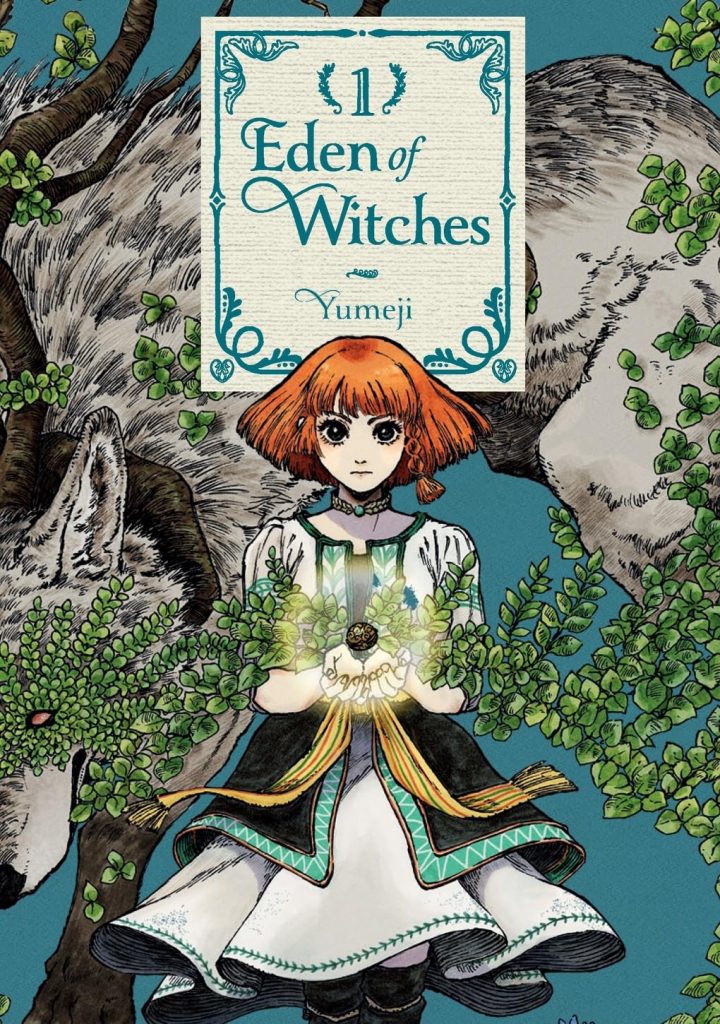
It’s some while before we learn the series star is named Pili, the young witch seen on the cover. Her powers aren’t developing as expected, so she tends a garden under the mentorship of kindly Toura, who’s gradually becoming more and more sick. Attempting to help, the naive Pili makes a fatal mistake.
While this may seem a manga title from a Japanese creator, Yumeji’s route to publication is hardly conventional. Skilled enough to be an art assistant for other creators, she was unable to take the step up to her own work and abandoned comics, only again rediscovering the joy when publishing her own fanzines. Eden of Witches, though, was taken up by a French publisher, not a Japanese company, with eight volumes issued to date.
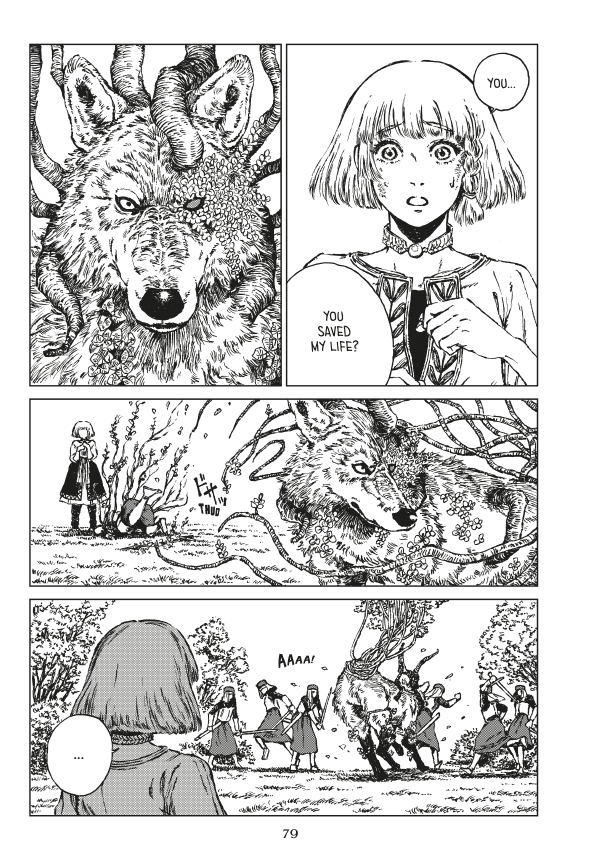
Time spent assisting others explains how what’s ostensibly the first work from a new creator is extremely accomplished, both conceptually and technically. The attractive art emphasises Pili’s innocence while the garden surroundings are lush even in black and white. They conceal a secret, though, and as seen on the sample art, Yumeji’s animal and plant hybrid is designed with the finesse applied to the remainder of the world.
Rather than take the obvious route of the powerful Oak instantly bonding with Pili in Toura’s absence, Yumeji has them remaining aloof. Oak will accompany Pili while she searches for Eden, but makes it clear from the start that she’s not his mistress, and all obligations beyond protecting Pili ended with Toura’s death. Having led a sheltered and in some ways privileged upbringing, Pili is astounded at the deprivation prevalent at a small village where she shelters. It’s another step in some careful character building as while Pili maintains her essential good nature throughout the series, there’s also a learning process about life and people. Readers may also wonder how humanity has survived without animals or plants to eat, but that’s not a question answered here.
By the end of this opening volume we’ve learned how thoroughly the emperor rules over the area, only the privileged few not desperate for food and shelter. That impacts on attitudes, where any opportunity to increase the little they have must be taken, never mind if it means someone else suffers. It plays into a melancholic tone overall, and Pili’s journey continues in Eden of Witches 2.