Review by Sabrina TVBand
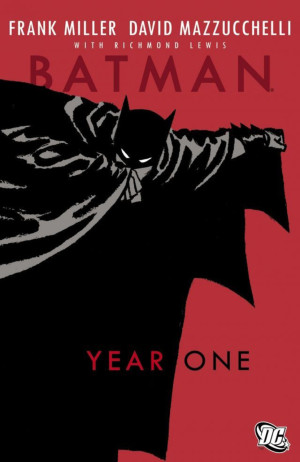
In 1986 Batman and his supporting cast underwent a soft reboot with the release of Batman: Year One. The character to receive the most radical reinvention under Frank Miller’s pen was Catwoman, who was no longer a woman who committed crimes for the thrill of it, and instead a dominatrix inspired by the presence of Batman to become a thief.
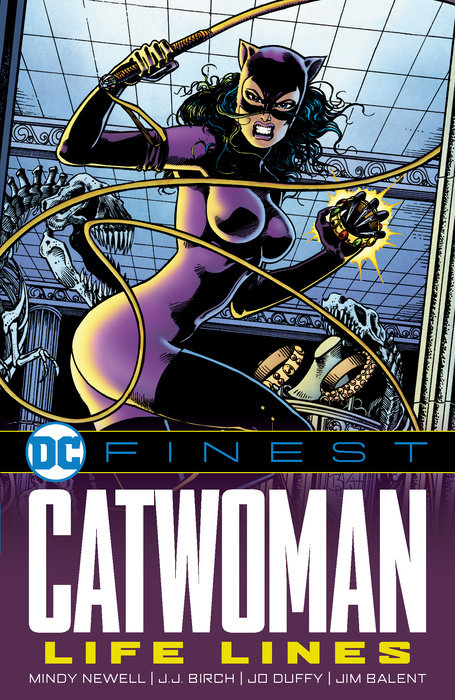
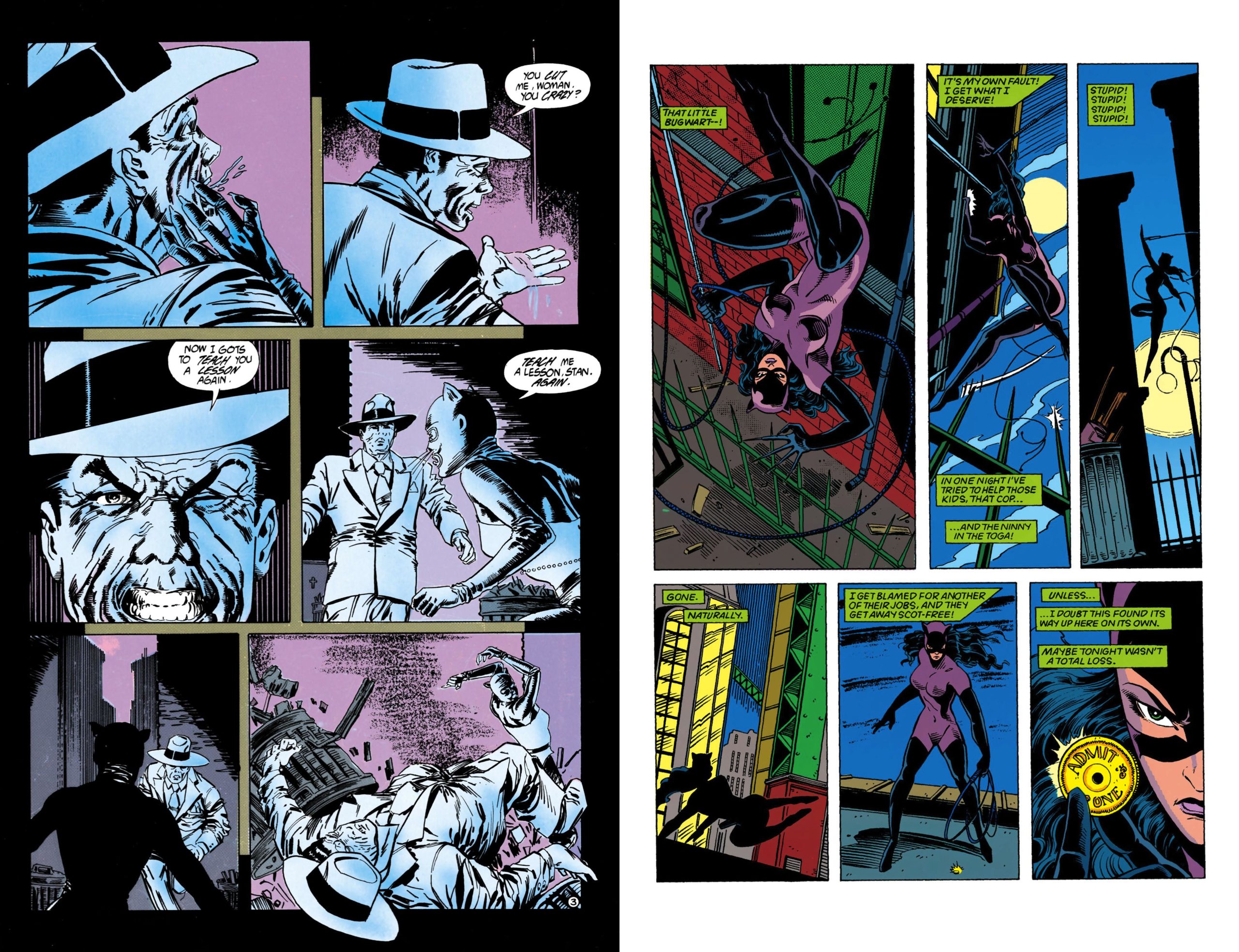
DC Finest: Catwoman – Life Lines begins where Year One ends. Or, rather, during the events of Year One itself. The miniseries that opens this volume in earnest, written by Mindy Newell, with art by Joe Brozowksi (sample art left), is set during the events of Year One, with a handful of scenes recreated to help situate the reader within the timeline.
Miller turning Catwoman into a sex worker in Year One was a controversial choice, but Newell impressively adds nuance and dimension to this take. By halfway the character is fully rehabilitated, with a background including Selina Kyle learning self defence and dealing with some familial estrangement.
‘Catwoman: Defiant’ follows and is the strongest continuous forty-odd pages in the entire book. Penned by Peter Milligan, with art by Tom Grindberg, the story focuses on themes of misogyny, envy, and self-loathing. There’s a lot of substance packed into this narrative, making for a satisfying read.
Writer Doug Moench and artist Ed Hannigan then have Catwoman realise someone else has already stolen the painting she was trying to acquire. In her quest to retrieve it Catwoman finds herself acting as a hero to the people who live on Storrow Street, referred to by Gotham locals as “Sorrow Street” due to its seedy nature. It’s solid, albeit without reaching heights of Newell’s work.
Roughly halfway through Catwoman’s first ongoing series begins, all material from it here written by Jo Duffy and illustrated by Jim Balent (sample art right), previously collected as Catwoman by Jim Balent Book One.
Duffy makes a bunch of creative decisions that won’t be to everyone’s taste. She heavily de-emphasises Catwoman’s self-interested qualities, pushing her “thief with a heart of gold” tendencies so hard that her altruistic actions end up feeling like her default mode rather than a subversion of character. This Catwoman also has an oddly poor track record when it comes to successfully completing jobs, to the point where it feels like Catwoman is bad at doing the one thing she’s supposed to be good at. Duffy’s run does at least feel ambitious in the sense that it has more continuity than Chuck Dixon’s following run reprinted in Vengeance and Vindication, which is highly episodic.
Balent is a polarising artist, but, when his work is taken in context, it’s easy to understand his appeal. He’s the only artist in this volume who doesn’t illustrate in what was essentially the Batman house style of the day, and shows great skill when drawing glitzy and expensive looking environments, which appear frequently. He does make the occasional storytelling mistake, but he also rejects the worst excesses of 1990s comic art, such as cacophonous layouts filled with panel breaks. His Catwoman, infamously, is posed in ways that can feel gratuitous.
Life Lines ends with a standalone story written by Christopher Priest, in which the role of Catwoman is assumed by Talia al Ghul. It’s a fine read managing to incorporate medieval crusades and gender dynamics into 54 pages.
It’s nice when these DC Finest volumes emphasise variety, and this is a smorgasbord of Catwoman material worthwhile for any fans of the character.