Review by Ian Keogh
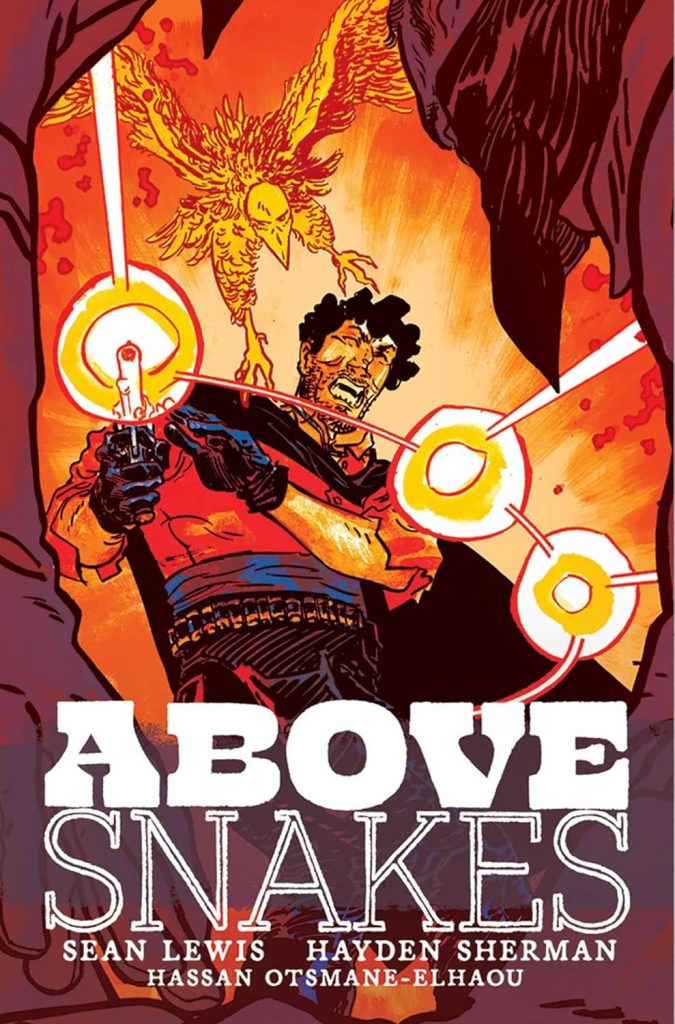
Dirt is a loner in 1866, looking for his wife’s killer, one of many widowed and unsuccessful in tracking down the perpetrator. However, this is a different 1866, as Dirt is accompanied by a spirit guide in the form of a translucent yellow vulture named Speck who might not yet have traced the killer of Dirt’s wife, but can certainly lead Dirt to plenty of other reprehensible types.
A thread takes us through Dirt’s encounters from start to finish, but these are for the most part five separate stories building a complete legend. The strange and attention-grabbing title of Above Snakes is a name Sean Lewis applies to a gang of thugs. They’re spread far and wide, giving Dirt a chance to wander from town to town, yet always finding someone needing a bullet or two in them.
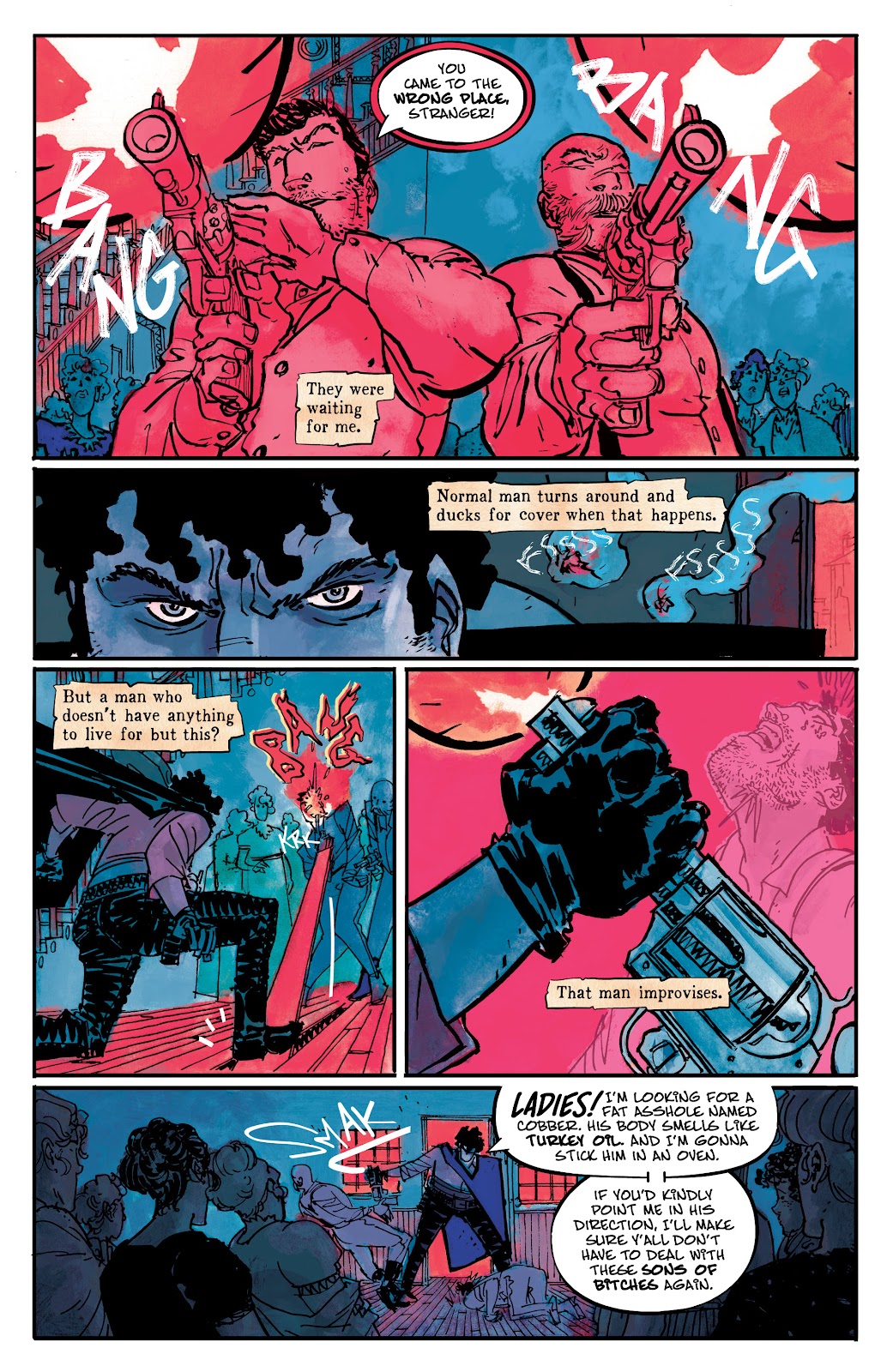
Anyone who might have wondered where Hayden Sherman plied his trade before stunning everyone on Absolute Wonder Woman need look no further. You’ll be surprised, though, as there’s nothing of the later precision here. Above Snakes is someone with considerable talent, but not the complete professional comic artist. This art is loose and sketchy, but serves in creating the rough and ready world Dirt inhabits while showing too great a reliance on close-ups. We further learn that Sherman is no colourist. Great swathes of clashing shades sit side by side, and the effect is really off-putting.
This isn’t a straightforward Western, though. At first Speck might seem a product of Dirt’s imagination, but he communicates and is visible to others. Midway through Lewis explains him as a vengeance bird, a prodding companion until revenge has been consummated, and we see others of its type. There’s also an extremely fanciful villain who at first seems just an old fashioned horror comic host introducing what’s to come, but no, his crowing character comes into its own toward the end.
Above Snakes has moments, but it’s messy in complicating matters that don’t need complicating. Perhaps Lewis felt the standard Western is no longer enough in the 21st century, but the fantasy elements and costume don’t work in accommodating other genres by association. They’re too fanciful and their distraction muddies what would have been better without them.