Review by Ian Keogh
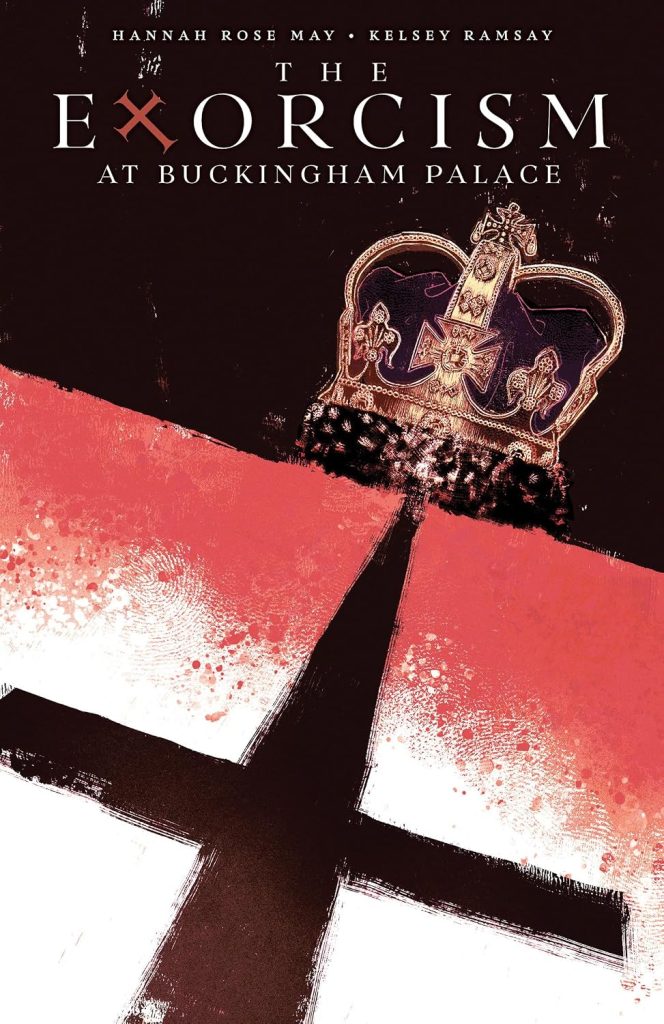
If title promise of an exorcism wasn’t signal enough, an opening chapter in which a fictional UK prince and princess are lost at sea along with their children sets up the sensationalist tone Hannah Rose May intends to take. Furthermore, it’s only a few more pages before a curse on the UK royal family is mentioned.
From the start little is credible, even with May pulling some aspects from recent UK royal history. She presents a king one moment reinforcing tradition and that the monarchy must endure, yet determined to abdicate no matter the loss of his family, meaning the first in line to the throne is dissolute distant relation Theo. At almost every stage May has her cast behave in a way that helps her plot, rather than in a way anyone would in the prevailing situation. Before there’s been a proper search for survivors at sea, King Adrian announces he’ll publicise his abdication; a random incident is positioned as leading to a vote of no confidence in the UK Prime Minister, and the possibility of a world war is floated. This is all within twenty pages. In other areas, Britain is confused with the United Kingdom in a speech by the king, timescales are shaky and there’s really funny hospital scene where a bedridden patient with a Dick Van Dyke accent worries about the future of the monarchy. The best part of the early stages is Theo’s uncertainty about the hurricane he’s been thrown into.
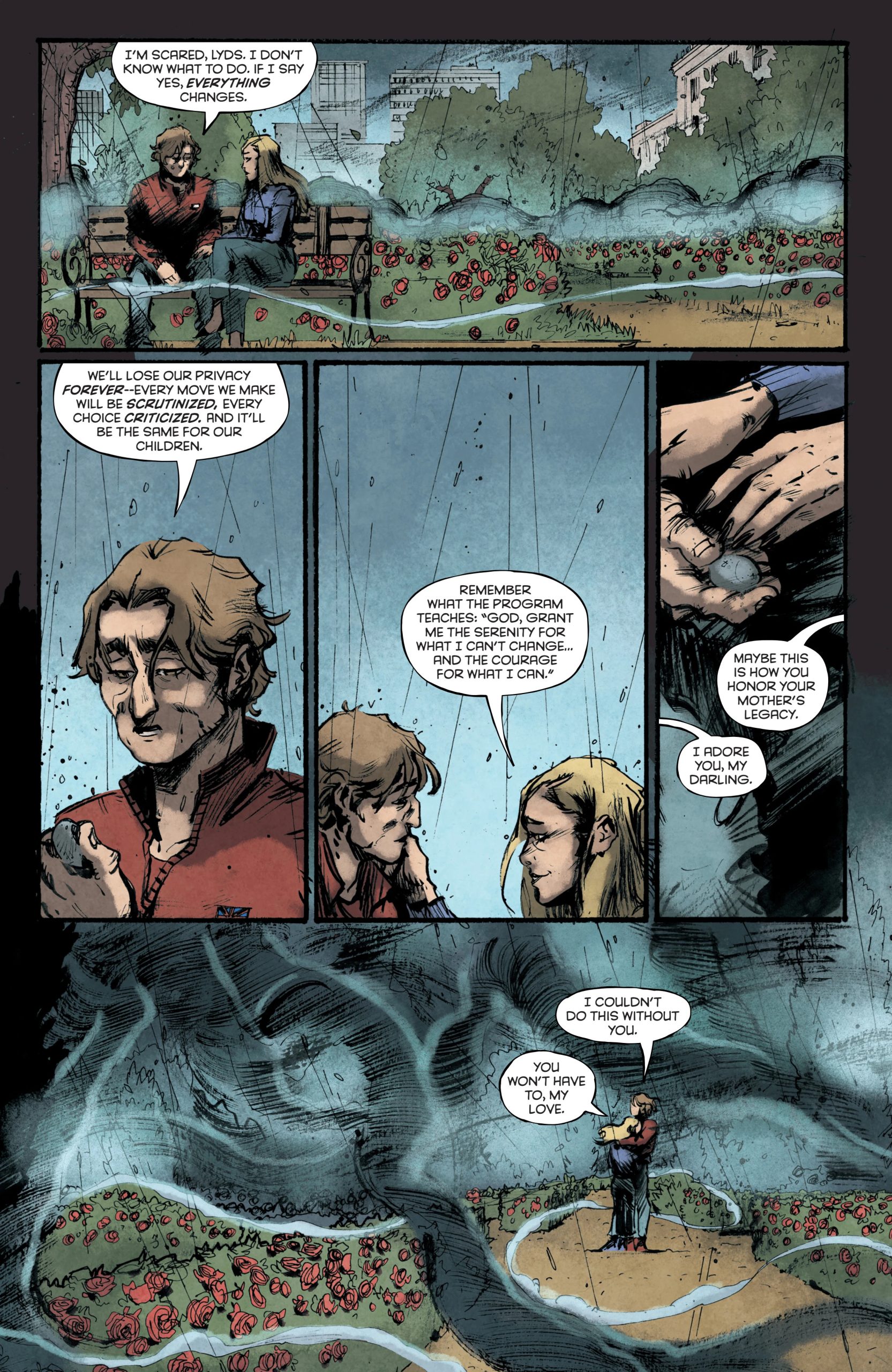
Via American president Doyle, May establishes a connection with her previous The Exorcism at 1600 Penn, which wasn’t drawn by Kelsey Ramsay. Once again, though, a plot crying out for a form of neat artistic realism is drawn in a sketchy manner. Wide-eyed, haunted people with multiple unnecessary lines defining them occupy dark backgrounds resembling sparsely furnished flats rented by a neglectful landlord rather than royal surroundings.
A melodramatic tone is instituted from the start and persists with the introduction of supernatural elements. As with the previous book, the necessity for an exorcism only manifests in the final chapter, with which any pretence of realism evaporates. Beware the haunted decanter! Despite this, the prevailing desperation and removal from reality results in the best sequence, offering a couple of good explanations for earlier events. It is, however, too little, much too late.
Exorcism at Buckingham Palace is recommended to British readers with a sense of humour as it’s unintentionally hilarious, but anyone wanting a genuine action thriller with horror elements will find far better.


