Review by Ian Keogh
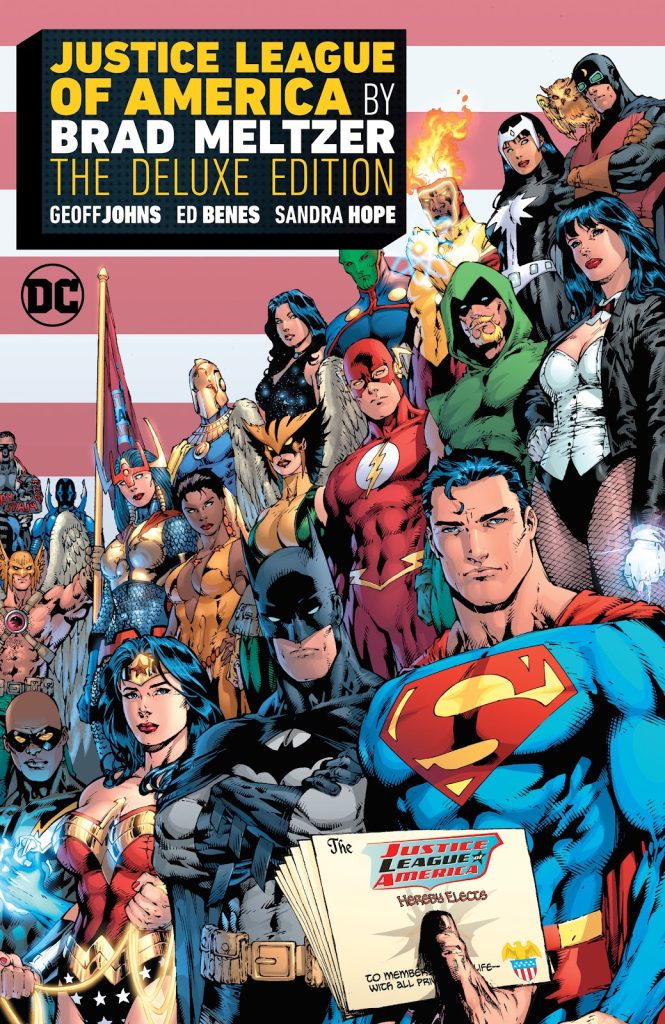
Before novelist Brad Meltzer rebooted the Justice League in 2006 he may have researched deeply, but the indications are that he was an avid reader of the series when younger. He revitalises while very much respecting the pre-1980s era, and draws heavily on it for villains, themes and easter eggs. It’s a methodology laid out in the opener in which seventeen different artists reinterpret scenes from the past, a story working best at the start when Meltzer adds character reflection to moments where it was previously lacking.
Unusually for a Justice League writer he’s not greatly interested in the big guns. Batman and Wonder Woman are bit part players while Superman features a little more, but hardly dominates. Meltzer instead builds his stories around Hawkgirl, Red Arrow, Red Tornado and Vixen, with others drifting in and out as necessary. It means some characters merely making up the numbers, Wonder Woman among them.
The new team is introduced over seven chapters that would have been tighter at five, mixing the new team being selected, the problems of the Red Tornado aching to be human and a whole posse of old villains, largely in minor roles. They’re problematical, as in wanting to surprise, Meltzer rips back the curtain too many times to reveal a different threat actually pulling the strings. It’s available in paperback as The Tornado’s Path, while the remainder is found as The Lightning Saga.
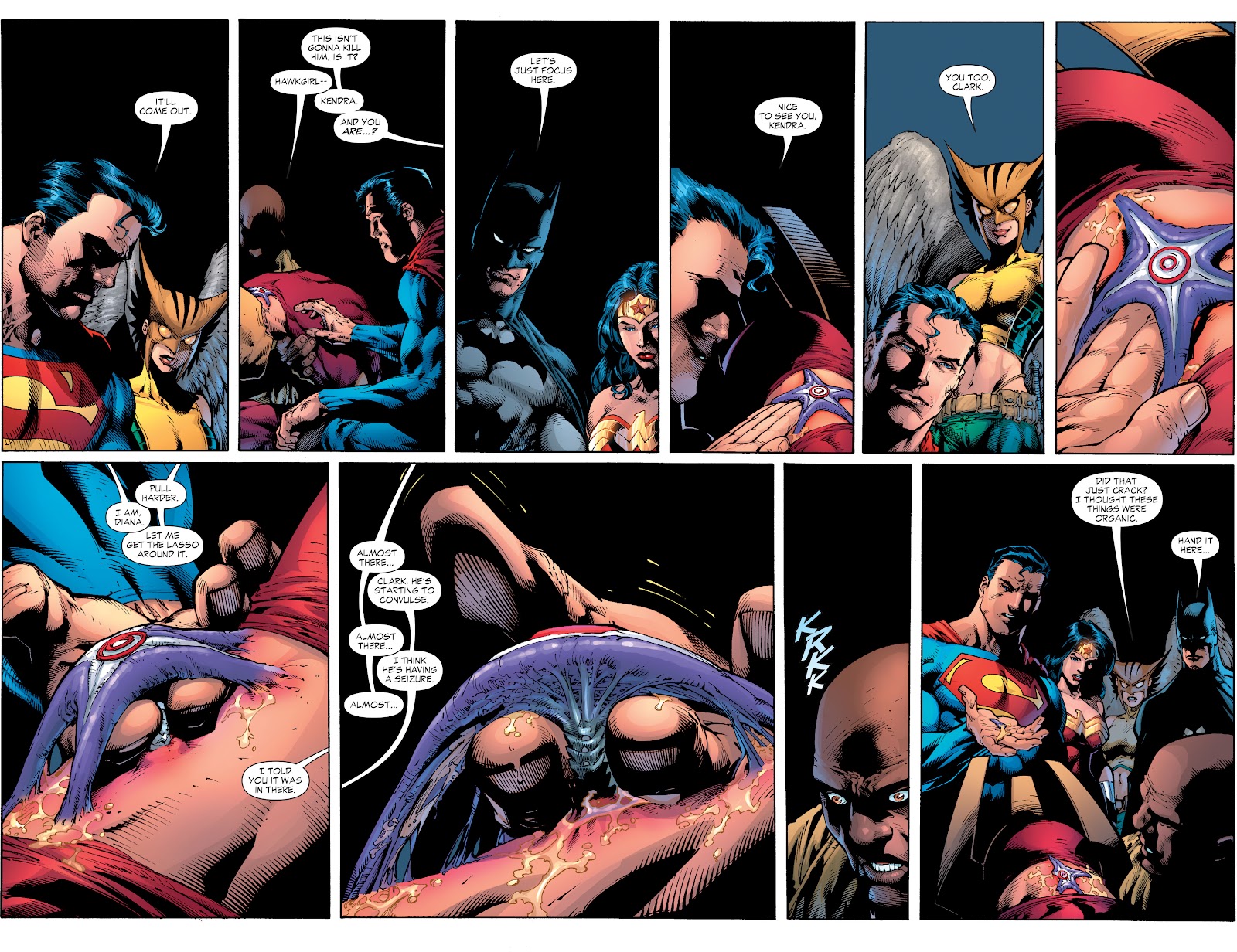
Gene Ha draws the Eisner Award winning story of Red Arrow and Vixen trapped beneath a collapsed building, revisiting an idea briefly seen early on, but the art is predominantly by Ed Benes. He’s an excellent storyteller ensuring smooth continuity and prioritising the right moments, but his style is rooted in the 1990s era of characters either grimacing or pouting with overworked muscles. He’s also prone to the graphic illustration of distasteful violence.
Again looking to the past, Meltzer’s second epic teams the Justice League with the Justice Society and also involves the Legion of Super-Heroes from the future. It builds to what in 2007 was major revelation resetting DC’s continuity, but that’s been rebooted so many times since that now it’s just a “meh!” moment. As the Justice Society had their own series at the time, Geoff Johns writes some sections, and in isolation the prominence given to their ongoing problems leaves too many unanswered questions. Restoring the idea of small squads mixing the teams works well, and Fernando Pasarin’s art on a single chapter is excellent, but this is story with shining moments rather than the desired epic.
Meltzer being best with moments is exemplified in ‘Monitor Duty’, his parting shot, which is nothing but moments. There’s a smooth transition from member to member via the connecting thread of the JLA records being accessed during periods spent on alert should trouble manifest, and it leads to an understated ending.
Bonus material includes plenty of alternate covers, the original character designs by Benes, and some commentary. Much acclaimed when released, and a great success, this isn’t a collection that’s stood the test of time. The ideas are good, but the execution muddies and distils them, while these stories being so reliant on continuity, whether contemporary or past, ensures a sell-by date.