Review by Frank Plowright
It certainly wasn’t obvious at the start, but Yan has become a series about superheroes, although as carefully planned by Chang Sheng it’s no conventional view of them. They’re individuals, isolated and haunted, gradually discovering each other.
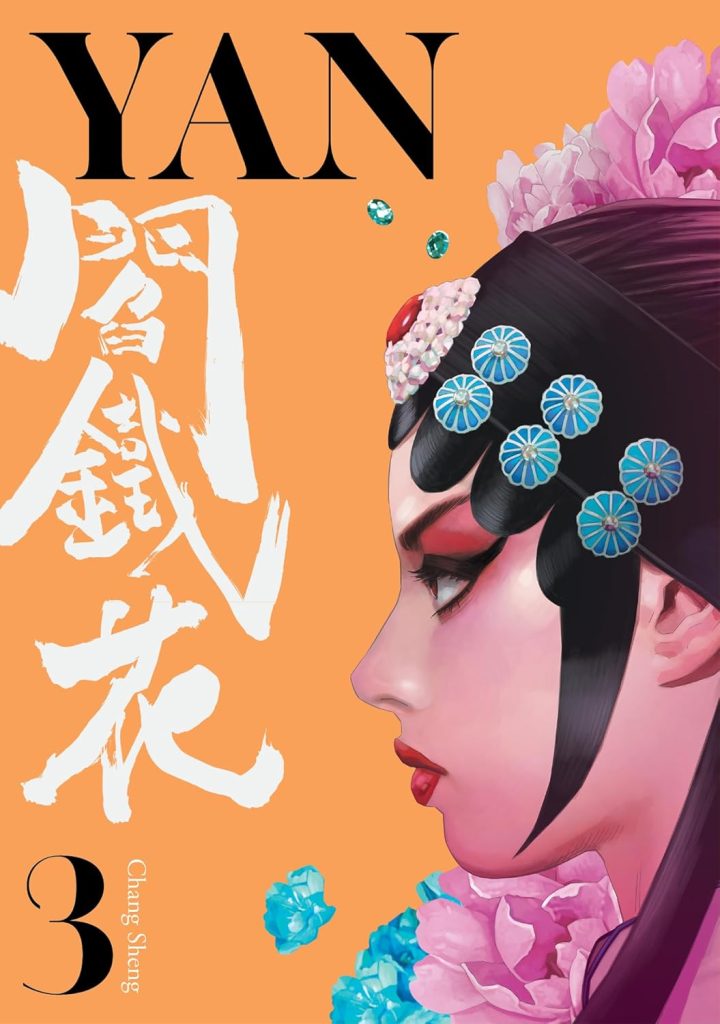
Yan Tieh-Hua is the title character, and has been seen in previous volumes carrying out what seem random killings. In Vol. 2 the truth of the facility she escaped from was revealed, and Vol. 3 opens with a flashback glimpse of what life was like for her growing up there before moving far beyond. Although Sheng doesn’t immediately supply every answer that’s been hanging over the series to date, the first third of the book explains much about Yan, her capabilities, her motivations and her mission. It’s handled with considerable nuance, particularly scenes set in the house of her grandfather.
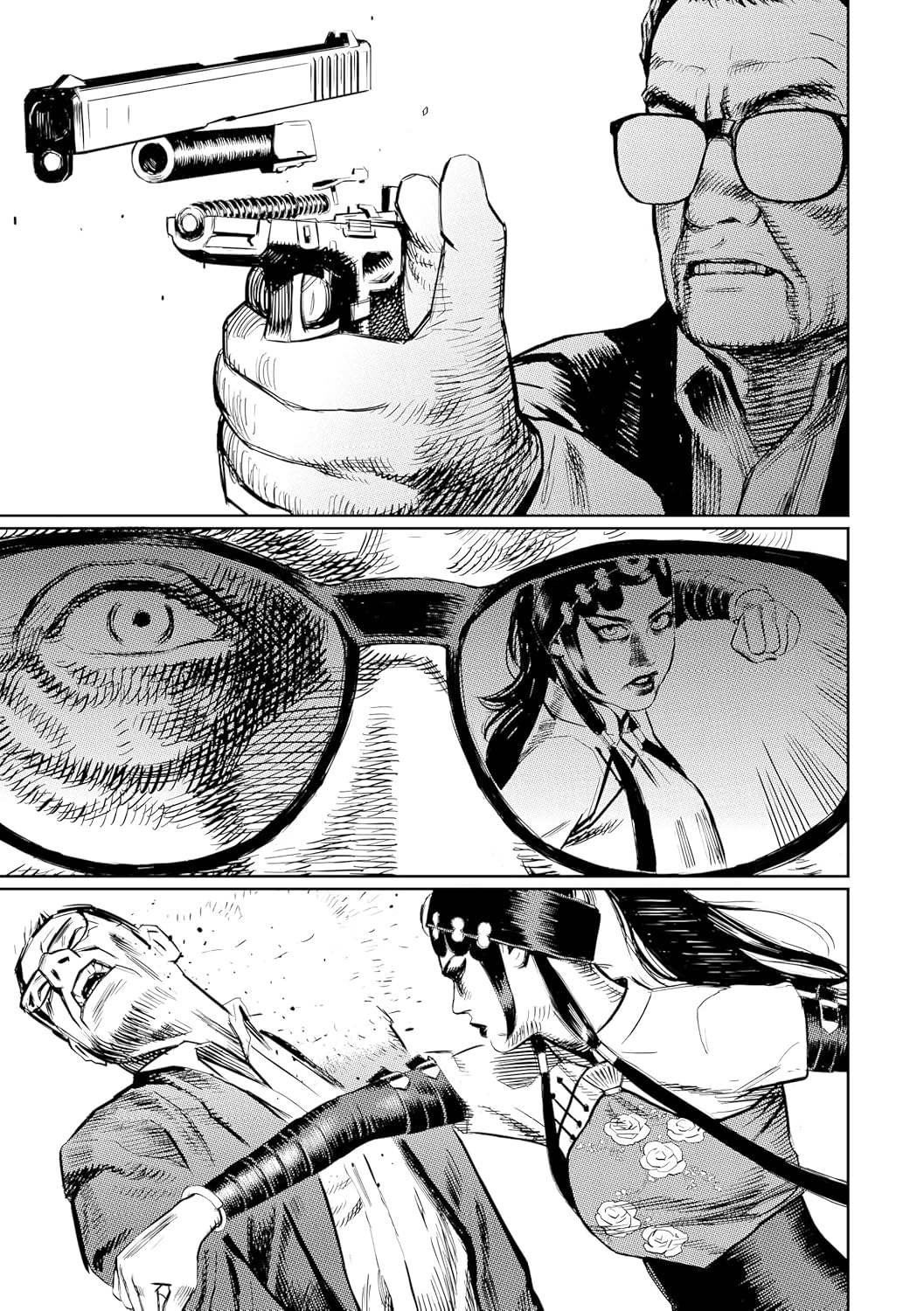
These are very much dependent on the art, and while action and detail have been phenomenally good over the first two books, this is the first occasion where considerable emotional subtlety is required, and Sheng sells the scenes beautifully. The one artistic weakness is the design of sinister AI Thirteen too closely resembling the morphing Terminator.
Back in the present day we have a saga of a rogue AI, people seeing the immediate future and people shifting from other realities. Hope of preventing disaster is diminished because Yan has seemingly died. Seeing as she’s the title character, it’s no great spoiler to reveal that she hasn’t, and the means of her return build cleverly on what’s already been seen. Further defining this as a completely unconventional superhero story is the getting to know each other sequence in a deserted convenience store, a calm before the storm scene.
The storm arrives due to a well plotted increase in Thirteen’s capabilities, one putting him on a par with Miku being able to see the future, yet it’s intriguingly handled by Sheng. If two people can see the future, whose vision is more accurate? The answer to that is a cleverly conceived final sequence where deception is key. Sheng delivers a long wordless battle scene, the art moving forward in slight increments, all incredibly well drawn, yet ultimately just a distraction.
A door has been left open for another visit to Yan’s world, but Sheng has since been occupied with other work, leaving this trilogy standing alone as a great action thriller.