Review by Ian Keogh
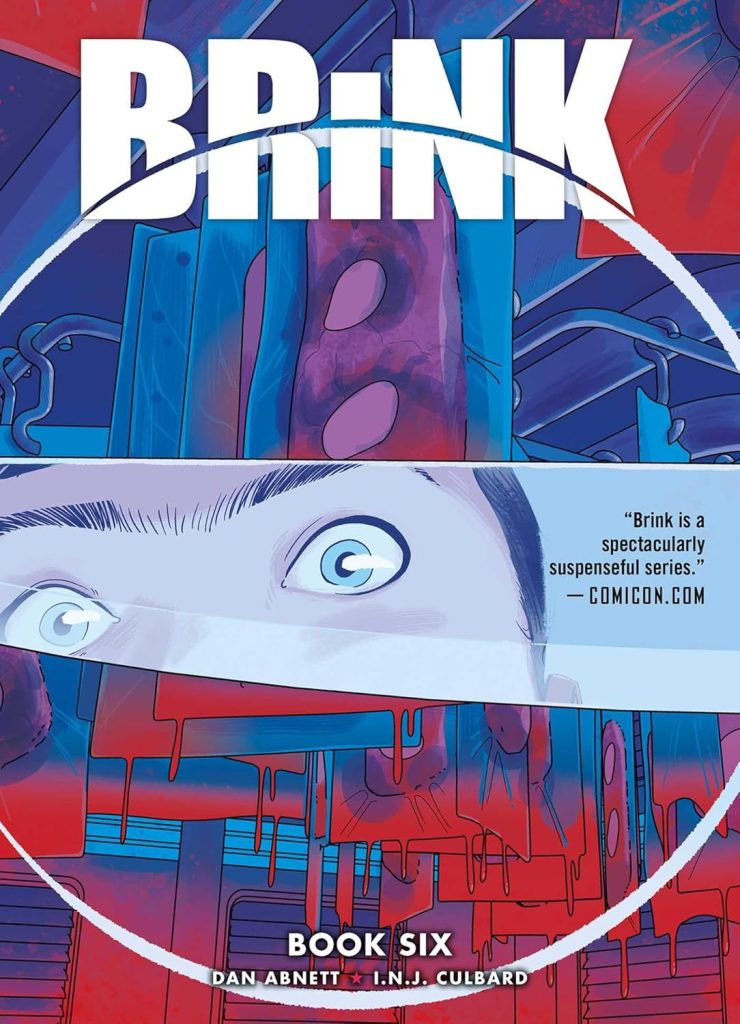
Brink continues to be the quiet contrast to the energy rush comprising the remainder of each issue of 2000AD when serialised, and it’s particularly welcome to see Book Six open with a synopsis of what’s been a complicated and nuanced series.
The short version is that the infiltration of a highly influential apocalyptic cult extends into high levels of power and Detective Bridget Kurtis has managed to prevent acts of sabotage aimed at mass killings. She was largely absent from Book Five, but in a break from tradition is introduced early here arriving at the Bellholme Habitat after a four month journey. Having designated the cult as hearsay and rumour until now, the authorities have finally sanctioned investigation, but Bellholme is only intended as a stopover.
Dan Abnett deliberately characterises Bridget as obsessive and awkward, yet utterly devoted to duty and with a heightened sense of injustice. She has no time for social niceties or fripperies and prioritises investigation over all else, so not someone it’s easy to warm to, yet her attention to detail, dedication and tenacity produces results. A highlight here is Abnett underlining how difficult it is to work alongside someone with that personality, yet simultaneously admiring their skill.
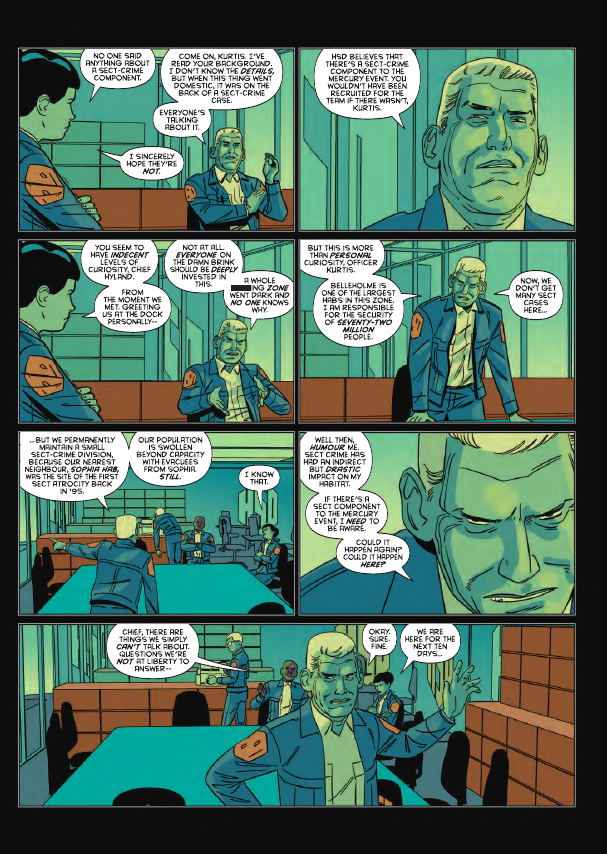
Several episodes end with nastiness at what seems to be the futuristic meat lab. As seen by other projects, artist I.N.J. Culbard enjoys classic horror material, and his method of defining horror is via suggestion and aftermath rather than explicit bloodletting, and it’s extremely effective. Otherwise Culbard knows the format is going to feature extended scenes of people talking and he keeps the reader’s attention by changing viewpoints and expressions. A long conversation with Bridget toward the end is a masterful example. Neither is he shy of filling the backgrounds with technological detail, yet it’s never showy or distracting, and the colours reflecting the artificial lighting in most scenes is notable.
While investigation and mystery is Abnett’s priority, it’s accompanied by some imaginative extrapolations of the future. He considers the area the homeless might occupy on a space station, for instance, while also supplying a surprising connection to the events of Book Five. You won’t see it coming, and it’s excellent, not least for bolstering what was the only weak Brink tale so far.
The heart of Book Six is two contrasting interrogation sequences with a murder suspect who’s activities have been followed alongside Bridget’s. It’s cleverly written and begins the domino chain propelling this toward being the best Brink tale so far. Readers will have to go on trust and instinct just as Bridget and fellow HSD officers must, Abnett expands the cast well and the secrets only tumble out toward the end.