Review by Frank Plowright
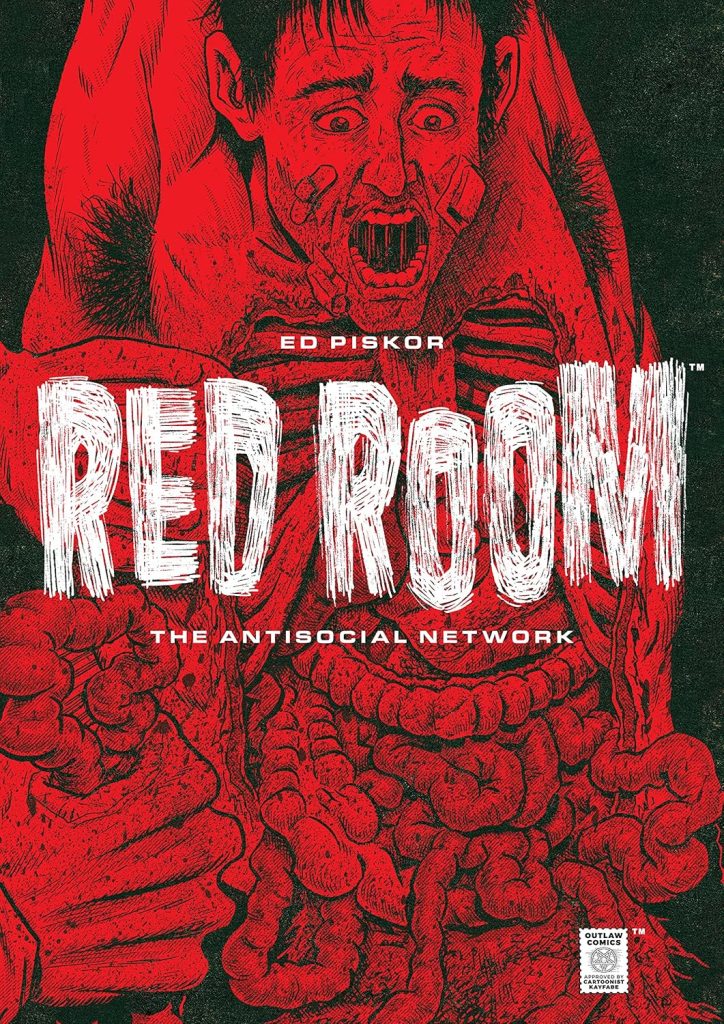
Anyone coming to Red Room via Ed Piskor’s earlier work is in for one hell of a shock. Nothing about a history of Hip-Hop, the story of a hacker or a reworking of the X-Men’s careers is going to prepare readers for the visceral gonzo horror this serves up. It’s provocatively strong and explicit, details depraved behaviour, and in his introduction Piskor refers to the content as extremely self-aware speaking to the thrills his younger self got from horror. You have been warned.
The Red Room is a fictional website where customers can log in to view people being tortured and murdered for their entertainment. Perpetrators operate under masked and costumed aliases, engendering a cult following, and their victims are selected from a vast basement of pitiful candidates. The logical extension of obsession with serial killers is something like the Red Room, and the opening story co-opts an existing serial killer giving them a new playground. Piskor shows the progression of torture on video screens as if live broadcasts, complete with real time commentary adjacent to the screen, frequently funny, but also just the hateful dicks empowered by anonymity that troll any site allowing comments. Why a K. Eastman features among more imaginatively conceived aliases is anyone’s guess.
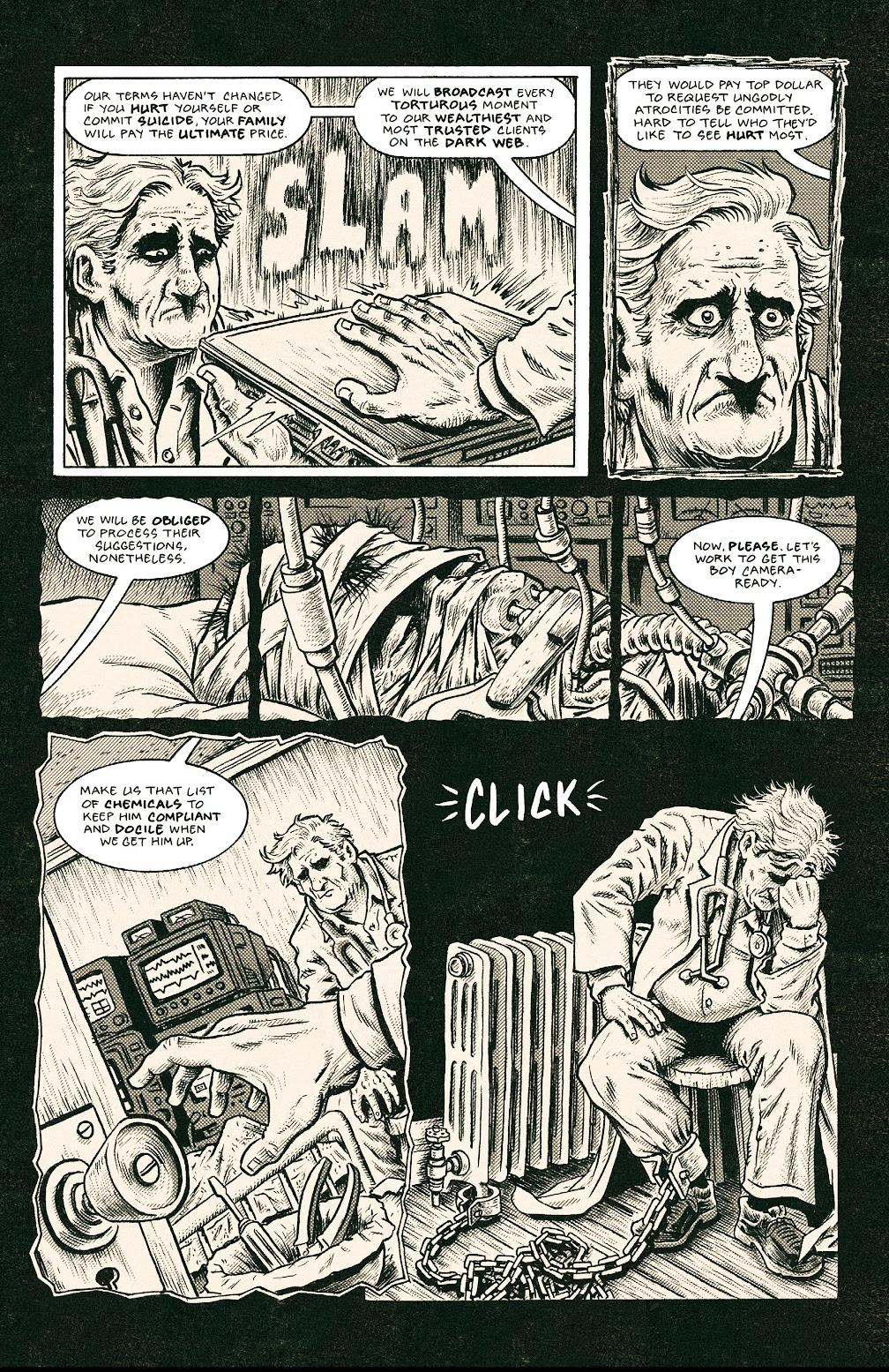
While the location remains in focus, Piskor treats every new chapter as a new story, and jumps about through time, establishing a timescale via small elements of continuity. We see another method of acquiring victims, the doctor who keeps them healthy, the coder whose creation of the dark web enables the atrocities to continue, and a look at a pre-internet snuff video told in the style of EC revenge horror shorts.
Despite horrific sequences occurring throughout, the first and longest story is the real stomach-turner for the shock of the introduction and its extended nature. Even that, though, has a strong character element as his teenage love of horror notwithstanding, Piskor focuses on people throughout. You may be surprised how rapidly you’re able to tune out the atrocities and become involved in their stories, and it’s also worth mentioning that this is Piskor’s first out and out fictional world, his other projects being closer to documentaries. Elements of that style persist in the bonus features including extensive commentary alongside design sketches and page roughs.
Piskor’s art is very disciplined considering the content is so over the top it’s stratospheric, with people neatly defined and recognisable. The horror, though, is unrestrained, with innards hanging out of people already missing limbs. We live in an era where barely any form of restraint is considered desirable, yet Piskor raises the bar for horror comics several notches. It’s not for everyone, and continues with Trigger Warnings.