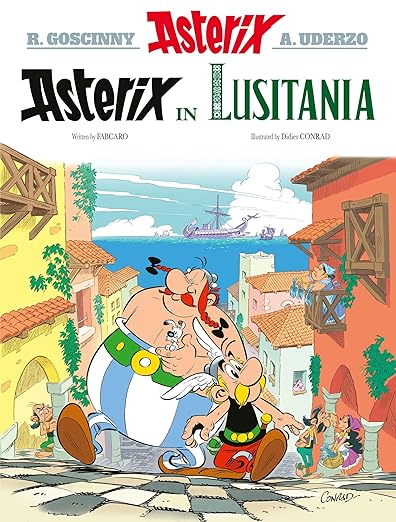
Review by Frank Plowright
Producing an Asterix story in the 21st century means the imposition of restrictions original creators René Goscinny and Albert Uderzo never worried themselves about. They cheerfully served up national stereotypes without any consideration, but offence is now far more easily taken, and some aspects of earlier books certainly strike the wrong chord. Here, decades too late, the Black pirate is finally drawn as something other than an inexcusable racist caricature. More debatable is whether highlighting national characteristics is intrinsically offensive.
It’s played safe here by writer Fabcaro selecting Portugal, known as Lusitania in Roman times, as the destination for Asterix and Obelix’s latest trip abroad. Most people would be hard-pressed to name anything intrinsically Portuguese, so beyond a taste for depressing songs it’s the culinary culture at the heart of the story. The majority of Portuguese-specific jokes relate to words in their language ending in ‘çáo’. Assorted English words ending in ‘ion’ are given the new appendage, which after a while is only mildly funnier than this dry description makes it sound.
Fabcaro imitates the classic Asterix style very well, including sections of jokes on a theme, names in Latin, and a fair number of puns, all of which keep translator Adriana Hunter busy determining English equivalents. She also comes up trumps with the assorted joke names for characters. Whether Deli Furtado is one of hers or Fabcaro’s, it’s great.
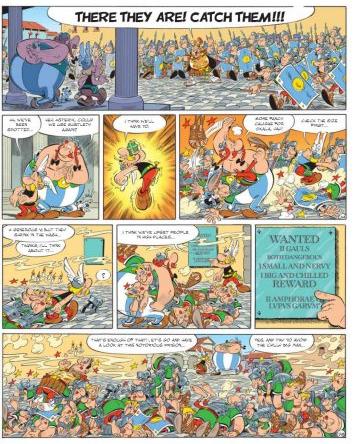
Because Uderzo was the original Asterix artist, so good and associated with the feature for so long, Didier Conrad is never going to get the credit he deserves on the feature, which is a shame. Yes, he’s working from Uderzo’s character designs and visual template, but he’s an excellent cartoonist in his own right and there’s so much skill and effort put into some of his busy half page designs.
For all that, this is weaker than Fabcaro’s début Asterix and the White Iris. That’s partially because he’s really straining to make jokes about the Portguese, and partially because it’s rather a bitty plot to allow for diversions, although it all ties together well. One of those diversions actually provides the best sequence, though, when Fabcaro satirises the modern day ills of passwords and marketing concept meetings. The idea of someone having to engrave a chosen password in stone is hilarious, and rather undersold by Conrad.
Balanced against that is too much retreading old ground. The greed of traders having no bounds has frequently featured, as has attempted flattery of Julius Caesar and Obelix falling for a young woman. Asterix in Lusitania is a perfectly adequate homage, but given the excellence of Fabcaro’s first volume more was expected.