Review by Frank Plowright
Before his tale is told, Robbie Morrison establishes Johann Weyer as a later author of considerable renown, with an influence stretching down through the centuries from his 16th century life. In 1529, however, he’s fourteen and has just arrived in Antwerp to be apprenticed to historical theologian Cornelius Agrippa. The Catholic church maintains a massive influence over everyday life, and any diversion from its teaching is considered heretical and possibly to be investigated by the feared Spanish inquisitors.
The appalling excesses of the Inquisition seeing witchcraft everywhere and using it as an excuse to persecute and kill prompted a reign of fear, making the era one ripe for stories, yet beyond Pat Mills giving it an SF gloss for his Nemesis the Warlock, it’s been relatively unseen in comics. The power wielded by Chief Inquistor Bernard Eymerich lays a constant tension over events, yet Agrippa doesn’t fear poking the bear, scorning his methods. When a third murder occurs in Antwerp, Agrippa is charged with solving the crimes, the unstated undercurrent being he might otherwise become a suspect.
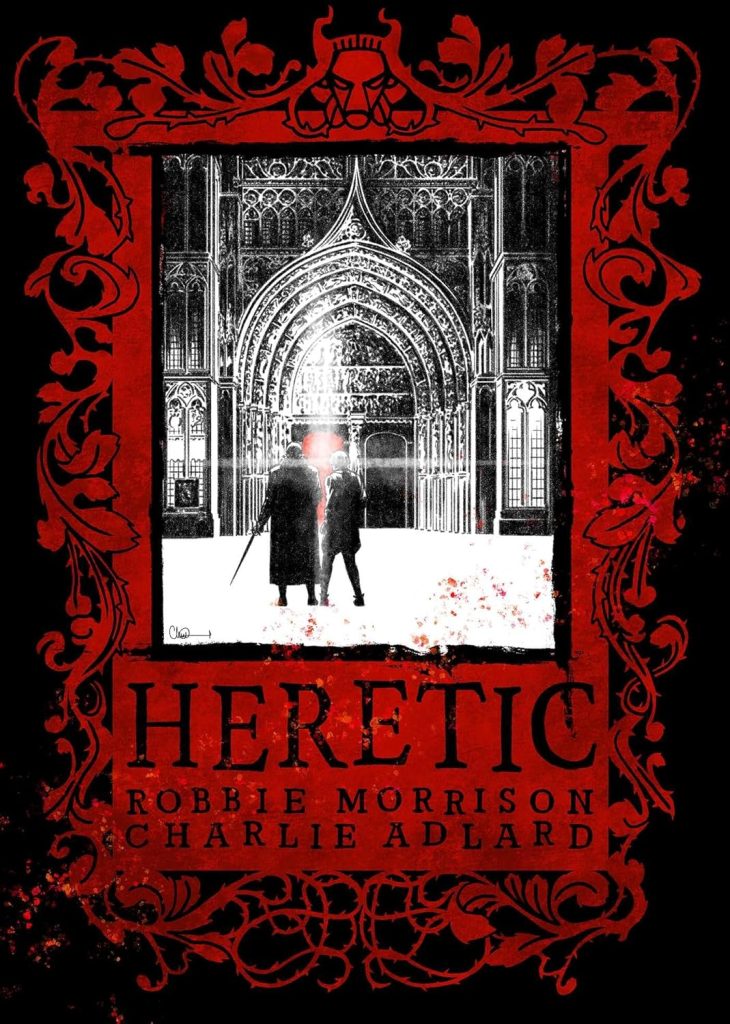
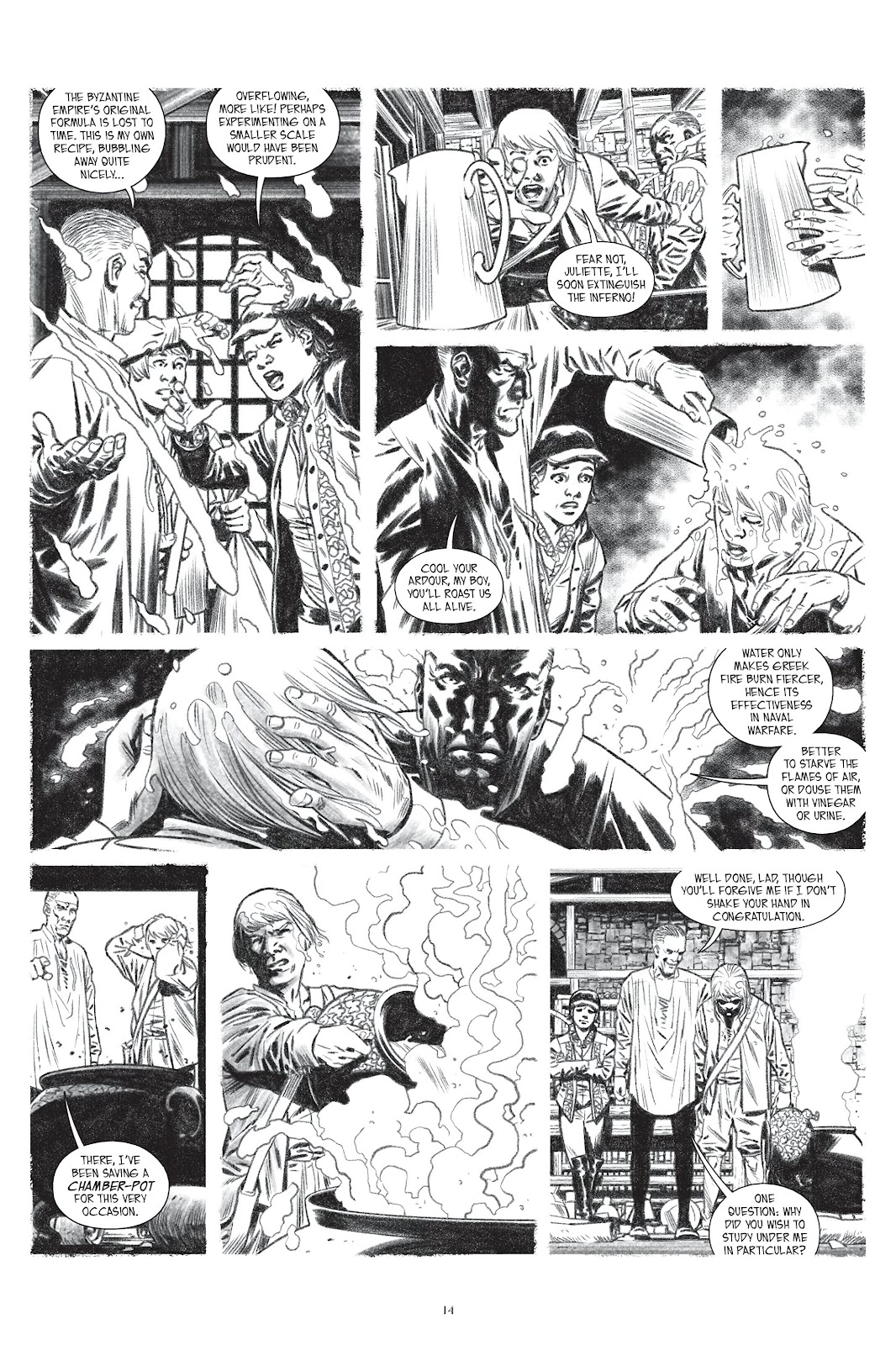
Charlie Adlard’s realistic art is deliberately understated, not taking the sensational route when other options are available, strong on personality and storytelling. Solid textured black and white art is enlivened by a very occasional startling burst into colour and some creative shopping in of religious imagery. Horrors occur and are revealed, but only very rarely does Adlard head into the explicit for shock value.
With investigations occurring against a background whereby the needs of the church must always be prioritised, Heretic has similarities with Umberto Eco’s The Name of the Rose, also featuring a vast intellect passing on their knowledge to a young assistant. Morrison unveils the hypocrisy of privilege as Agrippa’s investigations continue, contrasted with the cruelty endured by a Jewish woman abducted by the Inquisition. There’s an underlying air of menace perpetuated, partially by revealing the masochistic practices by those deep into church doctrine. If people will subject themselves to such violent oppression, what will they do to others?
Although he’s spotlighting the past, Morrison’s observations are contemporary. Self-aware rabblerousers feature, in this case representing an entrenched establishment, targeting minorities in the name of maintaining their narrow definition of national purity. It’s largely subtle, but toward the end when the truth tumbles out there’s less nuance. Nevertheless, Heretic is a graphic novel for our times, skilfully constructed and highlighting the madness to which many have succumbed.