Review by Ian Keogh
Coax is first seen saving a party of Helvetians from would-be Germanic attackers in 60BCE. He’s ruthlessly efficient, and so wins the trust of those he rescues. He’s then shown fifteen years earlier among a bunch of sea pirates hitting very lucky indeed by capturing later ruler of the Roman Empire, Caius Julius Caesar and holding him for ransom. Their encounter is a prime example of winning the battle, but losing the war. By the time the narrative circles back to Coax’s present we’ve learned much about his past and how he became co-opted by Caesar.
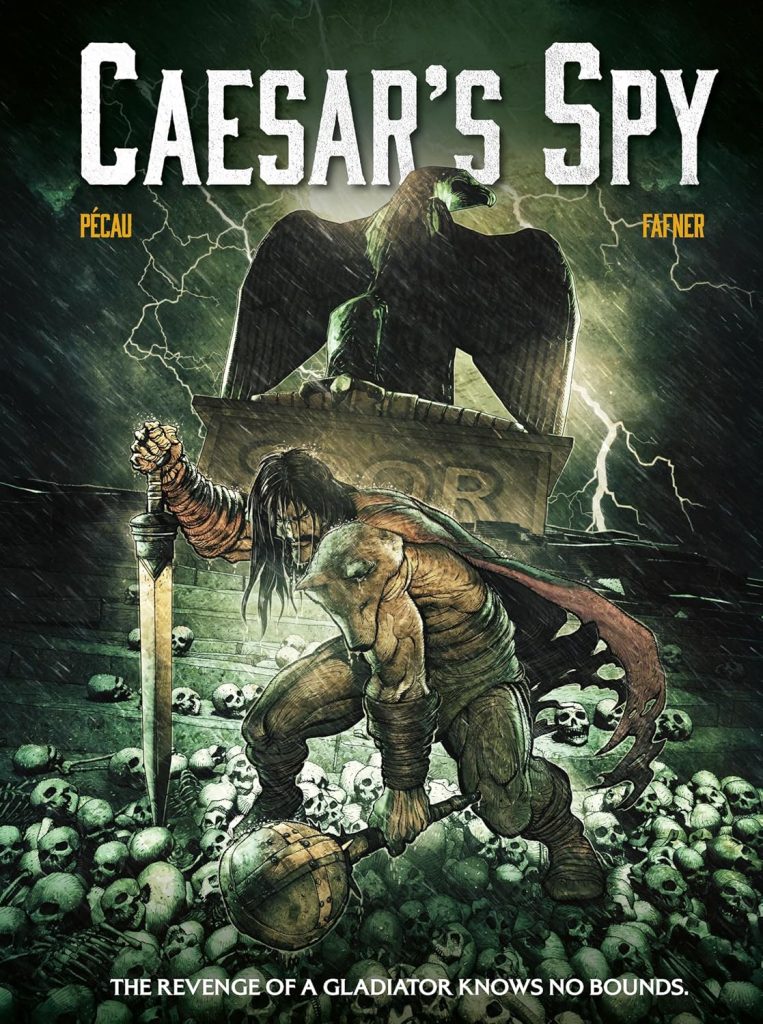
Caesar’s Spy combines three volumes of Coax’s activities, firstly Jean-Pierre Pécau’s bloody tale in which hundreds are slaughtered in the name of vengeance for a historical grudge. Cleverly, Pécau shows how that in turn begins a new cycle of vengeance. This is the type of rich and stirring historical fiction so popular in Europe, yet a success that’s yet to transfer to English language graphic novels. As drawn by Max von Fafner it stands a better chance of success than most.
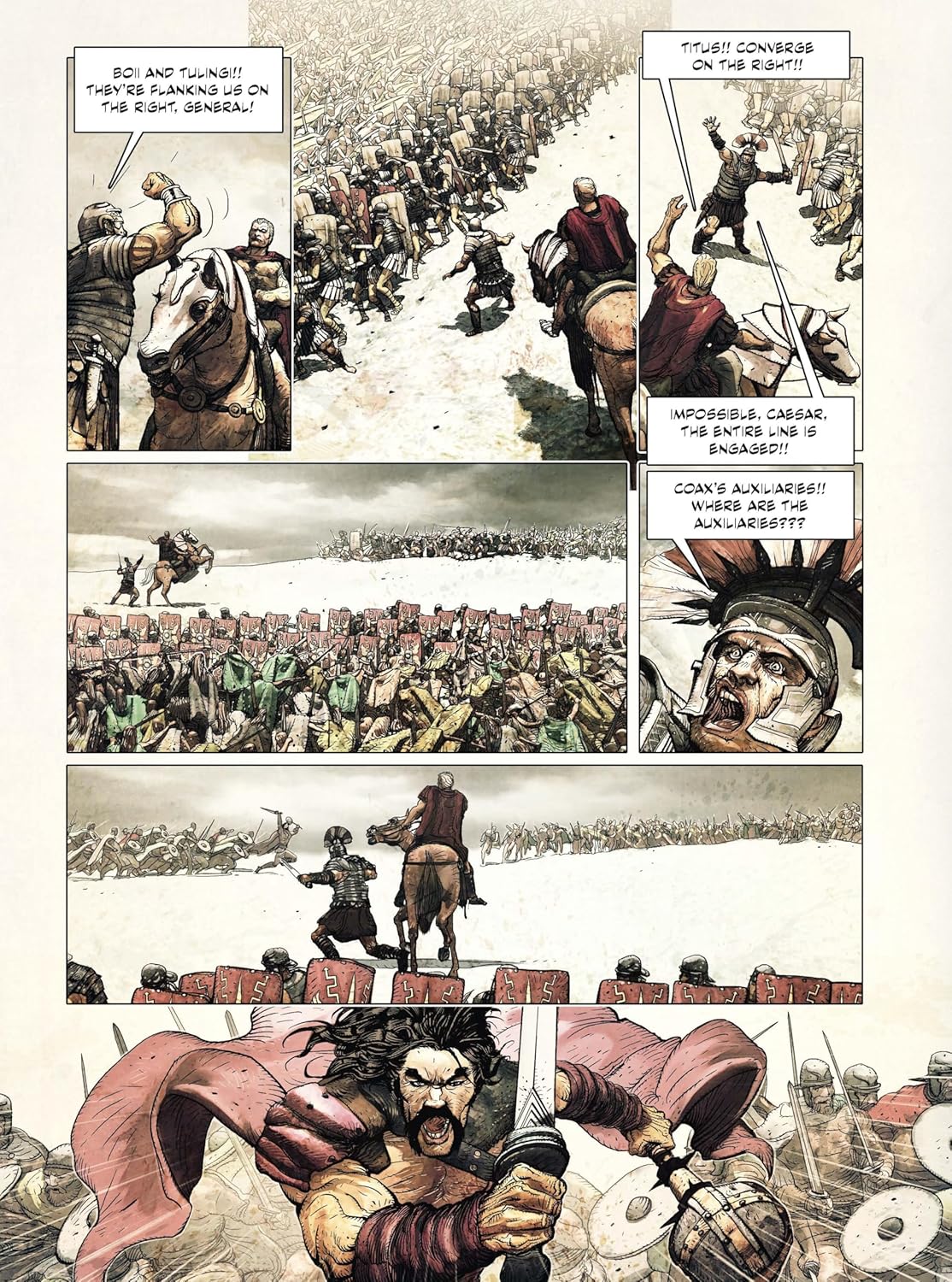
Coax is Conan the Barbarian in all but name, an impossibly muscled brute in a loincloth revelling in combat and women, and no stranger to surviving impossible odds. Fafner delivers this in classic action style, expansive with locations and backgrounds filled with troops as per the sample art. Page after page is gloriously impressive. If there’s a slight problem it’s expressions being just that little too fixed, but it’s only occasional.
The Caesar whom Coax deals with isn’t yet Roman Emperor, but a respected general who feels he has to conquer Gaul before he can return to Rome in triumph and assume political power. History has commended him as a military tactician, but planning requires knowledge, and that’s where Coax comes in. He’s sent to infiltrate or talk with people, and these missions are spliced with Caesar’s speculations about Rome as Pécau builds a world of constant mistrust. It serves the narrative well, as does Pécau emphasising the political groups of the era, not really that different from our own in outlook, just restricted to the privileged. Pécau doesn’t go overboard in explaining the period realities and allegiances, so what’s actually historical fact can transmit as narratively convenient, but those aware of the history will appreciate the nuance and completeness.
Each of the three stories captivates as Pécau uses them to chart Caesar’s eventual rise to power, so fans of historical adventure should find Caesar’s Spy very engaging historical fiction.