Review by Lewis Savarese
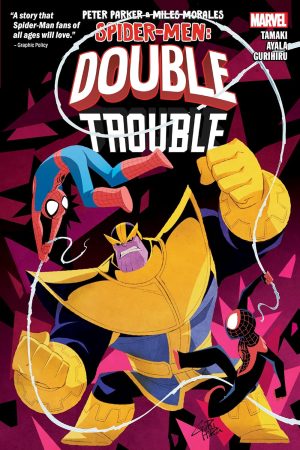
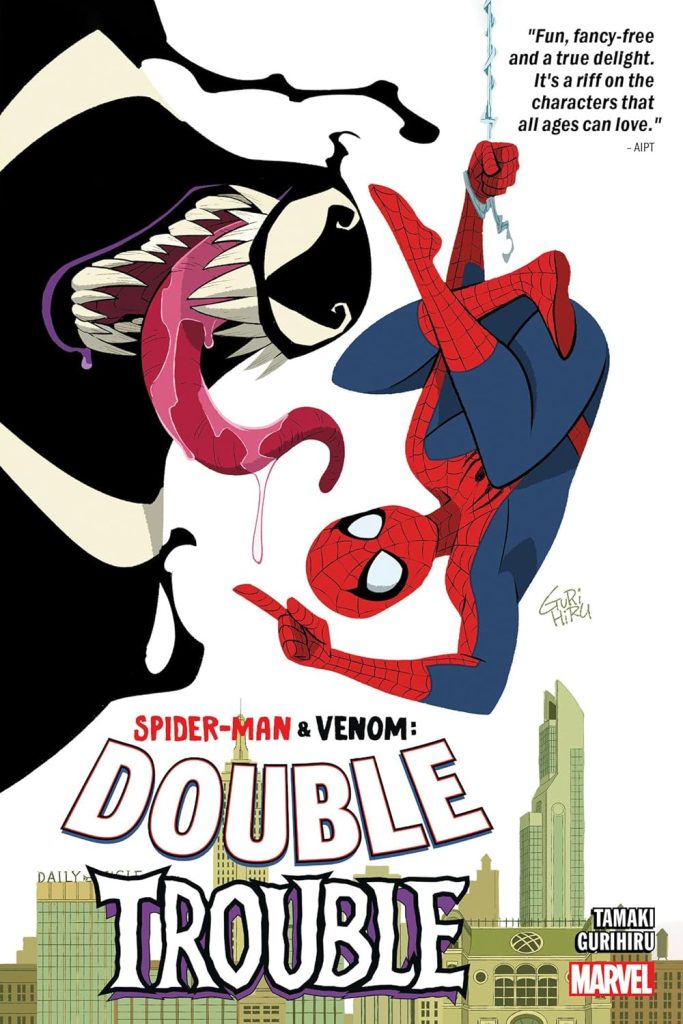
In 2019, Marvel tapped superstars Mariko Tamaki and Gurihiru to spearhead a new series for young readers starting with Spider-Man & Venom: Double Trouble. If you pick up Double Trouble looking for the twin mutants of the same name from the pages of X-Force, you will be disappointed. If this is a gift for a young superhero fan in your life, though, they will find some enjoyment, especially if they have a passing familiarity with the characters. Anyone with deeper knowledge of the characters might find Tamaki’s interpretation of them and their hi-jinks grating. Ultimately, Tamaki strikes an uneven balance between cartoon antics and established character dynamics, while Gurihiru outshines the narrative with their art.
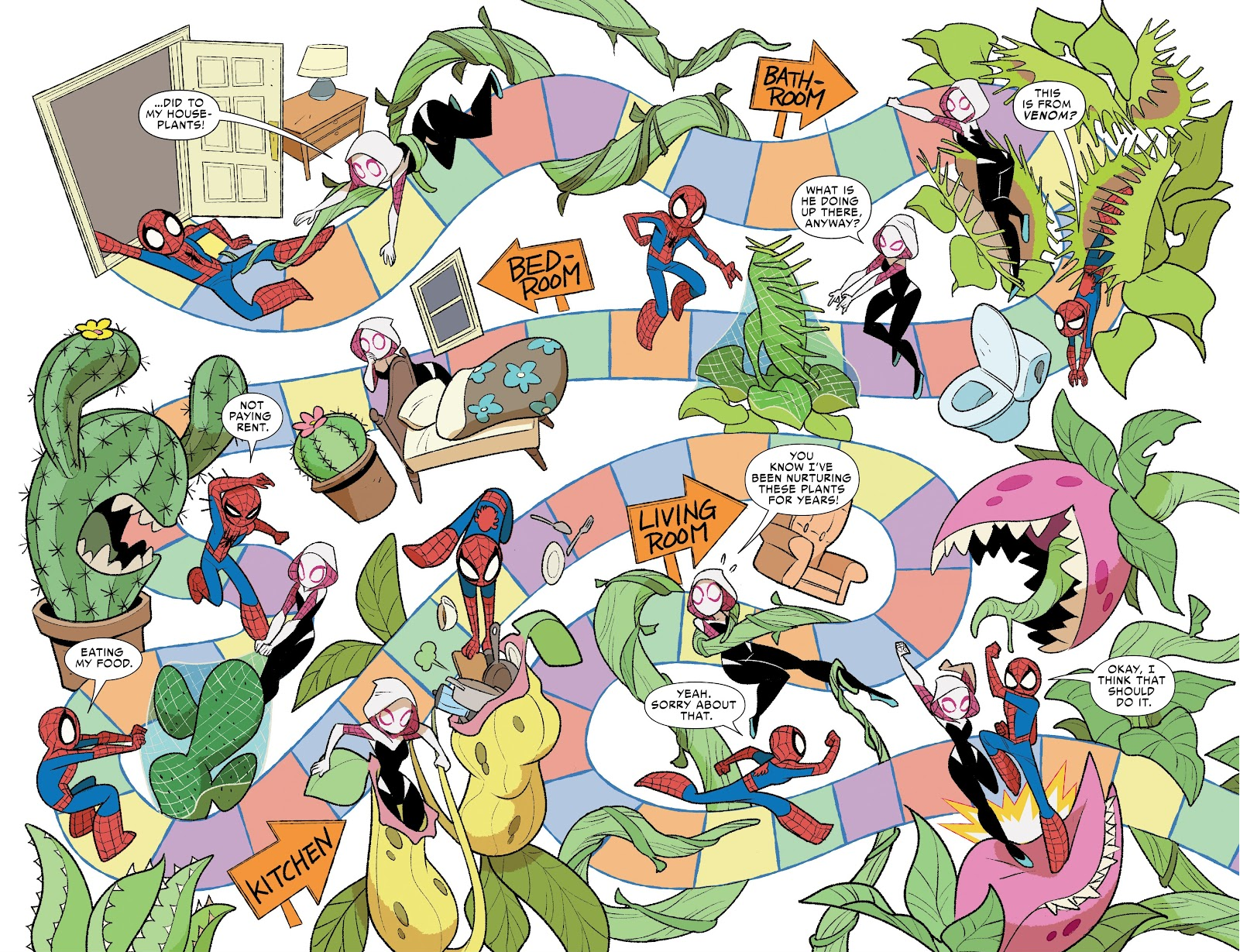
On a typical Manhattan afternoon, Spider-Man and Venom bound around the city stopping and creating trouble, respectively. They both sing in their head amusing, self-referential versions of the 1967 Spider-Man cartoon theme song. This sung narration motif quickly wears out its welcome when repeated three times in rapid succession, but thankfully disappears until the final chapter. Tamaki does offer an intriguing setup on revealing Spider-Man and Venom are roommates of the odd couple variety. Spider-Man shops for groceries and cooks them ramen, only for a slovenly Venom to gobble it all up without sharing. Ghost-Spider even makes an appearance as their downstairs neighbour who comes to complain about the symbiote-infused trash Venom has thrown into her apartment, causing her plants to mutate into hostile creatures. Gurihiru flexes their creativity here, depicting Ghost-Spider’s apartment as a colourfully tiled gameboard that Spider-Man and Ghost-Spider traverse while fighting off carnivorous houseplants.
Domestic squabbles between Spider-Man, Venom, and their neighbours are unfortunately abandoned for a mind swapping scheme concocted by Venom. While Spidey sleeps, Venom transfers his consciousness into Spider-Man’s body and vice versa with a gadget of inexplicable origin. To Tamaki’s credit, she offers up a quirky exploration of Venom as Spidey’s malevolent doppelganger, highlighting the vanity and bravado that plague Peter Parker through Venom’s attempts to capitalise on Spider-Man’s reputation. Using Spidey’s body, Venom wins a Ninja Warrior-like competition called ‘Battle of Heroes’ and becomes the spokesperson for a deodorant. In Venom’s body, Spider-Man has no opportunity to explore Venom’s antihero tendencies, instead he encounters the Green Goblin, who has been relegated to debt collector, tracking Venom since the beginning for an undisclosed arrears. Again Gurihiru elevate the shenanigans with an inventive spread: the lower third of the page is a single horizontal panel showing Spidey-as-Venom’s path through Central Park as he dodges Green Goblin’s winged pumpkin bomb drones, while the upper two-thirds are split into four vertical panels capturing magnified details from the panel below.
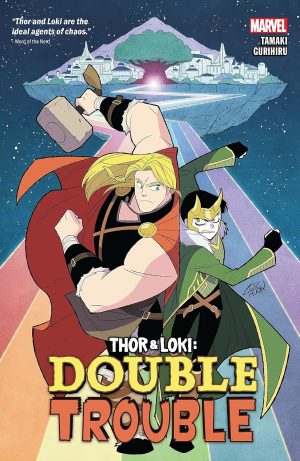
Venom’s motivation for the mind swap never manifests, but it doesn’t stop Tamaki incorporating another in the third act. Gurihiru’s Venom cat and Spidey squirrel are adorable, but aesthetics alone cannot justify this narrative retread. Spider-Man & Venom: Double Trouble might satisfy some young readers, perhaps even younger readers than Tamaki anticipated, but there is not much for adults, save Gurihiru’s art. The series continues with Thor & Loki: Double Trouble.