Review by Ian Keogh
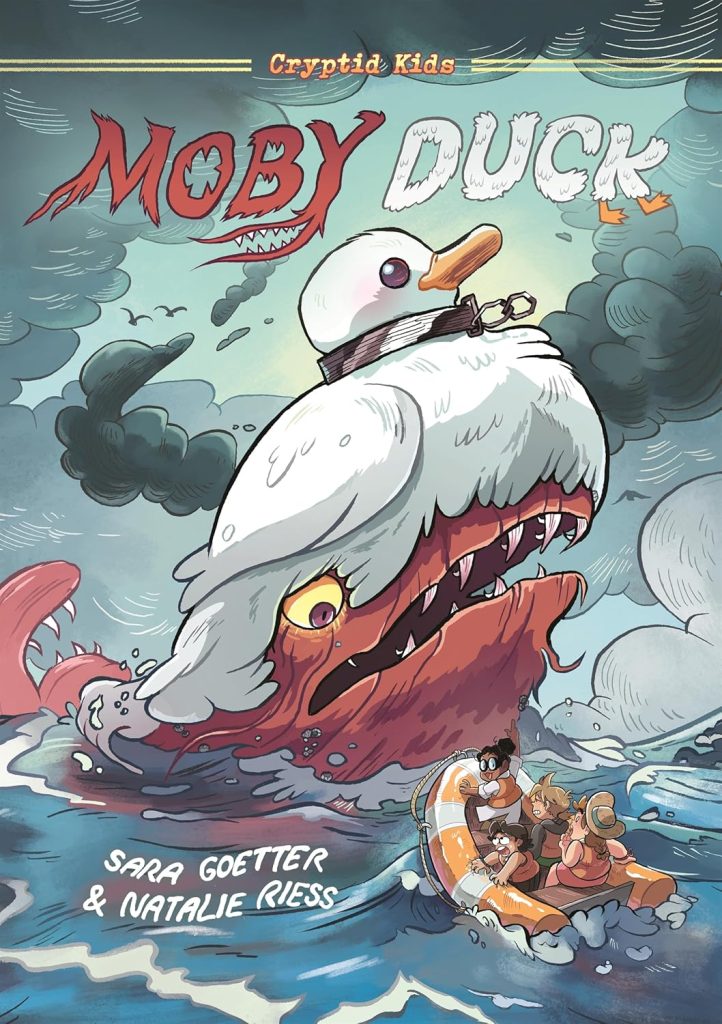
Alvida Scales isn’t very nice, although has all the equipment she needs to travel the world capturing rarely seen creatures considered by most to be myths. The opening pages show she doesn’t seemed to have learned any lessons from the results of her unpalatable behaviour in The Bawk-ness Monster either, and as Moby Duck begins she’s swearing to hunt the creature down. But is this Alvida? In case readers missed the previous book, there’s a handy recap in the form of the fanzine put together by K, Luc and Penny, who thwarted Alvida’s previous plans.
A year has passed, and for the summer Penny’s able to revisit her old hometown and her friends with the strict condition that there’s no hunting for cryptids (mythological monsters for those who don’t know). Penny’s mother will know if they do. There’s tension from the start. Penny’s brought her friend Jo, who joins in with Luc when they play online, and just as K has no interest in online games, Jo doesn’t know about cryptozoology.
For a long while, rather than the constant twists and turns of the first adventure, co-creators Sara Goetter and Natalie Riess supply a more structured adventure, but then drop a beauty of a surprise. K doesn’t believe in aliens and her father doesn’t believe in cryptids, and in that respect they’re both wrong. This is a more straightforward story, though, partly because having decided on the title Goetter and Riess throw in themes from Moby Dick, such as the injured and obsessed hunter. Given the prodigious imagination displayed overall, it’s a little disappointing that the title character is another bird/fish combination following the Bawk-ness Monster, although their personalities are very different.
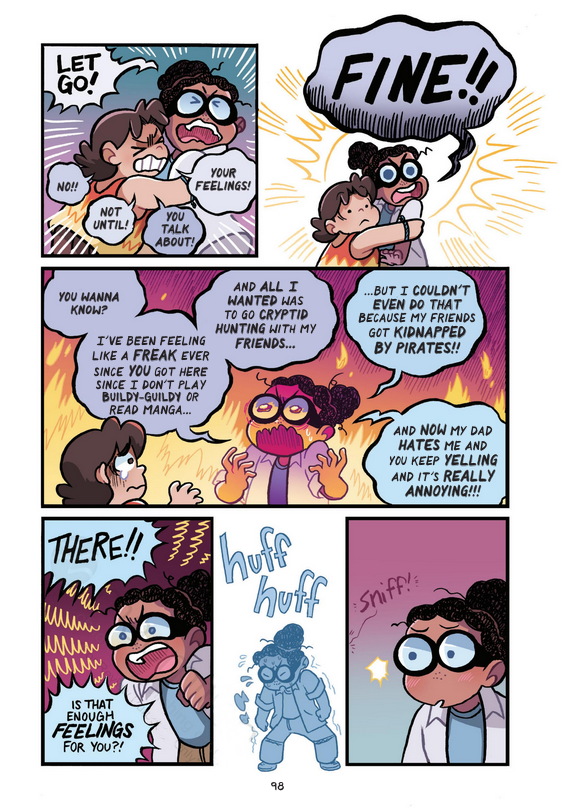
Both creators also share the art, and it’s not quite as busy as before, which helps in a story that’s very much about the differences between children and how they feel. In fact, it’s also about how some adults feel, as K’s dad features heavily, and the art brings that out. Every now and again there’s an action-packed spread, and these really push all the right buttons.
Foreshadowing is very naturally placed, with skills seen early proving extremely valuable later on, and as before a healthy absurdist sense of humour runs through the entire book. Goetter and Riess are also beginning to build their world, and several surprising connections are revealed to the children. There’s not quite the surprise and the manic energy of the first book, but this is still very good.