Review by Frank Plowright
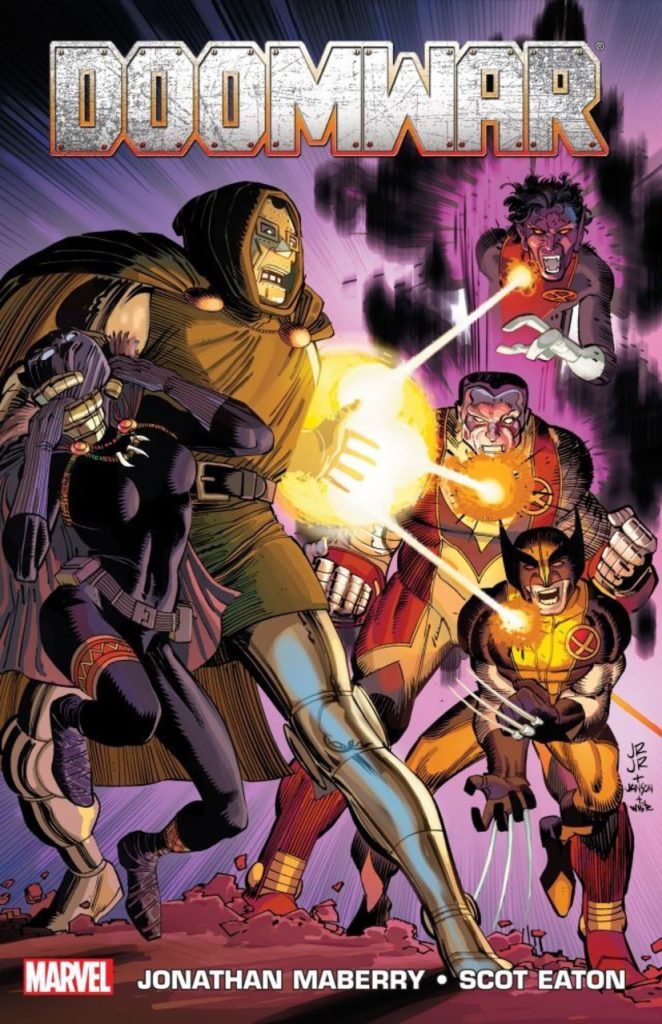
Doomwar spins out of events in Wakanda beginning with the murder of T’Challa, the Black Panther. He was returned to life considerably weakened, but knowing his killer was Doctor Doom, and in the meantime his sister Shuri became the Black Panther and Wakandan regent. Black Panther: Power told the story of T’Challa’s recovery, revolution in Wakanda and the framing of Namor.
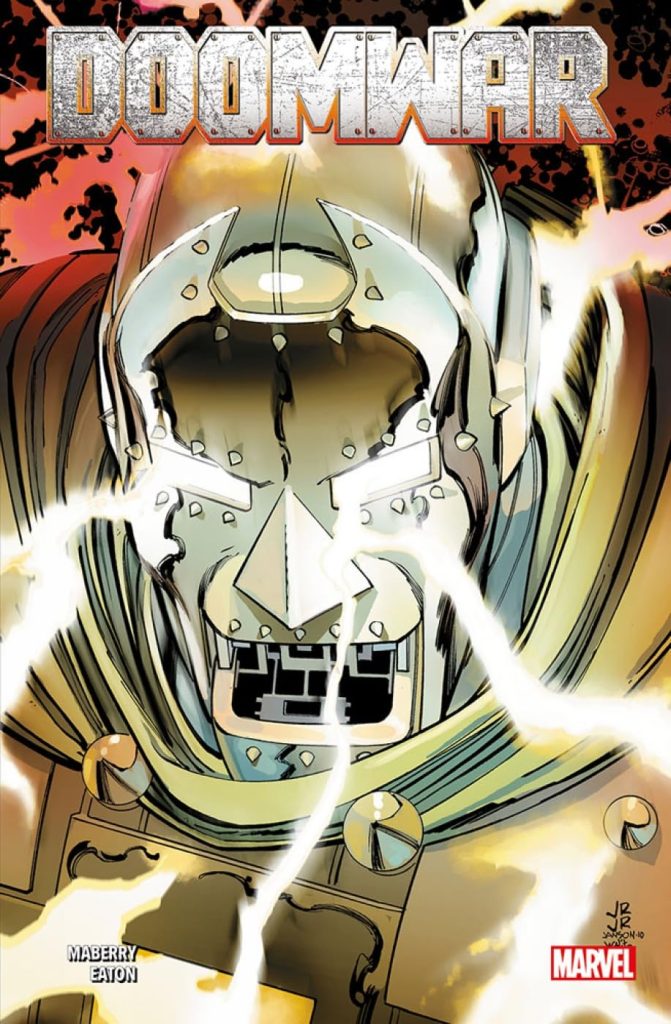
Jonathan Maberry ended that with few realising Doom was the true power behind the new Wakandan leadership, having shown a fair sized cast each with different plans and motivations. A powerful opening chapter spotlights each of them, and explains the clever method behind conquering the world’s most technologically advanced civilisation, meaning Doomwar can be experienced without reference to previous events. An additional sweetner, as seen on the cover, is Black Panther allied with the X-Men.
Mayberry’s writing style is very strong on explanations making sure his plot locks into place, but the resulting downside is that it doesn’t reach the crisis points as rapidly as it should. A case in point is six pages of recap opening the third chapter in order to persuade the Fantastic Four they should be involved. However, that same chapter also has a very clever path of reasoning as to who Doom is and why. Not everyone will buy into this, but it does form the basis of Marvel’s later Secret Wars crossover, and other interesting ideas include the appearance of Deadpool and Shuri’s idea as to what becomes a monarch in battle.
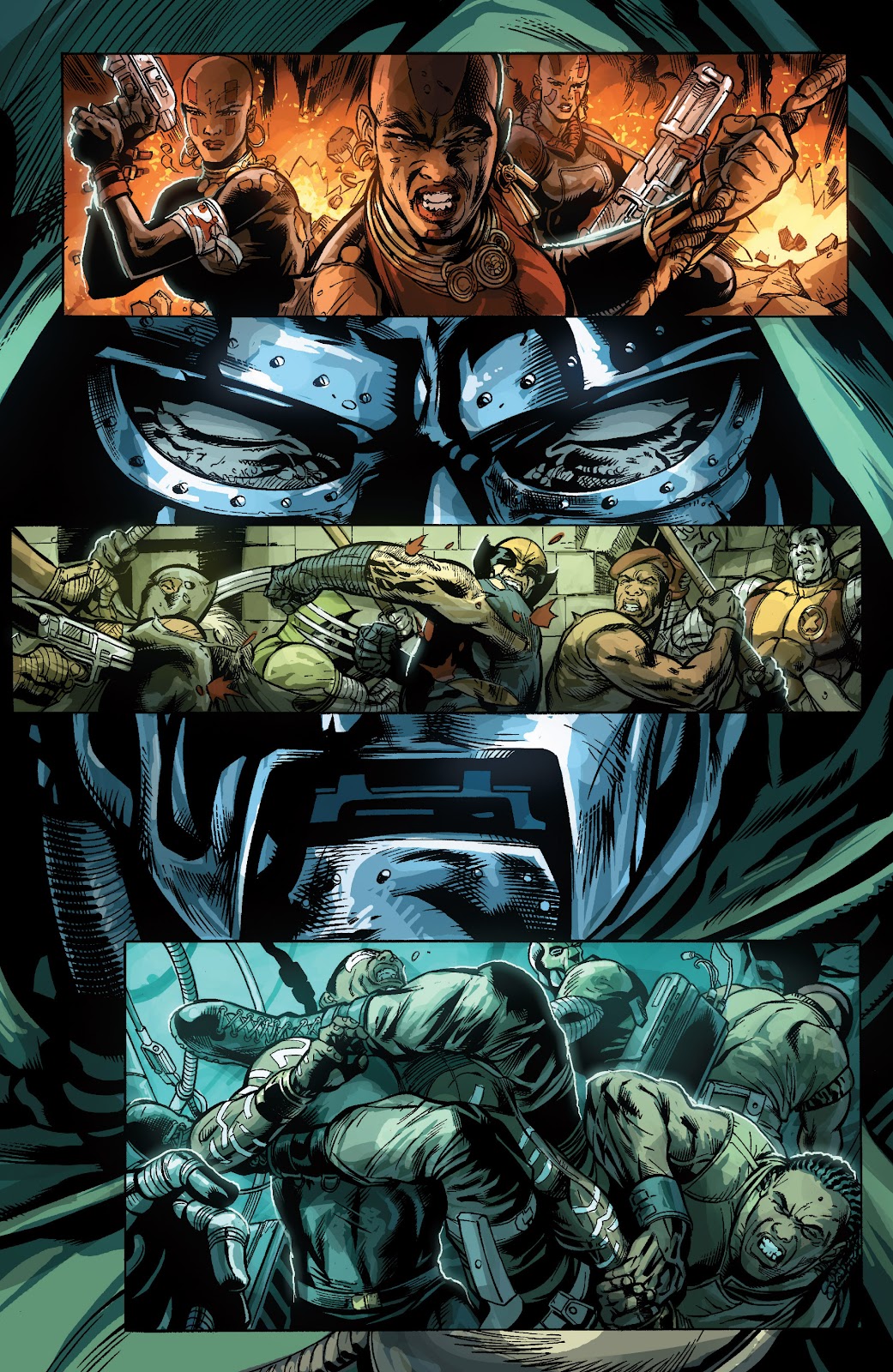
Being handed a story that’s almost constant action and involving many guest stars isn’t every artist’s dream assignment, but Scot Eaton relishes the moment. He packs the panels, delivers the pin-ups and spends time reinforcing Wakandan culture via detail on costumes, while the sample art shows his occasionally inventive layouts.
Having dragged the plot in places, Maberry’s ending is extremely rushed. However he sees himself, Doom is a villain, so as might be presumed, there’s a victory, but at a considerable cost that needed greater exploration. For a writer prioritising explanations at every turn, Maberry is very keen to gloss over this one and leave it to others to pick up the pieces, which is unsatisfying. On the other hand the many ideas and general unpredictability in reaching the ending is worthwhile.
If Maberry’s style of writing appeals, this story is better appreciated together with the build-up in the later Black Panther: Doomwar.