Review by Ian Keogh
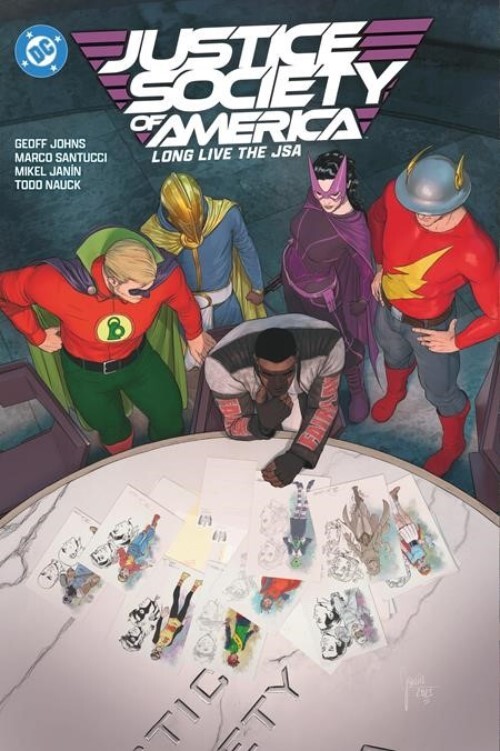
Long Live the JSA is the second and final volume of Geoff Johns’ return to the Justice Society of America. At first it seems that in preference to picking up on the dangling plot thread that ended New Golden Age, he’s instead concentrating on a sequel to Stargirl: The Lost Children. There, Stargirl rescued dozens of young sidekicks of 1940s heroes stuck in time and returned them to the present day, and this picks up almost immediately after their return, although there’s no need to read the other story as the essentials are supplied here.
The rescued sidekicks are sixty years out of their time, and in most cases the heroes they assisted are long dead, but thankfully the repeated experience is represented by a few examples and Johns hasn’t forgotten Huntress being stranded out of time on a different world. Her solution is to form the JSA of her world by intervening sooner in the destinies of villains like Solomon Grundy, but her choices are dangerous, and there’s a justifiable fear among existing JSA members as to whether this is a wise course of action.
From there Johns takes a wide ranging tour of the DC universe, which will surely have great appeal to superhero fans with long memories who’ll remember the obscurities he dredges up. However, the even greater appeal is the uncertainty surrounding them, as they may not be the people readers think they recognise. The use of the characters returned from the 1940s is limited, but the few who feature have a real presence, for better or worse.
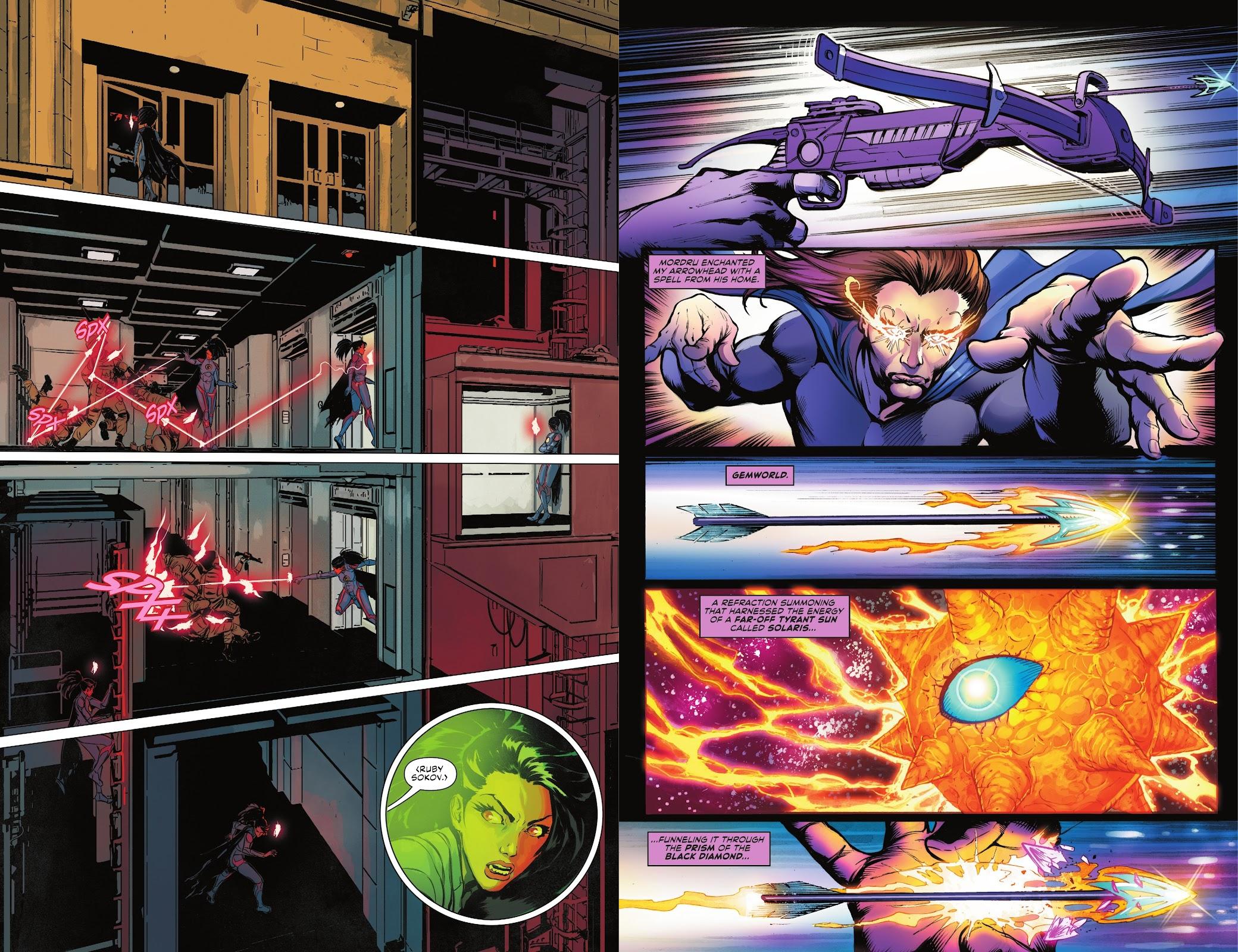
The art is pretty well split between Mikel Janín and Marco Santucci, which is quite the contrast. Janín echoes his work on the first volume with pages efficiently and attractively laid out (sample spread left), but sometimes too clean and precise. Santucci’s pages more reflect traditional superhero art packing in the characters, but there’s a noticeable downgrading of quality from his earliest pages to his later ones. Todd Nauck on the final chapter gives a masterclass on how to include dozens of characters on spread after spread and still have them look amazing.
The first five chapters set up something all too quickly finished in the sixth, and Johns’ solution manages to be both interesting and unsatisfactory at the same time, although the level of satisfaction could increase depending on how a group of characters are handled in the future. It’s a muddled attempt to reinforce the JSA as the first super team having a legacy stretching centuries ahead. The final chapter draws a line for Stargirl, and is the slimmest here, the Justice Society barely relevant in any incarnation, which is a disappointment.
Johns not revisiting his previous glories when returning to the Justice Society was the right decision no matter what fans might have wanted. However, the result is mixed and episodic, but when it shines it truly shines.