Review by Ian Keogh
Geoff Johns didn’t begin the Justice Society of America’s revival in 1999, but it’s his name on the JSA collections because his was the definitive achievement. Returning to the team years later carries expectations of previous accomplishments, and superhero comics are littered with examples of disappointment and failure under such circumstances. Does Johns buck the trend?
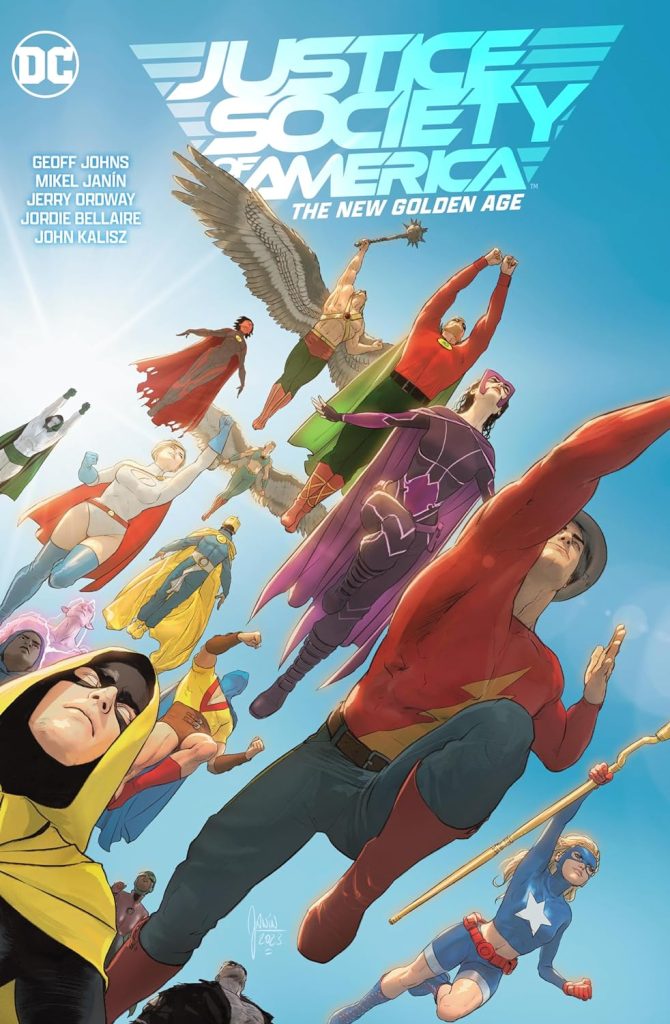
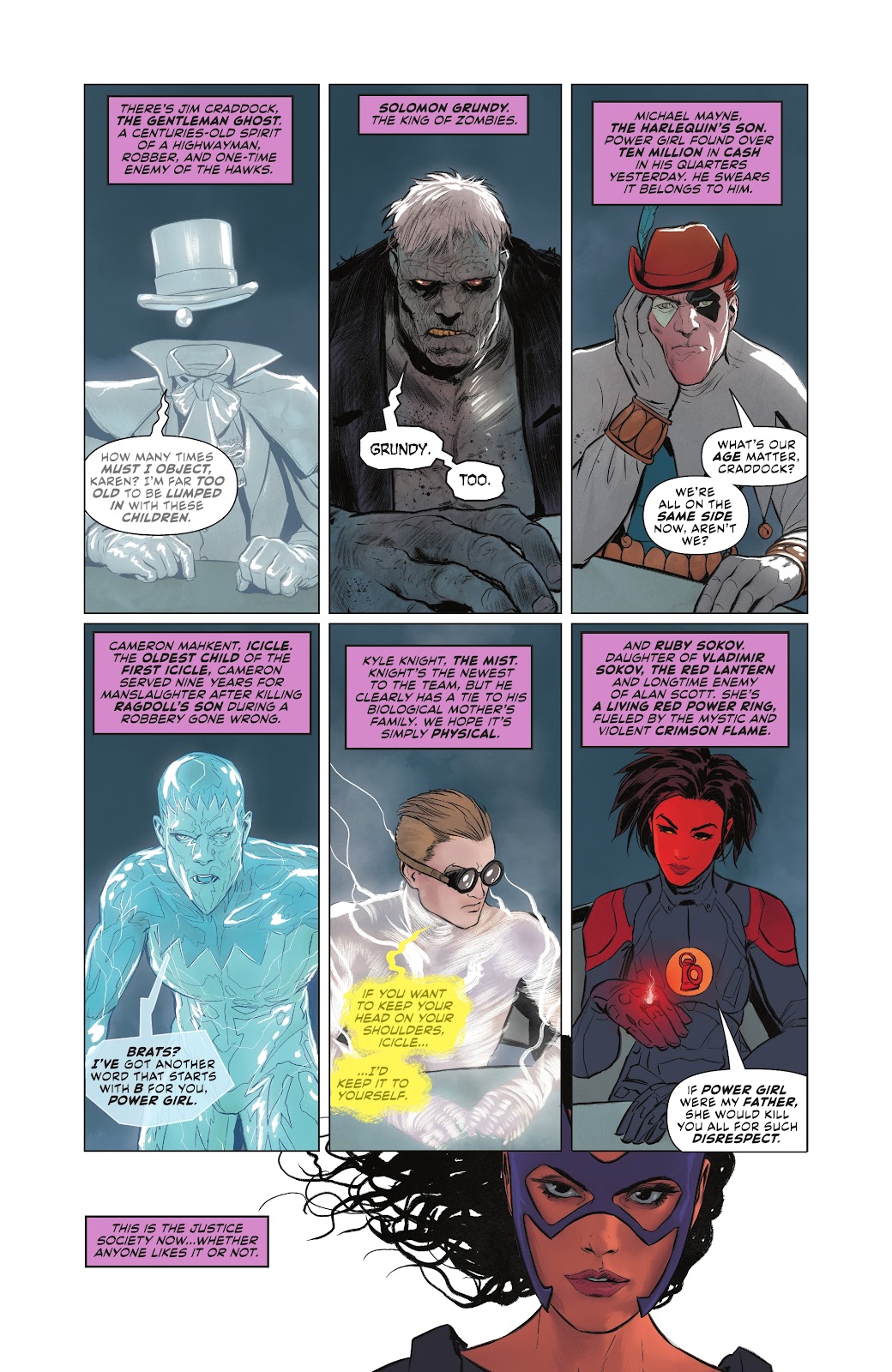
He certainly moves the odds in his favour by not exactly returning to the characters used before, but heading both back even further into the past and into the future, with pages drawn by guest artists who also have a history with the Justice Society, primarily Jerry Ordway. In the first instance, though, this certainly isn’t the Justice Society as anyone previously knew them, as seen on the sample art of Mikel Janín, the primary artist. His is technically very good art, but defined by an antiseptic distanced quality.
However, that distance fits well applied to a complex succession of hops through time in which the Huntress is the central figure. Johns begins with a tragedy, and then has Huntress seek to rectify it, but fans of the Justice Society in general aren’t likely to be satisfied with how they’re presented. True, there’s the pleasure of seeing various JSA teams in action, but they’re almost all cameos, and Justice League Dark occupy more pages than any of them. Also peculiar is mixing mysticism into a villain who’s always operated on super scientific principles.
The caveat is that being only likely to bother readers who’ve followed the Justice Society over the years and have fixed ideas about what they want. Readers attracted by a fine cover and the creative team without any previous knowledge of the Justice Society will be absorbed. They won’t realise Johns is pulling a trick from Kang’s handbook for the final chapter, but may well ask if one person can do it, why another can’t. There’s an attempt to forestall that question by portraying Doctor Fate as inexperienced and uncertain, but it’s unconvincing, although the eventual solution is neatly worked.
There’s a complete story here, and a solid one, but it ends with an unresolved anomaly, and that’s what takes us into Long Live the JSA.