Review by Frank Plowright
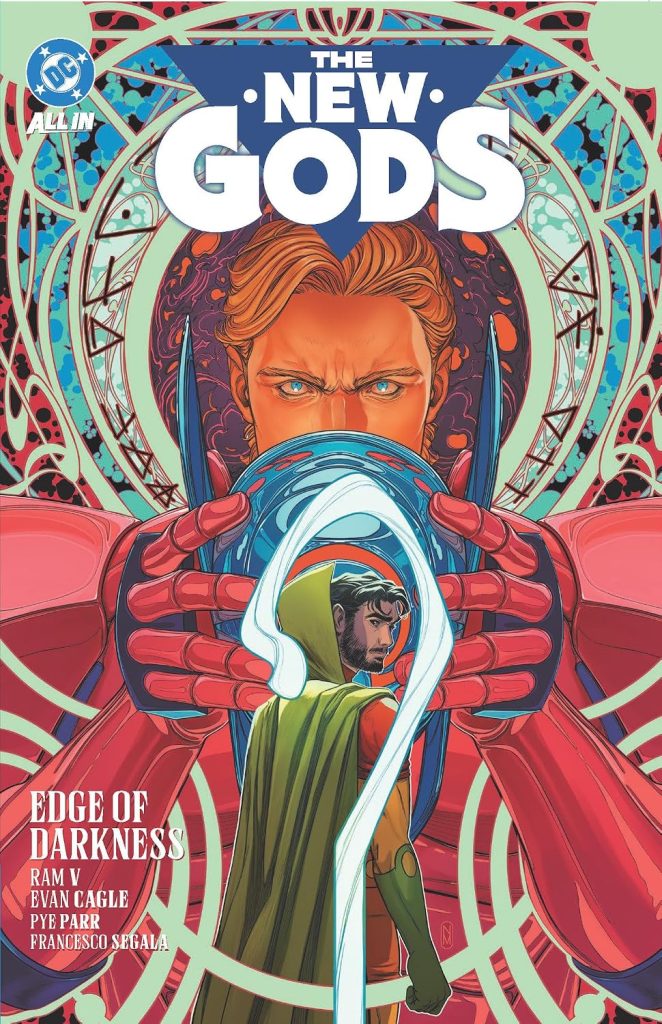
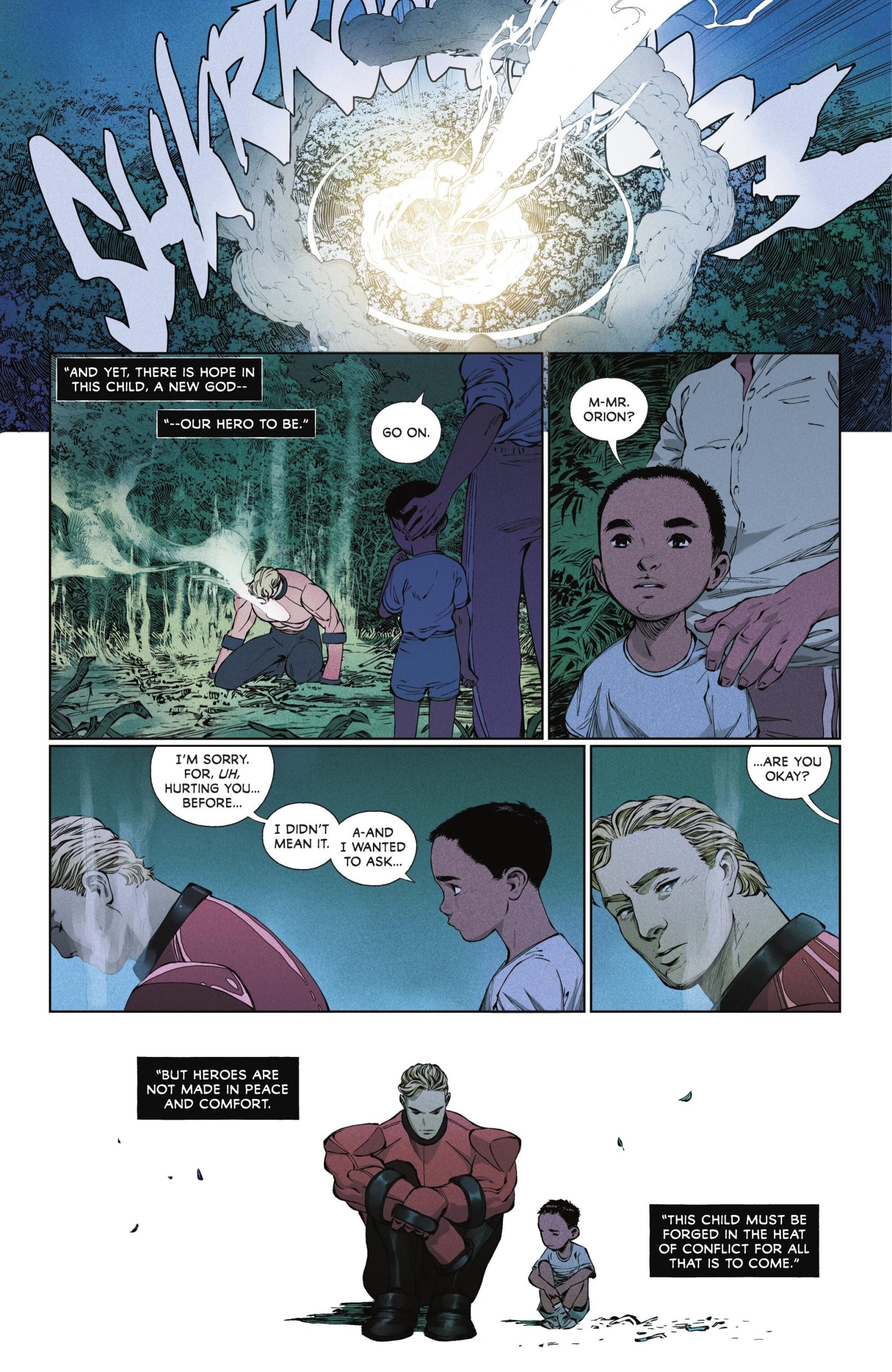
A matter readers may have wondered about as The Falling Sky played out is confirmed in the opening pages here. An element of manipulation has occurred prompting certain events. As that volume ended, the prominent New Gods had escaped to Earth, apart from one of their number, for whom circumstances are bleak, while the Justice League protect a child targeted for death by Orion on his father’s orders.
Despite spotlghting beings who by any standards qualify as gods in our terms, Ram V ensures a human heart to his plot about destiny, life and rebirth. As the bigger plot moves forward we’re given brief understandings of pivotal characters, as before some drawn by guest artists, in this case Travis Moore, Stipan Morian, Denys Cowan and Phil Hester. As it’s interludes they’re drawing, their art varying from the primary style is of no concern, and they’re all good.
So is Pye Parr, but with the series having been defined by Evan Cagle, Parr’s brightness and grimacing people are very much at odds with the subtlety Cagle supplies. Once again it has to be asked why DC’s thinking is so short term? A story that could have looked magnificent throughout has been partially sacrificed for being linked to serialised monthly comics that earn them less than the graphic novels and collected digital editions. Why not invest in Cagle’s time to have a series with twelve great-looking and consistent chapters?
Most characters associated with the New Gods and their worlds not seen in The Falling Sky have at least a small role here, and V continues to show a good understanding of their personalities. This time a speech given by Desaad resonates, and concludes with an excellent visual observation, underlining a series theme about people playing roles. It follows a period where V has lapsed into more conventional superhero tropes. It’s as if having introduced the Justice League for a specific purpose he can’t just sweep them away again, and the prominent roles of some detract from the title characters. The best moments here all involve them exclusively.
Mojo is recovered for the final chapters, where the guiding hand behind the scenes explains themselves. Here we encounter another stumble with weak justification that V possibly hopes will be lost in the joy of resolution. It’s certainly an interesting view that someone raised among the New Gods can’t trust them to act in their own best interests, but hubris was established at the start. One significant plot element remains unresolved, presumably setting up a sequel.
The Falling Sky fell just short of perfect in setting things in motion, but this is a flawed diamond presenting many interesting moments and a solid finale amid a lumpy middle section.