Review by Karl Verhoven
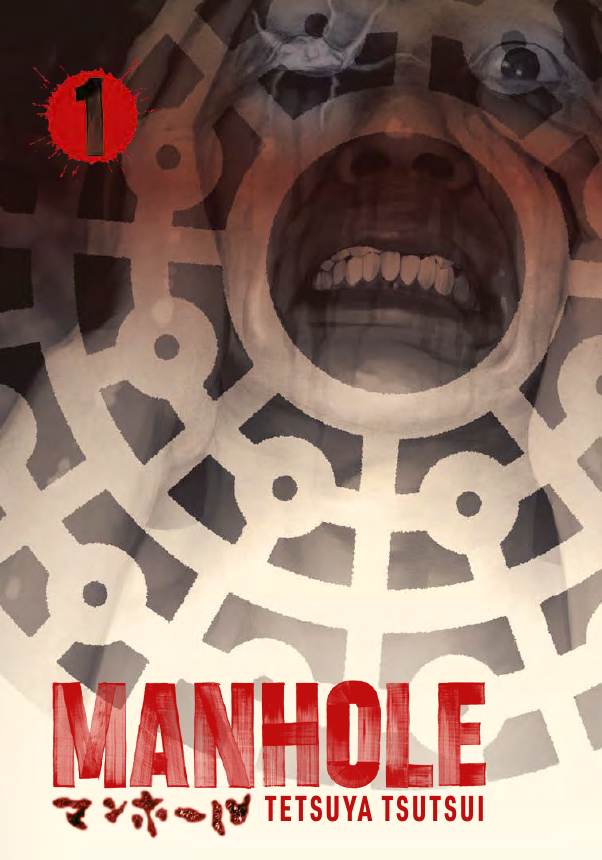
Manhole is the equivalent of a satisfying short run TV series, plotted over three chunky volumes as a police procedural investigation that gradually takes on possible supernatural overtones. Horror is present from the start as a naked man spews blood over a stranger in the fictional city of Sasahara, and the title is rapidly established as it’s discovered the man emerged from a manhole.
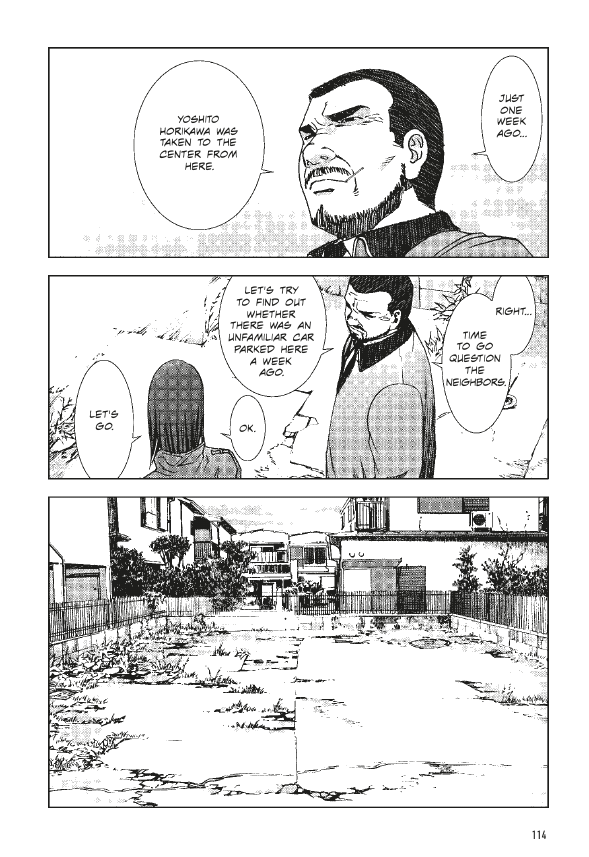
Ken Mizoguchi and Nao Inoue are the police detectives, but at the start Tetsuya Tsutsui takes the path of following both the investigation and the subsequent movements of victims infected with a parasite behaving beyond the knowledge of medical science.
Tsutsui’s art has a neat precision most of the time, only exaggerated for extreme emotion or horror. People have a naturalism to them, well designed not to resemble each other, although despite so many being named, in practice the detectives count more than anyone else. Mizoguchi is memorably presented a surly, but dapper compared with other detectives, and Tsutsui also excels at creating atmosphere, a technique used several times juxtaposing past and present.
The precision applied to the art is also apparent in the script, and at times Tsutsui prioritises procedural accuracy over moving Manhole forward. A scene where health officials offer advice and medication represents several similar, as if all who contributed to the research need to be acknowledged. A couple of aspects are lost in translation. Surely the police chief’s jokes – “I want information, not contamination” – have some greater impact in Japan.
Everything else works. Tsutsui brings home the difference between the glamour of TV police detectives and the mundane reality of the real job. Mizoguchi’s not afraid to get his clothes dirty following the clues, with Inoue a little more reluctant, and he emphasises how much of the job is finding the right people and then asking the right questions. Furthermore, not every diversion is one that slows the story down. There’s a clever discussion of lobotomy contextualised by the person leading the conversation, so both informative and manipulative, followed by a horrific journey to Botswana.
By the end of this opening the police have a puzzling series of clues to fit together, but what’s happening has been revealed to readers along with the perpetrator. It’s a form of madness, yet seductively sold and sets up Manhole 2 very nicely.